
Hyvä is a modern frontend framework for Magento 2 that replaces the default Luma theme. Instead of the RequireJS, KnockoutJS, jQuery, and LESS stack that Luma carries, Hyvä builds the storefront on Alpine.js and Tailwind CSS, which cuts the frontend down to a handful of files and produces page speed scores Luma cannot reach. This guide explains what Hyvä is, why merchants move to it, and exactly how to install it on Magento 2.
🚀 Quick takeaway
Hyvä is a Magento 2 storefront theme that swaps Luma’s heavy JavaScript stack for Alpine.js plus Tailwind CSS, dropping a typical 230+ frontend files to roughly 5. Since November 10, 2025, the core Hyvä Theme is free and open source, so the main remaining cost is the build itself.
Overview
- Hyvä is a Magento 2 frontend framework that replaces the Luma theme and removes RequireJS, KnockoutJS, jQuery, and LESS in favor of Alpine.js and Tailwind CSS.
- As of November 10, 2025, the core Hyvä Theme is free and open source under the OSL3 and AFL3 licenses, the same licenses as Magento Open Source.
- Installation is a Composer require, three Magento CLI commands, and theme activation under Content > Design > Configuration, on Magento 2.4.4+ with PHP 8.1+ and Node.js.
What is Hyvä for Magento 2?
Hyvä is a frontend framework for Magento 2 that fully replaces the default Luma theme and offers a lighter alternative to a full PWA build. It strips out RequireJS, KnockoutJS, jQuery, and LESS, then rebuilds the storefront on Alpine.js for interactivity and Tailwind CSS for styling. Per Mageplaza’s Hyvä Theme guide, that change takes a standard Luma frontend of 230+ files down to roughly 5 and slashes page weight enough to reach near-perfect PageSpeed scores.
Hyvä was created by Willem Wigman and first launched in 2021. It lands between two extremes most Magento merchants already know. Luma is reliable but slow and dependency-heavy, while a headless or PWA storefront is fast but expensive to build and maintain. Hyvä keeps the storefront server-rendered and tied to native Magento, so most extensions and admin workflows behave the way your team expects, while delivering the speed that usually requires a much larger frontend project.
Why merchants choose Hyvä
The short answer is speed, a simpler stack, and, since late 2025, a far lower cost of entry. Hyvä removes the JavaScript bundling and dependency tangle that made Luma slow, so Core Web Vitals improve without the constant tuning a Luma store demands. scandiweb client Byggmax reached a 99 PageSpeed score on Hyvä, the kind of result that moves both rankings and conversion.
On Luma, getting close to that often meant heavy JavaScript bundling work and ongoing frontend firefighting. Hyvä changes the baseline: a smaller asset footprint means there is simply less to optimize. For teams that still need deeper tuning across the full stack, scandiweb’s Magento performance optimization work pairs naturally with a Hyvä frontend.
🚀 Quick takeaway
Choose Hyvä when you want Luma-level compatibility with native Magento and most extensions, but PWA-level frontend speed, without the cost and maintenance load of a full headless build.
There is also a platform-context reason. Merchants weighing Magento vs Shopify often cite frontend speed and modern tooling as Shopify advantages. Hyvä closes much of that gap on the Magento side: a modern Alpine.js and Tailwind frontend, fast pages out of the box, and the control of self-hosted Magento.
The cost picture changed in late 2025. Per Hyvä’s official announcement, the Hyvä Theme became free and open source on November 10, 2025, relicensed under OSL3 and AFL3, the same licenses as Magento Open Source, with supporting modules relicensed alongside it. Checkout, Enterprise, and Commerce remain proprietary, but the core theme that most stores start from no longer carries a license fee. Adoption reflects the momentum: per a 2026 Hyvä theme guide from Qarbi, over 4,900 live stores ran Hyvä in production by early 2026, up from roughly 2,000 at the time of the open-source announcement.
How to install Hyvä themes in Magento 2
Installing Hyvä on Magento 2 takes one Composer command, three CLI commands, and a theme switch in the admin. Per Mageplaza and Webkul install guides, the prerequisites are Magento 2.4.4 or newer, PHP 8.1 or newer, and Node.js for the Tailwind build. scandiweb’s Hyvä Themes implementation team runs this same flow on production stores.
The standard sequence is:
- Require the theme with Composer: composer require hyva-themes/magento2-default-theme (with valid Hyvä Composer credentials).
- Apply the database changes: bin/magento setup:upgrade.
- Compile dependency injection: bin/magento setup:di:compile.
- Deploy static content: bin/magento setup:static-content:deploy.
- Activate Hyvä in the admin under Content > Design > Configuration, set it for the relevant store view, and save.
For anything beyond a default install, create a child theme that extends the Hyvä default rather than editing the base theme directly. The child theme is where your Tailwind configuration, custom templates, and brand styling live, so core updates stay clean. Run the Tailwind build inside that child theme’s web/tailwind directory whenever you change styles.
🚀 Quick takeaway
The install itself is short: Composer require, setup:upgrade, setup:di:compile, setup:static-content:deploy, then activate under Content > Design > Configuration. The real work is the child theme, the Tailwind build, and re-checking any extension that injected its own frontend assets.
How to set up the Luma theme fallback in Hyvä
Hyvä includes a Luma fallback so pages or modules that do not yet have a Hyvä frontend can still render on the original Luma templates. This matters during a phased rollout: you switch the storefront to Hyvä, but a few extension-driven pages keep falling back to Luma until they are ported. You control this from the Magento admin under Stores > Configuration in the Hyvä Themes section, where you enable the compatibility module and set which areas fall back.
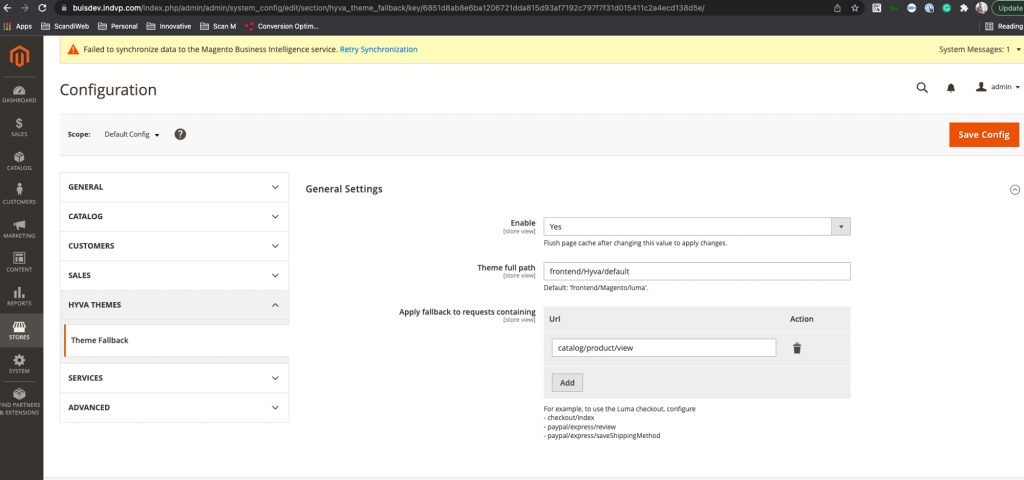
Treat the fallback as a migration aid, not a permanent state. Every page that stays on Luma reloads the heavier Luma assets, which dilutes the speed gain that motivated the move. The practical approach is to enable the fallback at launch, track which pages still use it, and port them to Hyvä until the fallback is no longer needed.
How do you structure Tailwind CSS files in a Hyvä theme?
In a Hyvä theme, Tailwind CSS lives inside the theme’s web/tailwind directory, with the tailwind.config.js file, the source styles, and the compiled output kept together so the build stays self-contained. Component-level styles belong in Tailwind utility classes inside the templates, and shared or custom CSS goes into the source stylesheet that Tailwind processes, so the final build stays small and predictable.
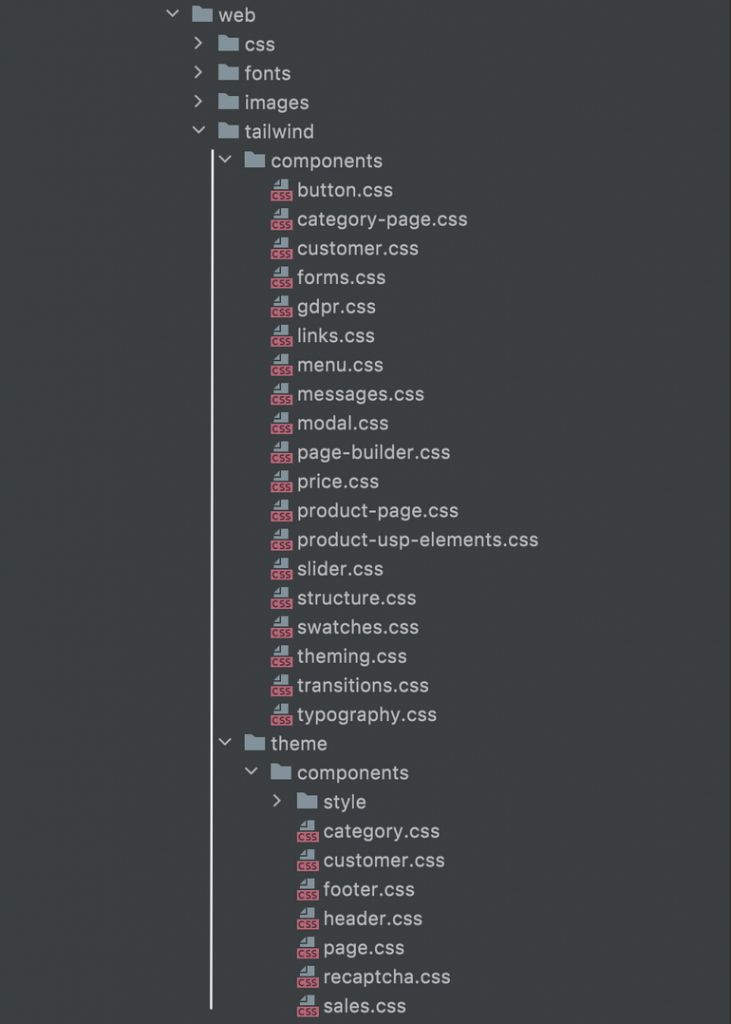
The recommendation is to keep the Tailwind setup inside your child theme rather than the base theme, so brand styling and configuration survive Hyvä updates. Keeping the structure consistent across projects also makes the build step easy to automate in your deploy pipeline.
How to deploy a Hyvä theme to Adobe Commerce Cloud
Deploying Hyvä to Adobe Commerce Cloud follows the standard Cloud build and deploy flow, with one extra step: the Tailwind build has to run during the build phase. You add a build hook that installs Node dependencies and compiles Tailwind, and you set the Hyvä Composer auth keys at the project level so the build can pull the theme.
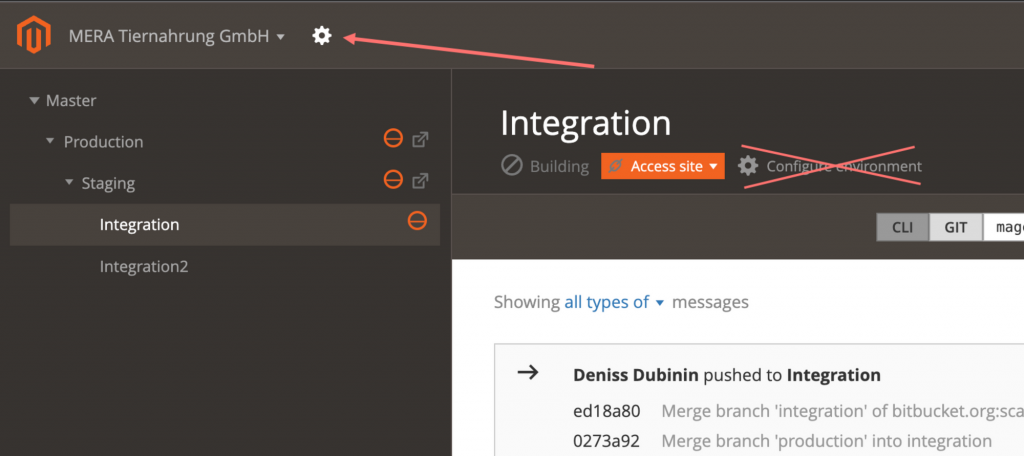
Pin a current Node.js LTS release through nvm in your build hook so the Tailwind compile matches what your team runs locally, then confirm the build logs show Tailwind producing the compiled CSS before static content deploys. Once the auth keys are set at the project level and the build hook is in place, the deploy is repeatable, and each new environment picks up the same Hyvä build automatically.
🚀 Quick takeaway
On Adobe Commerce Cloud, the only Hyvä-specific additions are a build hook that compiles Tailwind during the build phase and the Hyvä Composer auth keys at the project level. Get those two right and every environment rebuilds the same theme on its own.
Developer notes for advanced customization
Most merchant projects never touch the edges below, but development teams porting custom modules to Hyvä will hit a few recurring tasks. Keeping them in one place keeps the customization predictable.
- XML layout: Hyvä uses native Magento layout XML, so you reference Hyvä block templates and view models through the same layout handles you already know, just pointed at the Hyvä theme’s templates.
- View models: prefer Hyvä view models over blocks for passing data to templates. They keep template logic thin and align with how the default theme is built.
- Template overrides: override a default Hyvä template by copying it into the matching path inside your child theme, then editing the copy, never the base file.
- Localization: standard Magento translation files and i18n flow apply unchanged, so your existing locale CSV files keep working.
- Icons: Hyvä ships a set of predefined SVG icons through a view model, and custom icons are added by extending that icon set in your child theme.
Frequently asked questions
What is Hyvä Magento?
Hyvä is a frontend framework for Magento 2 that replaces the default Luma theme. It removes RequireJS, KnockoutJS, jQuery, and LESS, then rebuilds the storefront on Alpine.js and Tailwind CSS. The result is a much smaller, faster frontend that still runs on native, server-rendered Magento.
Is Hyvä free?
Yes, the core Hyvä Theme has been free and open source since November 10, 2025, relicensed under OSL3 and AFL3, the same licenses as Magento Open Source. Supporting modules were relicensed alongside it. Hyvä Checkout, Enterprise, and Commerce products remain proprietary and paid.
What does Hyvä do for performance?
Hyvä cuts a typical Luma frontend of 230+ files to roughly 5 and removes heavy JavaScript dependencies, which sharply reduces page weight and improves Core Web Vitals. scandiweb client Byggmax reached a 99 PageSpeed score on Hyvä, a level that is difficult to hit on a default Luma storefront.
Is Magento 2 still worth it?
For mid-market and enterprise merchants that need deep customization, B2B features, and full data ownership, Magento 2 remains a strong fit, and Hyvä answers the frontend speed concern that often drove teams elsewhere. For a fuller view, see scandiweb’s take on whether Magento is dying.
Do my Magento extensions work with Hyvä?
Many do, because Hyvä keeps native Magento on the backend, and a growing set of extensions ship Hyvä-compatible frontends. Extensions that injected their own Luma JavaScript or templates need a Hyvä frontend or a fallback. The Luma compatibility module bridges the gap during migration while those pages are ported.
How long does a Hyvä build take?
It depends on how much custom frontend the store has. A largely standard storefront can move to Hyvä in a few weeks, while a heavily customized store with many bespoke pages and extension frontends takes longer because each custom area is rebuilt in Alpine.js and Tailwind rather than ported as-is.
If you want a faster Magento frontend without rebuilding your whole stack, explore a Hyvä build with the scandiweb team and see what your store’s PageSpeed could look like.