Last updated: June 2026
Digital wallets accounted for 56% of global eCommerce value in 2025, per the Worldpay Global Payments Report 2026, and the gap between cards and wallets keeps widening at different speeds in Europe, the UK, and the US. The single biggest avoidable loss at checkout in 2026 is offering the wrong mix for the buyer’s region. iDEAL captures two-thirds of Dutch shoppers. Bancontact captures nearly three-quarters of Belgian ones. Klarna and Pay in 3 now run a quarter of UK BNPL volume. FedNow has turned account-to-account into a real US conversation. None of that shows up on a “global best practices” checklist; it appears in the country tables below.
Every region asks for a different mix of cards, wallets, and pay-later rails, and getting that mix wrong is one of the most common sources of payment friction we see at checkout across the eCommerce sites we work with.
Don’t let a buyer reach the payment step and bounce – shopping cart abandonment climbs fast when the payment methods on offer don’t match the ones shoppers trust in their market.
🚀 Quick takeaway
Europe: digital wallets reached 52% of German online value in 2025 (PayPal cited by 70% of shoppers). Cards still lead France (71%) and the Nordics, but local rails like iDEAL (NL, 66%), Bancontact (BE, 73%), and SOFORT (DE, 15%) decide a quarter of total checkout outcomes.
UK: cards do 64% of all transactions and 73% of online. Mobile-wallet adoption jumped from 42% to 57% of adults in one year. One in four UK adults now uses BNPL, fashion-led, with Klarna, Clearpay, and PayPal Pay in 3 leading.
US: BNPL hit 6% of US eCommerce in 2024 and is projected at $122.3 billion in volume in 2025. 91.5 million Americans use it, and A2A rails (FedNow, RTP) are entering high-ticket checkouts.
2026 layer: digital wallets in physical stores (PayPal Germany, Vipps Norway, Bizum Spain), account-to-account rails, and the EU digital ID wallet rollout are the three signals to design for.
Popular payment methods in Europe, the UK, and the US
The right answer is country-specific. Inside each region, the patterns are split by checkout type (B2C vs B2B, low-ticket vs high-ticket) and by category (fashion runs BNPL, electronics and travel run cards and A2A). Below, we cover the share each method holds today and where the 2026 trends are pulling the mix.
Europe
Digital wallets and cards are the top two pools for eCommerce in Europe, but local rails decide regional outcomes. The European Central Bank’s SPACE study covering 2024 (released December 2024) puts online cards at 48%, e-payment solutions (wallets, PayPal, mobile apps) at 29%, direct debit at 5%, and instant payments at 5% across the euro area for eCommerce checkouts. By value, online payments reached 36% of total day-to-day euro-area spending.
The Worldpay Global Payments Report 2026 reads the same shift more sharply: digital wallets reached 52% of online value in Germany in 2025 – the highest in Western Europe – and PayPal is cited by 70% of German online shoppers. BNPL accounts for 18% of German eCommerce, driven by a longstanding consumer preference for invoice-based payments that predates the modern installment lending category.
Wero (the European Payments Initiative wallet), Bizum in Spain, and Vipps in Norway are launching in-store payments in 2026, pulling traditionally card-heavy POS markets toward digital wallets. That same wallet rail is what now decides most checkout outcomes online too.
Country-by-country trends in Europe
Each row below shows the share of online shoppers in that country who used the method in the past 12 months, per Ecommerce News Europe (updated March 10, 2026).
| Country | Top methods (share of online shoppers, past 12mo) |
|---|---|
| Netherlands | iDEAL 66% · PayPal 47% · Cards 39% · Klarna 21% · Apple Pay 16% · Google Pay 12% · Direct debit 10% |
| Germany | PayPal 67% · Purchase on account 40% · Cards 36% · Direct Debit 31% · SEPA 29% · SOFORT 15% · Google Pay 10% · Apple Pay 10% · Giropay 9% · Installments 7% |
| France | Cards 71% · PayPal 57% · SEPA 20% · Direct debit 19% · Apple Pay 14% · Google Pay 14% · Klarna 9% · Other BNPL 5% |
| Belgium | Bancontact 73% · Cards 41% · PayPal 39% · KBC/CBC Betaalknop 18% · Klarna 14% · Direct debit 9% · SEPA 9% · Apple Pay 8% · Belfius 8% · Other BNPL 6% · Google Pay 5% · SOFORT 2% |
| United Kingdom | Cards 73% · PayPal 66% · Direct Debit 45% · Apple Pay 21% · Open banking / bank transfer 20% · Google Pay 19% · Klarna 8% · Other BNPL 5% |
What this means in practice:
- In the Netherlands, iDEAL plus PayPal plus cards covers more than 80% of stated checkout preferences. Skip iDEAL, and a third of your buyers will not see a method they trust.
- In Germany, PayPal, purchase on account, and cards cover ~85%. Purchase on account is the line item most foreign merchants underestimate.
- In France and the UK, cards still lead, but PayPal sits second in both at 57% (FR) and 66% (UK) – wallet support is no longer optional.
- In Belgium, Bancontact is non-negotiable at 73% – it is the single biggest payment-method decision in the country.
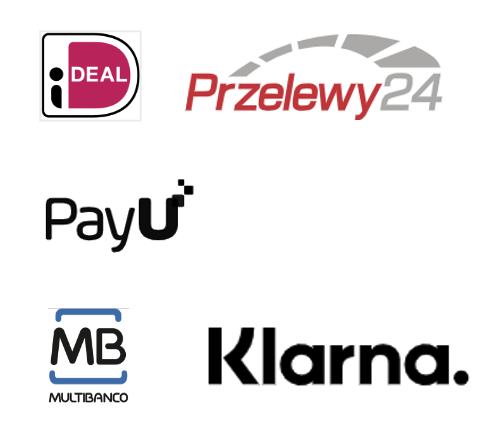
Implementing iDEAL, Bancontact, Multibanco, or Klarna natively in Adobe Commerce typically falls under our Magento development work, where the regional gateway and the checkout flow are wired together as a single unit.
United Kingdom
The UK runs heavier on cards and mobile wallets than continental Europe, and BNPL adoption has accelerated faster than UK Finance predicted in 2020. UK Finance’s Payment Markets Report 2025 (covering 2024 data, published October 2025) lays out the live picture:
- Debit, credit, and charge cards (physical plus mobile) accounted for 64% of all UK transactions in 2024.
- 26.1 billion debit card payments were made in 2024 – the most-used single method overall.
- 57% of UK adults are registered for mobile wallets in 2024, up from 42% in 2023.
- 50% of UK adults used mobile contactless payments at least once a month in 2024.
- One in four UK adults (25%) used BNPL services in 2024, up from 14% the year before.
- Fashion led BNPL at 46% of transactions, average spend £114. The top three BNPL providers were Klarna, Clearpay, and PayPal Pay in 3.
For online checkouts specifically, Ecommerce News Europe (March 2026) puts the UK at cards 73%, PayPal 66%, Direct Debit 45%, Apple Pay 21%, open banking / bank transfer 20%, Google Pay 19%, Klarna 8%, other BNPL 5%.
What changes between now and 2034
UK Finance projects cards will still lead at roughly 67% of payments in 2034 – the share rises slightly because mobile contactless replaces cash, not because cards displace wallets. The rails that will pull the most volume away from cash between now and 2034 are Apple Pay, Google Pay, and open-banking-powered bank transfers (which already account for 20% of UK online shoppers). The BNPL ceiling depends on the timing of FCA regulations – the methods are not going away, but the marketing and risk treatment will tighten.
United States
US shoppers lead the world in online card use, but the BNPL and wallet trajectory is the bigger story. Per the Worldpay Global Payments Report 2026, digital wallets like Alipay, Apple Pay, and PayPal now account for over half of online and a third of in-person transaction value globally – the US sits ahead of that curve on the wallet side and behind Europe on local rails.
The BNPL numbers (Statista, Capital One Shopping, Chargeflow 2025-2026 syntheses):
- BNPL purchase volume in 2025 is expected to total $122.3 billion, up 10.9% YoY.
- BNPL reached 5% of total eCommerce payments worldwide in 2024 – and 6% in the US specifically.
- 91.5 million American consumers will use BNPL in 2025, up 5.78% YoY.
- Klarna’s US payment volume is expected to reach $25.77 billion in 2025, up 17.2% YoY.
- Klarna holds roughly 35% of the global BNPL market share.
- 52,330 US online retailers use Afterpay.
The implication for US checkout design: Affirm, Klarna, PayPal Pay in 4, and Afterpay should be treated as standard wallet tiers alongside Apple Pay and Google Pay, not as extras. For high-ticket categories (electronics, travel, home goods, B2B), the cost of card interchange is now high enough that A2A rails (RTP, FedNow) are showing up in serious checkout RFPs.
Trends in the US
Three signals to design for through 2027:
- Digital wallets continue to absorb card share at POS and online. Apple Pay, Amazon Pay, Google Pay, and PayPal are the four to support in the default order. Worldpay projects payment apps will account for 46% of global POS value by 2030 – or $15.6 trillion.
- BNPL has moved from a niche to a standard tier, with $122.3 billion projected for 2025. Risk-adjusted pricing into the merchant fee is the design question.
- Account-to-account is the high-ticket and B2B layer. FedNow and RTP enable instant settlement without card networks, which matters for invoices, marketplaces, and any cart over ~$500 where interchange is the largest line item.
How to choose payment methods by region
The shortest decision framework that actually works:
- Start with the top three local methods in each country you sell to. Use the country table above as the anchor – if a method sits above ~20%, it has earned the slot.
- Layer cards plus the leading wallet (Apple Pay + Google Pay in most markets, PayPal everywhere PayPal is offered). This handles roughly 50-70% of cross-border buyers in any single market without local rails.
- Add BNPL where category fits: fashion, electronics, home goods, beauty in the UK and US, categorized credit and purchase-on-account in Germany, Klarna and Pay in 3 in the UK, Affirm, Klarna, and Afterpay in the US.
- Add A2A for high-ticket and B2B baskets, where interchange savings of 1.5-2.5% per transaction compound into real margin. EU SEPA Instant and US FedNow are the relevant rails.
- Pressure-test the gateway, not just the method. The same “PayPal” can mean five different gateway integrations depending on the platform, the one your acquirer offers, the one your platform’s marketplace ships, or the one your local payment service provider wraps. Reconciliation, refund flow, and dispute handling differ.
For Adobe Commerce and Magento stores specifically, our breakdown of Magento payment gateways maps each gateway to the regional methods it natively supports.
Account-to-account (A2A) and real-time payments in 2026
A2A rails (Wero in Europe, SEPA Instant across the euro area, FedNow and RTP in the US, PIX in Brazil) are pulling high-ticket and B2B transactions out of card networks. J.P. Morgan Payments’ 2026 trends note carries the key risk framing: “With account-to-account (A2A) payments, once money leaves an account, it is gone for good, so pre-transaction ID controls are essential.” That risk is why the EU is rolling out a digital ID wallet in 2026 for cross-border authentication.
What this means for eCommerce checkouts:
- B2C low-ticket (< $100): A2A is competing with wallets on UX, not on cost. Card or wallet wins on speed.
- B2C high-ticket ($100-1,000): A2A starts to make sense for one-tap, no-3DS-friction flows, especially in Europe (SEPA Instant) and the UK (Faster Payments / Open Banking).
- B2B and marketplaces ($500+): A2A is now the default for repeat invoices, supplier settlements, and any flow where the buyer is willing to authenticate once and authorize a recurring rail.
Account-to-account rails matter most for high-ticket and B2B eCommerce, where card interchange erodes margin, and invoice settlement is already the norm.
FAQ
Which payment methods should I support in Europe in 2026?
For most European markets, the answer is cards plus the top one or two local rails plus PayPal plus a wallet (Apple Pay or Google Pay). The local rails matter most: iDEAL in the Netherlands (66% of shoppers), Bancontact in Belgium (73%), purchase on account and SOFORT in Germany (40% and 15%), Multibanco in Portugal, Przelewy24 / BLIK in Poland. PayPal is universal across the region (52% of German online value in 2025 per Worldpay GPR 2026, 47% in NL, 57% in FR, 66% in UK, 39% in BE).
What are the most popular payment methods in the UK in 2026?
Cards lead at 73% of online shoppers, then PayPal at 66%, Direct Debit at 45%, Apple Pay at 21%, open banking / bank transfer at 20%, Google Pay at 19%, Klarna at 8%, other BNPL at 5% (Ecommerce News Europe, March 2026). Across all UK transactions (online plus offline), cards held 64% in 2024 (UK Finance Payment Markets Report 2025). One in four UK adults uses BNPL, fashion-led.
What share of US eCommerce is BNPL in 2026?
BNPL reached 6% of US eCommerce in 2024 and is projected at $122.3 billion in purchase volume in 2025 (up 10.9% YoY). 91.5 million Americans will use BNPL in 2025. Klarna’s US payment volume is projected at $25.77 billion in 2025, and Afterpay is live on 52,330 US online retailers (Statista / Capital One Shopping / Chargeflow 2025-2026 syntheses).
Which payment methods do B2C versus B2B buyers prefer in Europe?
B2C buyers in Europe split across cards, PayPal, and a country-specific rail (iDEAL, Bancontact, SOFORT, Multibanco). B2B buyers strongly prefer purchase on account / invoice settlement and direct debit, plus SEPA bank transfer for higher-ticket orders. Purchase on account is the single biggest category B2C-to-B2B payment difference in Germany at 40% of online shoppers (per Ecommerce News Europe 2026 data) – and it is the only category where most non-German merchants underprovision their checkout.
What payment methods should I support for cross-border eCommerce?
Cards (Visa, Mastercard) plus PayPal cover the broadest cross-border tail. Layer Apple Pay and Google Pay for mobile-heavy traffic. For each market where you exceed ~5% of revenue, add that market’s top local rail (iDEAL for NL, Bancontact for BE, SOFORT / purchase on account for DE, Klarna for fashion in the UK and US). Cross-border A2A (SEPA Instant for the euro area, Faster Payments/Open Banking for the UK) is the rail that will matter most for high-ticket cross-border in 2026-2027.
How does account-to-account (A2A) payment differ from a card payment for eCommerce?
A2A moves money directly from the buyer’s bank account to the merchant’s bank account, without the card network in the middle. Settlement is instant on real-time rails (SEPA Instant, FedNow, RTP, PIX, Faster Payments). For the merchant, the upside is lower fees (typically 0.2-0.5% vs 1.5-3% for cards) and no chargeback risk after settlement. The downside is that “once money leaves an account, it is gone for good” (J.P. Morgan Payments 2026), so pre-transaction ID controls and authentication carry more weight. A2A is becoming the standard for high-ticket and B2B checkouts in Europe and the US.
Will cards still dominate UK payments in 2034?
Yes – UK Finance’s Payment Markets Report 2025 projects cards at roughly 67% of all UK payments in 2034, up slightly from 64% in 2024. The rise is driven by mobile-wallet-on-card flows replacing cash transactions, not by cards displacing wallets. Cash share will keep falling, and open banking and BNPL will keep climbing inside eCommerce specifically.
Get your checkout and payments stack tuned for the region you actually sell in. Talk to our checkout team and we will map your live data, your platform, and your country mix to the payment methods that move your conversion rate, not your wishlist.