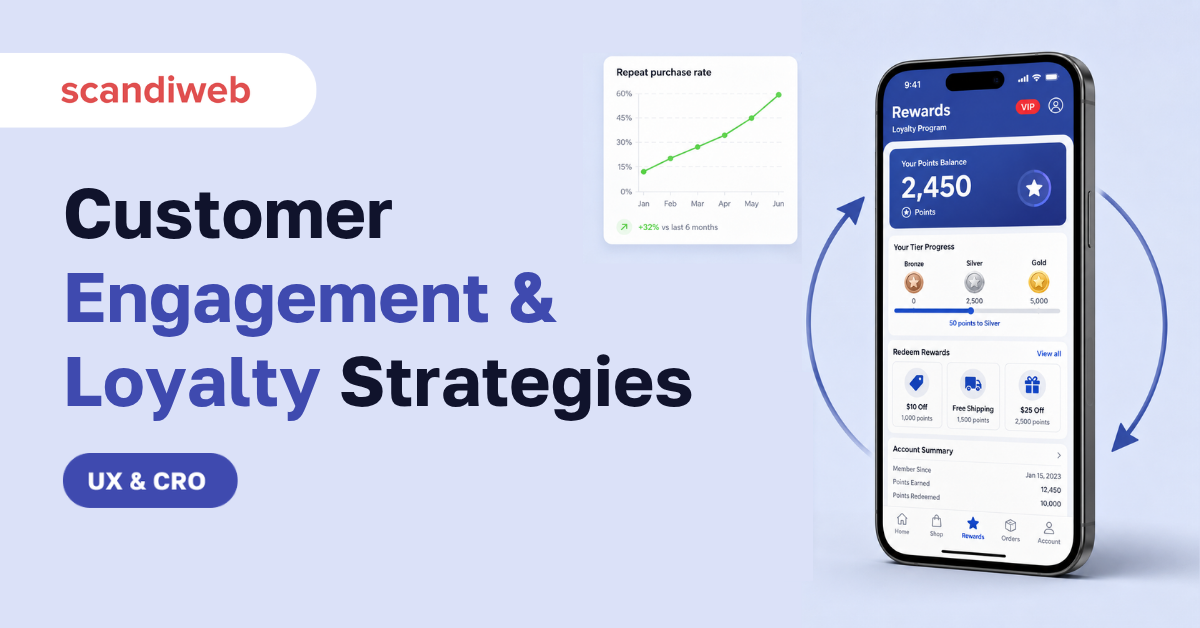
Acquiring a new customer can cost five to 25 times more than keeping one you already have, and a 5% lift in retention can raise profits by 25% to 95%, according to research from Bain & Company and Harvard Business Review. That math is why customer engagement is not a soft metric. It is the cheapest growth a store has. The hard part is turning a one-time buyer into someone who comes back, and then into someone who brings others. This guide covers the customer engagement strategies that work, how they build loyalty, and the metrics that tell you whether they are working.
🚀 Quick takeaway
Engagement earns attention, loyalty earns repeat revenue. The brands that win both treat a purchase as the start of the relationship, not the finish line. Combine reward programs, personalization, omnichannel consistency, proactive support, and value-driven content, then measure repeat-purchase rate, CLV, CSAT, and churn, not just first orders.
Why customer engagement and loyalty pay
Engagement is a profit lever, not a brand nicety. Returning customers spend on average 67% more than new ones (BIA Advisory), and because you are not paying to acquire them again, more of that spend reaches the bottom line. A small retention gain compounds: keeping 5% more customers can swing profit by a quarter to nearly double over time.
The opportunity is large and customers are receptive. The Antavo Global Customer Loyalty Report 2026 found that loyalty programs measuring their return report an average 5.3x ROI, roughly nine in ten owners report a positive return, and 65.9% of consumers say using a loyalty program is now part of their daily lives. Yet more than a quarter of loyalty points in the US go unspent, a reminder that signing members up is not the same as keeping them engaged. For the full picture on the revenue side of retention, see our guide to customer lifetime value.
Engagement and loyalty are not the same thing
Engagement is how often and how meaningfully a customer interacts with your brand, like opening emails, joining a quiz, replying to a post, or reading content. Loyalty is the behavior that follows when engagement is consistent and rewarded: repeat purchases, referrals, and a willingness to choose you over a cheaper option. You build engagement to earn loyalty, and you protect loyalty by keeping engagement fresh. The strategies below do both.
Customer engagement strategies that work
No single tactic carries a program. The brands that hold attention combine several of the strategies below, then double down on the ones their data rewards.
1. Build a reward program and promote it early
A reward program gives customers a reason to come back and a reason to spend more each visit. Promote it before launch to build anticipation, then keep promoting it after launch with fresh benefits based on what members actually use. Make the value obvious on your main product pages so shoppers understand what they gain by joining, and drive sign-ups through email, social, and on-site prompts.



Amazon promotes Prime through free trials and early access to deals before major events like Prime Day, building anticipation that turns into sign-ups. After joining, members get ongoing value through free shipping, exclusive content, and special discounts.
2. Add gifts and perks that feel high value
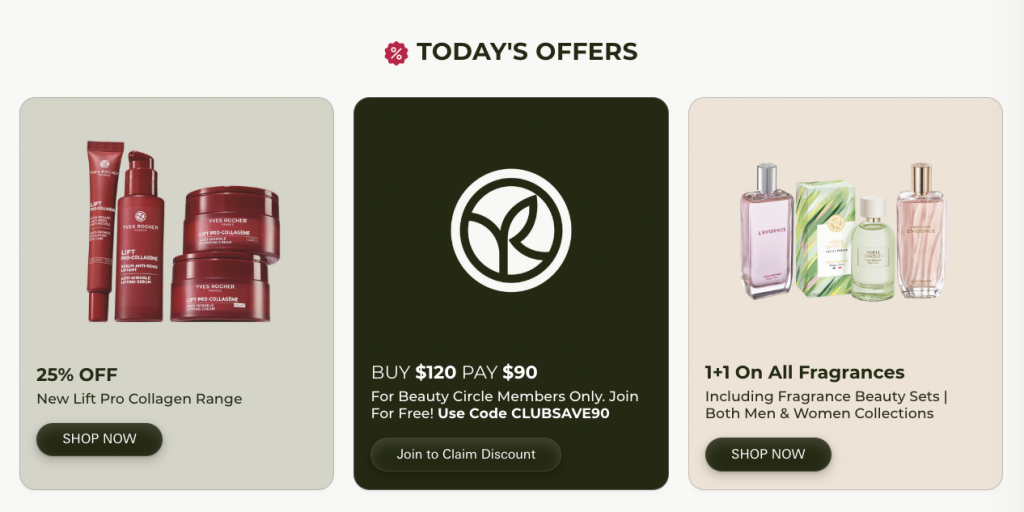
Beyond discounts, tangible gifts and perks like extended warranties or co-branded extras can tip a purchase decision in your favor. The catch is that customers often miss perks they are entitled to, so make them visible at the point of decision. Partnering with complementary brands for exclusive, limited-edition perks adds interest without discounting your own margin.
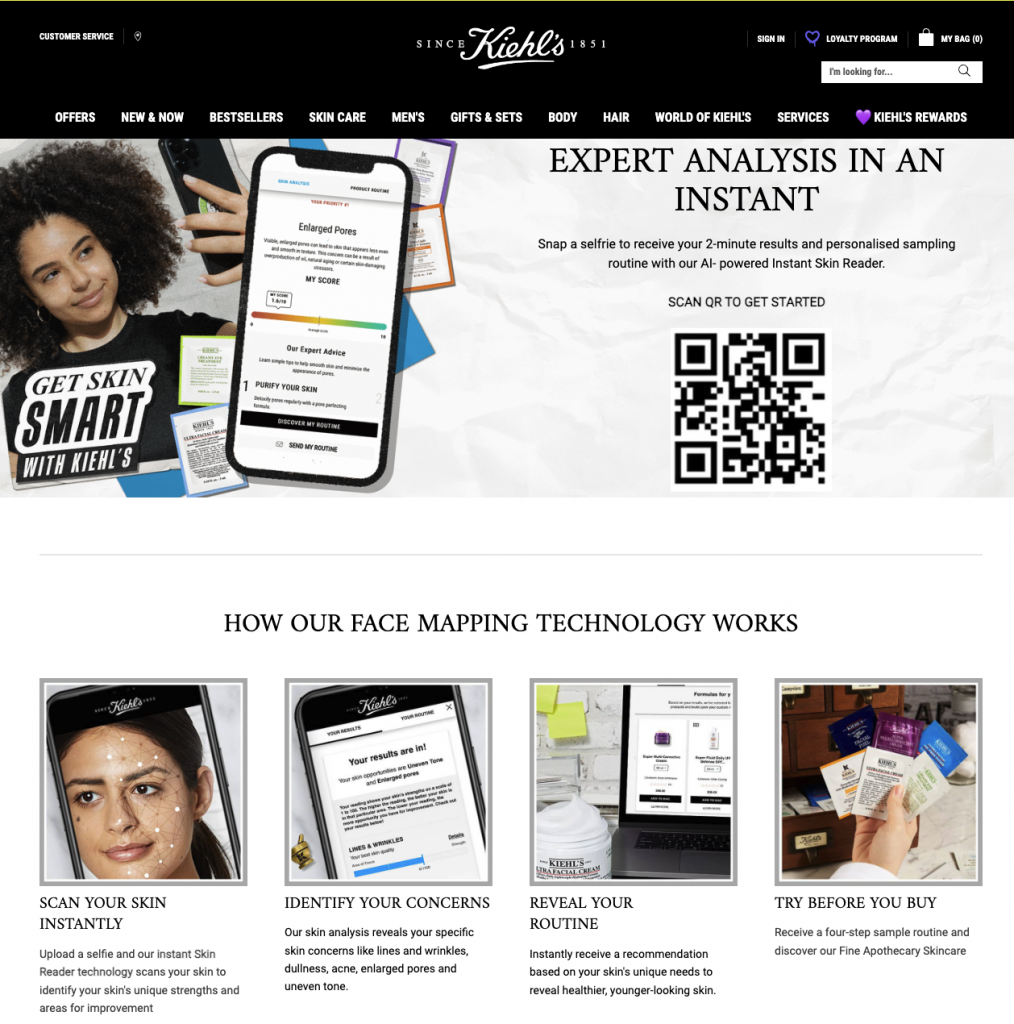
3. Personalize with data, and make it interactive
Personalization is one of the highest-return strategies available: McKinsey finds it typically lifts revenue by 10% to 15%, with faster-growing companies earning a larger share of revenue from it than slower peers. Tailoring promotions to individual preferences makes every message more relevant, and interactive formats like quizzes both engage customers and collect the data that makes the next interaction sharper. The right tools make this practical, so see our roundup of personalization tools.
4. Engage on social media and build community
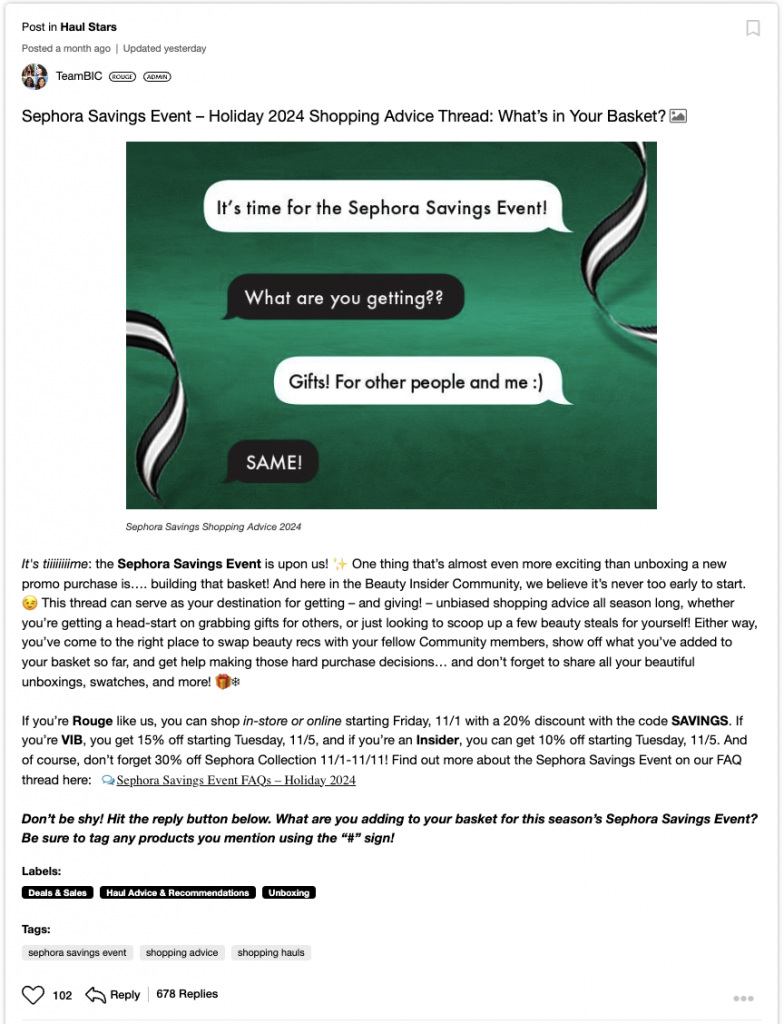
Active participation in the communities around your brand strengthens ties that discounts cannot buy. Post consistently, respond to comments, address concerns, and run live sessions or Q&As so customers feel heard. Direct conversation builds trust and surfaces insight you can feed back into products and marketing.
This is not theory for us. After sustained SEO work and active community building for a multinational consumer-electronics and home-appliance brand, scandiweb delivered strong organic gains in one region, comparing Q2 against the prior year:
- +38.3% all clicks
- +53% branded queries
- +32% non-branded queries
5. Be consistent across every channel
Customers move between your website, app, email, social, and sometimes a physical store, and they expect the experience to feel like one brand throughout. Omnichannel engagement means a cart, a wishlist, and a loyalty balance that follow the customer wherever they go, plus messaging that picks up where the last touchpoint left off. Inconsistency, like an offer in email that the site does not honor, breaks trust faster than almost anything else.
6. Offer proactive, AI-assisted support
Support is an engagement channel, not just a cost center. Self-service help centers, AI chatbots for common questions, and proactive outreach when an order is delayed all keep customers engaged at the moments that decide whether they stay. The goal is to resolve the issue before it becomes a reason to leave, and to free your team for the conversations that genuinely need a human.
7. Use conversational, two-way messaging
Email, SMS, live chat, and push notifications work best when they invite a reply rather than broadcast at the customer. A back-in-stock text, a chat that remembers the last order, or a push that lands at the right moment all turn one-way announcements into a conversation. Respect frequency and consent, since the fastest way to lose an engaged subscriber is to over-message them.
8. Lead with value-driven content
Content keeps customers engaged between purchases. How-to guides, styling ideas, setup help, and honest comparisons give people a reason to come back when they are not buying, and they build the trust that makes the next purchase easier. Useful content also feeds your other channels, giving email, social, and search something worth sharing.
9. Onboard with lifecycle and trigger-based journeys
The first weeks after a first purchase decide whether a buyer becomes a repeat customer. A welcome series, a how-to-use-it follow-up, a replenishment reminder, and a win-back flow for lapsing customers all engage people at the moment that matters instead of on a generic schedule. Triggered journeys based on real behavior consistently outperform one-size-fits-all campaigns.
10. Add gamification and close the feedback loop
Challenges, streaks, badges, and tiered milestones make engagement feel rewarding rather than transactional, which is part of why tiered programs hold attention. Pair that with a real feedback loop: ask for input through surveys and reviews, then visibly act on it. Customers who see their feedback change something feel ownership, and ownership is what loyalty is made of.
Choosing a loyalty program type
A loyalty program is one of the strongest engagement strategies, but not every program fits every store. The four most common models each reward a different behavior, and many brands combine them.
- Points programs reward spend with points redeemable for discounts or products. They are simple to understand and work well for frequent, lower-value purchases.
- Tiered programs offer better benefits as customers spend more, which motivates higher lifetime value and gives members a status to protect.
- Paid memberships (like Amazon Prime) charge a fee for ongoing benefits, filtering for committed customers and creating recurring revenue.
- Referral programs reward customers for bringing in new ones, turning loyalty into low-cost acquisition.
For a deeper look at how different industries structure these, see our collection of loyalty program examples, and when you are ready to build, our step-by-step guide to setting up a loyalty program walks through the decisions. To see one built end to end on Magento, read the Holzkern reward engine case study.
How to measure customer engagement and loyalty
You cannot improve what you do not track. Use a mix of outcome metrics and leading engagement indicators:
- Repeat purchase rate is the share of customers who buy more than once, the clearest single signal of loyalty.
- Customer lifetime value (CLV) is the total expected revenue from a customer relationship. Rising CLV means your strategies are compounding.
- Retention and churn rate track the customers you keep versus the ones you lose over a period. Small gains here drive outsized profit.
- CSAT and NPS measure how satisfied customers are and how likely they are to recommend you, both early warnings before churn shows up in revenue.
- Engagement metrics like email open and click rates, program participation, and session frequency lead retention before it reaches the bottom line.
Set these up before you launch new strategies so you have a baseline, then review them on a fixed cadence and refine based on what the data shows.
Putting it into practice
Start with a written plan that names objectives, timelines, and owners across marketing and customer service, and keep it flexible enough to adjust as results come in. Connect your analytics so the metrics above are tracked from day one. Then review performance regularly, learn what works, and keep communication clear and consistent across email, social, and on-site messaging. Engagement is not a one-time campaign. It is a habit the whole team maintains.
Frequently asked questions
What is a customer engagement strategy?
A customer engagement strategy is a coordinated plan for how a brand interacts with customers across channels to build interest, trust, and repeat business, using tactics like personalization, loyalty programs, content, proactive support, and community.
What is an example of a customer engagement strategy?
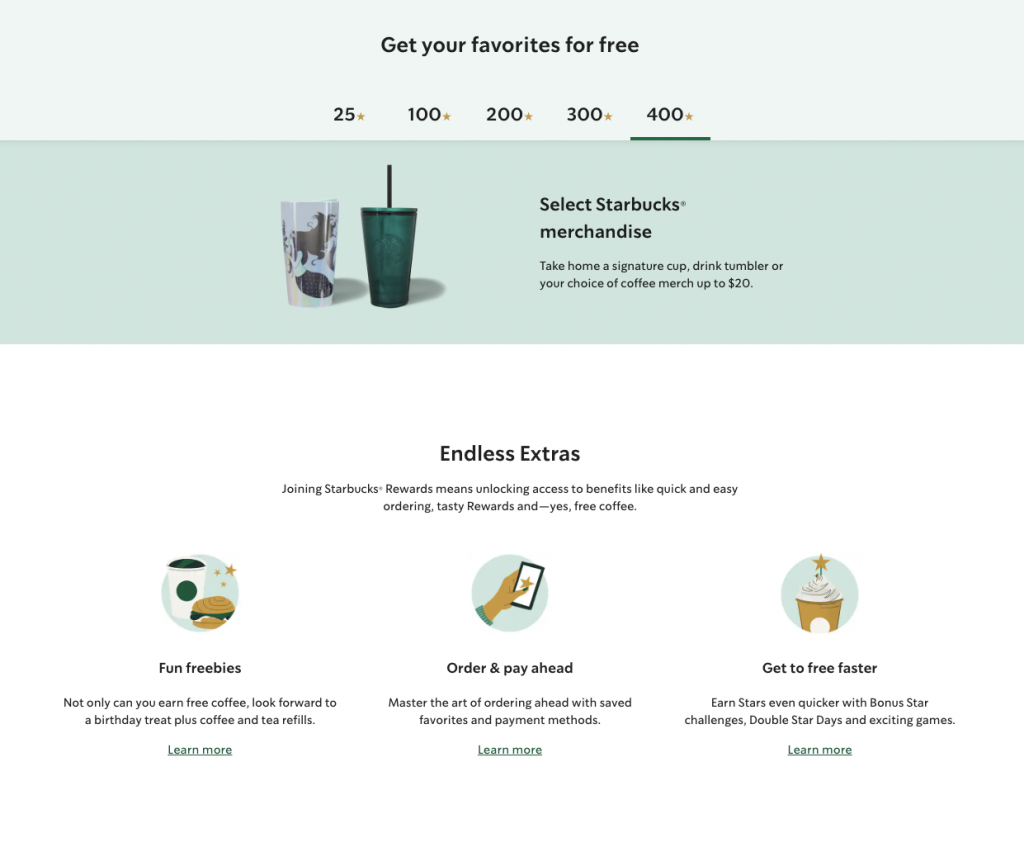
A loyalty program is a common example: Starbucks Rewards lets members earn Stars on every purchase, redeem them for free items, and unlock perks, which gives customers a reason to come back and engage between visits.
What are the 3 C’s of customer engagement?
They are commonly described as consistency (a reliable experience across channels), customization (personalized, relevant interactions), and convenience (making it easy for customers to engage and buy).
Why is customer retention more valuable than acquisition?
Acquiring a new customer costs five to 25 times more than retaining an existing one, and returning customers spend about 67% more. A 5% increase in retention can lift profits by 25% to 95%, so retention is usually the cheaper path to growth.
How do you measure customer engagement?
Track repeat purchase rate, customer lifetime value, and retention or churn as outcome metrics, plus CSAT, NPS, email open and click rates, and program participation as leading indicators.
Ready to turn one-time buyers into repeat customers? scandiweb designs and builds loyalty programs and the engagement experiences around them, from strategy to the storefront. Tell us what your retention looks like today and we will map the next step – explore our loyalty program accelerator.