4.9
AI content strategy for eCommerce catalogs
For catalogs where writing every product page by hand stopped being possible. Senior copywriters build the workflow and sign off every batch, so volume does not come at the cost of quality.
Trusted by 700+ leading brands worldwide


Trusted by 700+ leading brands worldwide
AI copywriting from senior Claude Certified copywriters
23+
Years in eCommerce
700+
Clients
2,100+
Projects completed
%20(1)-p-800.png)
.svg)

Where catalog content breaks down
Most catalogs outgrow their content process long before anyone decides to fix it. The symptom is rarely a missed deadline. It shows up as pages that quietly underperform while everyone assumes someone else has them covered.

Thin product pages
Half the catalog carries a manufacturer blurb or nothing at all. Those pages convert worse, and they give search engines almost nothing to index.
Translation debt
When the source copy changes, the other nine markets sit on last season's text for months.
Seasonal spikes
Because campaign volume arrives in bursts, an in-house team is either idle or underwater, and freelance capacity takes weeks to bring up.
%20(1).png)
What AI content strategy covers
AI content strategy is the plan for producing and maintaining product and campaign copy at catalog scale using AI, with experienced copywriters reviewing at defined checkpoints. For eCommerce it spans product descriptions, category pages, campaign copy, and translations, plus the rules that hold brand voice and factual accuracy steady across every generated page. The distinction that matters is between a tool and a process. A generator gives you a draft. A content strategy decides which pages get written first, what the copy has to contain, who signs it off, and how the output is measured against the pages it replaced.
At scandiweb that process is built by senior copywriters who also work as prompt engineers, so the person tuning the automation is the same person accountable for how the writing reads. Where the wider AI program is still being scoped, our AI strategy consulting team sets that direction before production starts.
What we produce
AI copywriting for eCommerce only works when it starts from your catalog structure and your brand guidelines, so output lands in the format your team already imports. Volume and turnaround are agreed before the first batch, along with how deep the review goes. Each deliverable below can be scoped on its own.

Product descriptions
Unique copy for every SKU, written against your attribute data and mapped to the fields your PIM expects.

Category and landing copy
Category pages get the context that turns a filtered product grid into something search engines can rank.

Translation and localization
Source copy carries into your other markets, with regional terminology checked by native reviewers. Site-wide language rollouts are handled by our website localization team.

Campaign and email copy
Seasonal pushes arrive as a complete set, so a launch is never waiting on one writer's queue.

Content refresh
Aging pages get rewritten in place against current search demand, and the refreshed version keeps its URL and its link equity.

Product data enrichment
Missing attributes and inconsistent naming get fixed first, because copy written on top of bad data inherits the problem.

Brand voice specification
A senior copywriter documents your voice as a working spec, and every generated page is held against it.

Editorial review
An experienced copywriter reads every batch before it reaches you, checking it against your product data and your voice spec.

Performance reporting
Because output is tracked against the pages it replaced, you can see what the new copy actually changed.
Not sure where your catalog stands?
Half your catalog is doing the selling. Let's look at the other half.
A short sample review tells you which pages are costing you traffic and what it would take to bring them up.

How a content project is delivered

Catalog and voice audit

A senior copywriter reviews a sample of your live pages against your brand guidelines, then documents the voice spec that every later batch is held to. You see the spec before any copy is written.

Workflow build and pilot batch
The same copywriter builds and tunes the generation workflow, then puts a first batch through it end to end. The pilot exists so you can approve the output shape while the commitment is still small.

Production at volume
Approved batches are produced against your catalog structure and delivered in the format your PIM or CMS imports, so nothing has to be copied out of a separate portal by hand.

Editorial review and handover
An experienced copywriter checks factual accuracy against your product data and voice against the spec, then signs the batch off by name. It lands in your staging environment for your own team's approval.

Refresh cycle
Pages are re-checked against current search demand on an agreed cadence, so the catalog does not drift back to where it started.
.png)
Content programs and what they returned
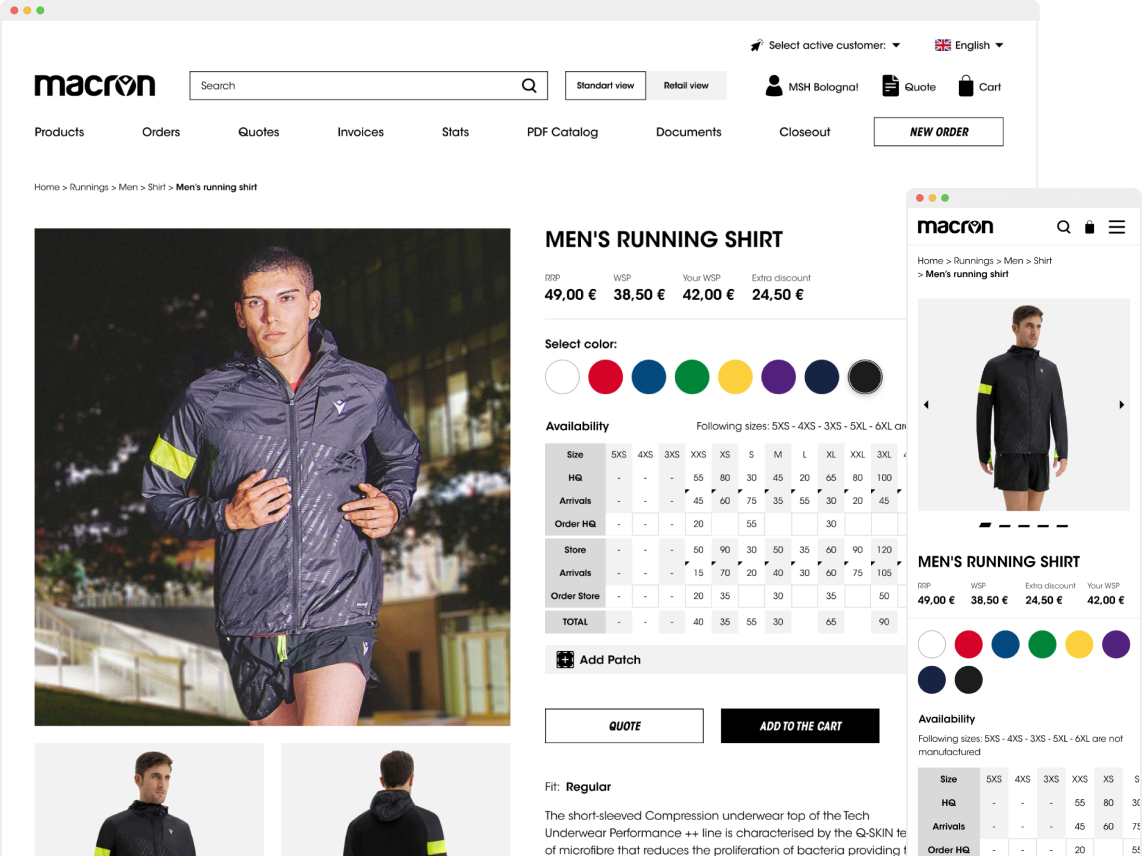

200% faster product page creation brings valuable traffic
+539%
Visibility in Google
+199%
Organic clicks
+223%
Organic traffic increase
Learn more


Rewritten landing page copy lifted revenue from search
+170%
Revenue from organic traffic
+85%
Impressions
+60%
Clicks
Learn more
.png)

Optimized product and category copy grew organic revenue
+66%
Organic sessions
+56%
Revenue from organic traffic
2×
Product listing page clicks
Learn more
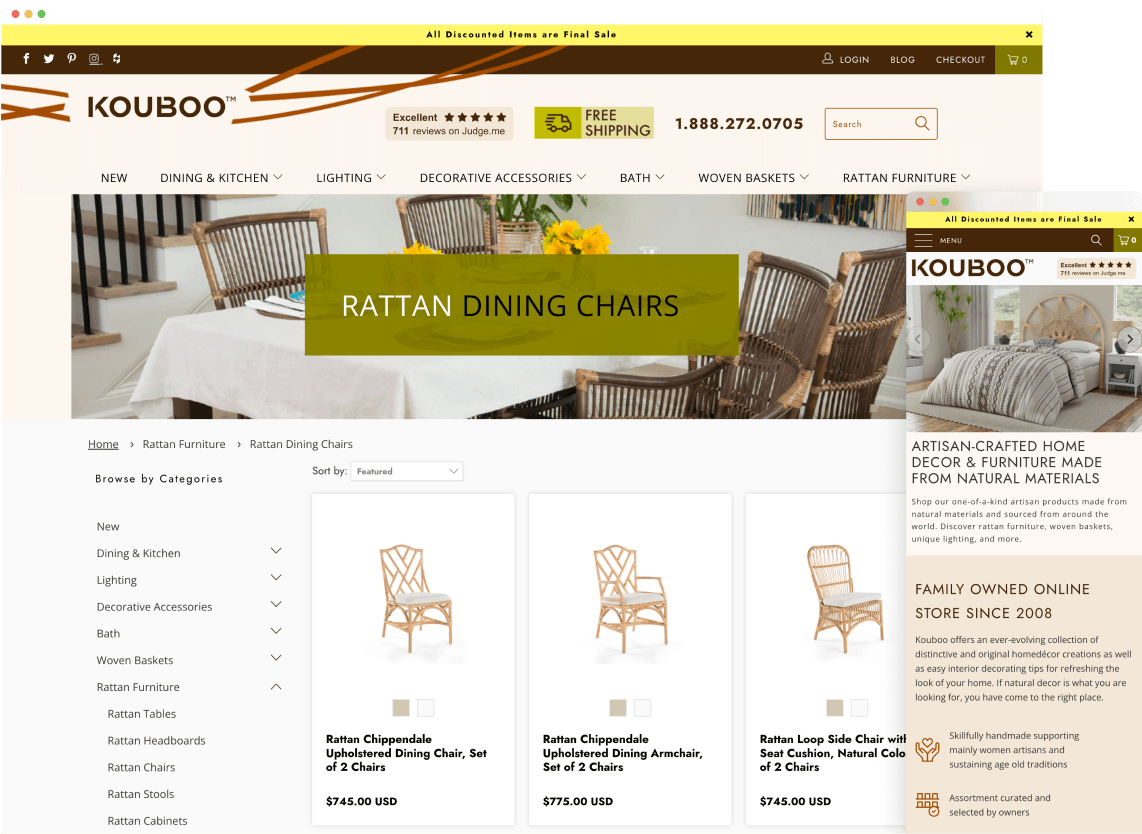

Doubled search visibility by rewriting the catalog's content
+107%
Total revenue
+72%
Organic traffic
+138%
Top-3 ranking keywords
Learn more
What changes after the first batch
eCommerce content optimization pays back in different places depending on where your catalog is weakest. These are the shifts clients report most often once production settles into a steady cadence, usually somewhere between the second and the fourth batch.

Coverage across the full catalog
The long tail stops being the part of the site nobody has written yet.
Markets that stay in sync
Source copy and translations update together, so a price change does not leave nine markets stale.
Campaign copy on the campaign's timeline
Launch dates hold because the copy is ready when the merchandising is.
A voice that holds at volume
Because the spec is written down and checked, page two thousand reads like page one.
Category pages that earn rankings
Context above the product grid gives search engines something to rank, which is where eCommerce SEO gains usually come from first.
Cost per page that falls as volume rises
The spec work happens once. Every batch after it is cheaper than the one before.
What our clients say

.webp)




Why brands pick scandiweb for catalog content

23+ years in eCommerce
Working in online retail since 2003, across every catalog size from a few hundred SKUs into the tens of thousands.

95 NPS across clients
Measured across the whole client base, including the projects that turned out to be difficult.

2,100+ projects delivered
For 700+ clients, which means the edge cases in your catalog are unlikely to be new to us.

Senior copywriters & prompt engineers
Claude-certified prompt engineers, drawn from a 600+ person team, who spent their careers as copywriters before they wrote a single prompt.

One accountable delivery manager
One person owns the batch schedule and the review gate, so escalation never goes into a queue.

Content delivered into your own systems
Output lands in your PIM or CMS in the format it expects. You own it outright, with nothing held in a platform you would have to keep paying for.
Questions about AI content strategy
How much does AI content production cost?
Pricing is per batch and scales with volume, so cost per page falls as the catalog grows. A project is scoped after we review a sample of your pages and agree how deep the review goes. We quote a fixed price per batch before any work starts, which means there is no open-ended hourly exposure to manage.
How do you keep our brand voice consistent?
We document your voice as a written spec before production starts, built from your existing guidelines and a sample of pages you consider on-brand. Every generated page is then checked against that spec by a named reviewer. Where your voice shifts by market or product line, the spec carries those variations.
Who reviews the content before it goes live?
Every batch is read by an experienced copywriter before it reaches you. They check factual accuracy against your product data and voice against the spec, then sign the batch off by name. It lands in your staging environment for your own team's approval, so nothing publishes without a second pair of eyes on it.
How many products can you cover?
Projects have covered catalogs from a few hundred SKUs into the tens of thousands. Volume is set by what your review process can absorb, which is usually the real constraint. Editorial review scales with batch size, so the ten-thousandth page gets the same read as the first.
How quickly can we see the first content?
A pilot batch is usually back within two weeks of the voice spec being signed off. That batch exists so you can approve the output shape before committing to volume. Once the shape is approved, production batches follow on a cadence set against your campaign calendar.
Will Google penalize AI-generated product content?
Google's guidance targets content produced to manipulate rankings. What it measures is whether a page is accurate and useful to the person reading it. Our process puts human review before publication and holds output to your factual product data, which is what keeps pages on the right side of that line.
How do you keep quality consistent at high volume?
The workflow is built by a senior copywriter who also works as a prompt engineer, so the rules that produce your copy are written by someone who edits for a living. Every batch is then read before handover. Quality holds because the review step scales with the volume, and it is never the thing dropped when a deadline tightens.
Is our product data used to train AI models?
No. Your catalog data and brand guidelines are used to produce your copy and nothing else. Generation runs in enterprise accounts where customer inputs are excluded from model training, and the finished copy is yours outright, delivered into your own PIM or CMS. Data handling sits inside our ISO 27001 certified process.

Tell us what your catalog looks like
Tell us which platform you are on and roughly how many SKUs need work. A content strategist will reply with a scope and a timeline.

Prefer to talk now? Book a call straight away, or email us at: [email protected]



Related services
Send us a sample of your catalog. We will tell you what it needs.
We scope the first batch from what you send and quote a fixed price for it before any writing starts.