
You uninstalled MageMonkey, cleared the cache, hit Connect, and the sync still throws an error. Or every store view synced except the one that actually matters for abandoned-cart emails. If that is where you are right now, you are not doing anything wrong, the Mailchimp connector for Magento (Adobe Commerce) has a handful of well-known failure points, and the documentation for them is scattered across forum threads and old release notes.
We have set this integration up many times across client stores, hit the same walls, and worked out what reliably clears them. This guide is the short version: what the integration is in 2026, why the sync fails, how to connect a multi-store setup cleanly, and when the free connector stops being enough.
Overview
- The integration is now called Mailchimp for Adobe Commerce (formerly Mailchimp for Magento 2), a free connector that syncs customers and order data to a Mailchimp audience.
- Most “sync failed” errors trace back to one of three causes: a leftover MageMonkey install, an orphan Mailchimp store, or a multi-store setup on subdirectories rather than subdomains.
- You can only fully connect one store view per Mailchimp audience, so the real decision is which store view earns the full feature set.
🚀 Quick takeaway
Nearly every failed connection comes down to leftover data from a previous install or a store-view setup Mailchimp cannot fully support. Fix the cause, not the symptom.
What is the Mailchimp for Magento (Adobe Commerce) integration in 2026?
Mailchimp for Adobe Commerce is a free integration that adds your store’s customers and their order information to a Mailchimp audience, so you can run targeted campaigns, product retargeting, and abandoned-cart automations from purchase data. It used to be branded “Mailchimp for Magento 2” and you will still see both names in the wild, the connector and the underlying behavior are the same.
You install it from the Adobe Commerce Marketplace (it is free), or via Composer, then connect it to your Mailchimp account from the store’s admin. The setup itself is short. The friction is almost always cleanup from a previous tool or a multi-store quirk, which is what the rest of this guide covers.
Before you connect: remove MageMonkey completely
If your store has been live for years and you used Mailchimp before, you were probably running MageMonkey, the older extension. As the Mailchimp documentation states, you must uninstall MageMonkey before you can use Mailchimp for Adobe Commerce.
Here is the part the documentation skips: removing the extension files is not always enough. We have seen connections keep failing after developers removed MageMonkey, because not every path and database table was cleaned up during removal, and the leftovers caused errors. Ask your developers to confirm the database is clean, not just that the module folder is gone.
🚀 Quick takeaway
A half-removed MageMonkey install is the single most common reason a “fresh” Mailchimp connection refuses to work.
Why does the Mailchimp Magento sync fail?
When the sync fails, you usually see a generic connection error rather than a clear cause. Based on the extension developers’ guidance, that error points to one of three scenarios:
- You have a parent scope configured.
- You are using multi-store on the same domain under one Mailchimp account.
- You have an orphan Mailchimp store left over from a previous connection.
The next two sections handle the orphan store and the multi-store cases, since those are the ones that send most people in circles.

An orphan store is blocking the connection
If you previously connected Magento to Mailchimp through MageMonkey, uninstalling it leaves an orphan store inside Mailchimp. That orphan blocks the new connector from claiming the store.
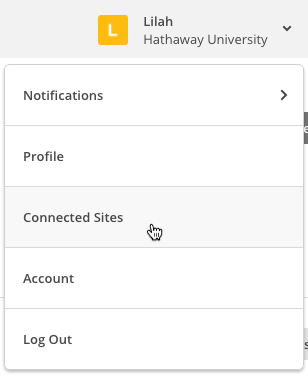
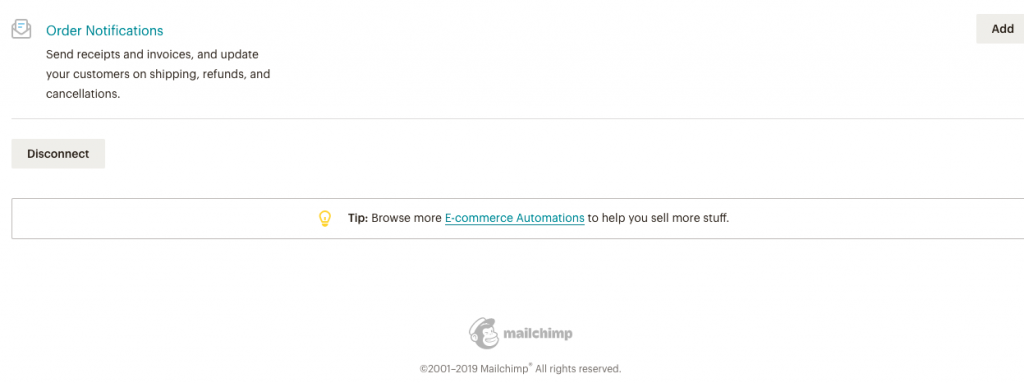
To clear it, log in to Mailchimp and open the Connected Sites page. You will see the connected store, and a Disconnect button in the lower-left corner that removes the orphan. If you do not see any connected account but the connection still fails, contact Mailchimp support and ask them to check for orphan stores that are blocking the connection, they can see ones the interface hides.
How do you connect a multi-store Magento setup to Mailchimp?
Mailchimp can connect several store views, but the layout of your store decides how cleanly it works. If your store views sit on separate subdomains, you are fine, you can connect all of them to your Mailchimp account. If your store views are separated by subdirectories, you cannot fully connect all of them.
In a subdirectory setup, one store view connects completely and shows up under Connected Sites. The others will still sync subscriber and order data, but they will not appear in Mailchimp and will not support Connected Site features like product retargeting, abandoned-cart emails, or Google Ads. So the data flows, but the revenue-driving automations only run on the one fully connected store view.
That makes the setup a decision, not just a configuration: pick the store view that earns the full feature set. Usually that is your highest-revenue or highest-traffic market, the one where abandoned-cart and retargeting automations pay for themselves fastest.
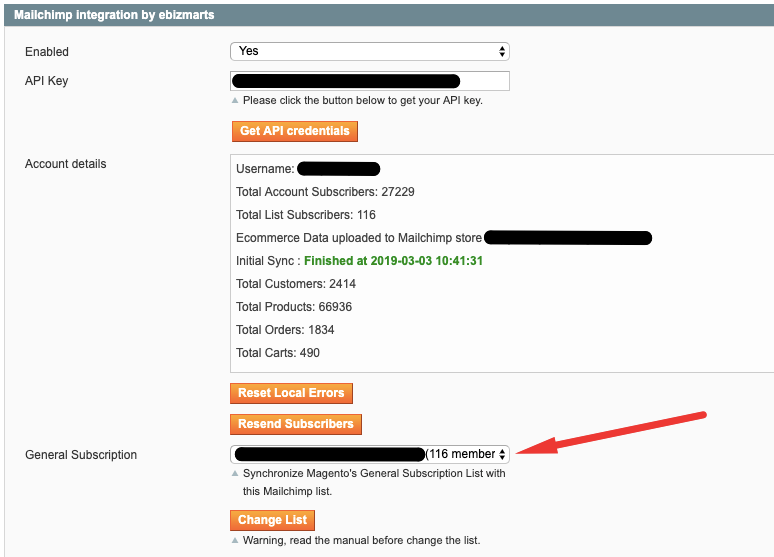
One more rule that trips people up: each store view (each subdirectory) must connect to a separate Mailchimp audience. Create a new audience in Mailchimp for every store view you plan to connect, then point each store view’s backend configuration to its own list.
🚀 Quick takeaway
On a subdirectory multi-store, only one store view gets the full Mailchimp feature set. Choose the market where retargeting and abandoned-cart automations matter most.
Connection steps after the errors are resolved
Once you have cleaned up MageMonkey and disconnected any orphan stores, connect in this order:
- Uninstall the MageMonkey extension correctly, with developer help to confirm the database is clean.
- Open Connected Sites in Mailchimp and disconnect the old sites.
- Go to the Magento (Adobe Commerce) backend and clear the cache.
- In the Mailchimp extension settings, save the configuration at the default scope, do not enable the extension for the default scope, just save the configuration.
- Switch to the store view you want to connect, enable the extension, and save the configuration there. Assign a separate audience to each store view you connect.
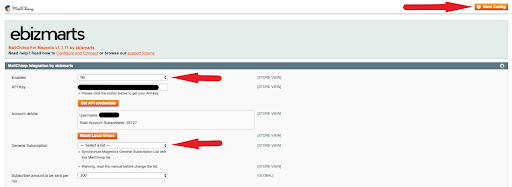
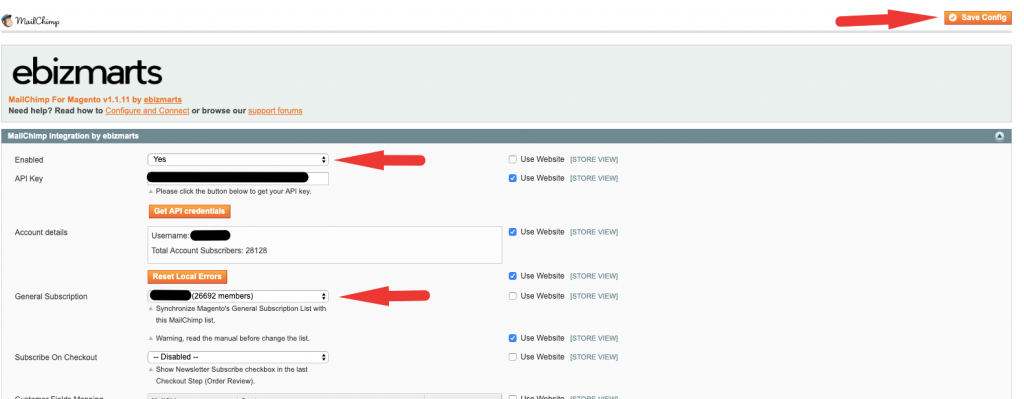
If you still hit an error after these steps, it is almost always an orphan store the interface is not showing, go back to step 2 and have Mailchimp support confirm it on their side.
Free connector or custom integration: which do you need?
The free connector is the right call for most stores. It syncs customers and orders, powers the standard automations, and costs nothing. You should look beyond it when one of these is true:
- You run a subdirectory multi-store and need full feature parity across markets, not just one fully connected store view.
- You want data the standard sync does not pass, such as custom attributes, loyalty tiers, or product-level segmentation rules.
- You are evaluating whether Mailchimp is even the right platform. Stores chasing predictable email revenue often move to a platform like Klaviyo, our Klaviyo migration case study covers a 4.8x email-revenue increase after one such move, and our email marketing best practices guide covers what to fix before you blame the platform.
If you need the connector to carry data it does not support out of the box, that is custom Magento integration services territory rather than a settings problem.
🚀 Quick takeaway
The free connector fits most stores. Reach for a custom integration only when multi-store parity or non-standard data forces it.
FAQ
Is the Mailchimp Magento integration free?
Yes. Mailchimp for Adobe Commerce (formerly Mailchimp for Magento 2) is a free connector available through the Adobe Commerce Marketplace. You only pay for your Mailchimp plan based on audience size and features, not for the integration itself.
Why is my Mailchimp Magento integration not working?
The most common causes are a partially removed MageMonkey install, an orphan Mailchimp store left from a previous connection, or a multi-store setup on subdirectories. Clean up the old install and disconnect orphan stores in Mailchimp’s Connected Sites before reconnecting.
Can I connect a multi-store Magento setup to Mailchimp?
Yes, but with limits. Store views on separate subdomains connect fully. Store views split by subdirectories will sync data, yet only one can be fully connected with retargeting and abandoned-cart features. Assign a separate Mailchimp audience to each store view.
Does the integration work with Adobe Commerce and Magento Open Source?
Yes. The same connector supports Adobe Commerce and Magento Open Source on supported 2.4.x versions. “Mailchimp for Magento” and “Mailchimp for Adobe Commerce” refer to the same tool after the Adobe rebrand.
What data does the integration sync?
It syncs customers and their order information into a Mailchimp audience, which powers segmentation, product retargeting, and abandoned-cart automations on the fully connected store view.
Should I use Mailchimp or move to another email platform?
Mailchimp’s free connector is fine for getting started. If email is becoming a serious revenue channel and you need deeper segmentation or automation, it is worth comparing platforms, our email marketing services team can scope that against your current setup.
Still staring at a sync error, or unsure which store view to fully connect? Send us your setup and the scandiweb team will tell you exactly what is blocking the connection. Tell us about your setup, and we will get your Mailchimp data flowing.