When PUMA’s team wanted their first online orders to land within minutes of go-live, they did not chase a flashier homepage. They rebuilt the storefront on Magento as a Progressive Web App and tuned it market by market. The first orders arrived two minutes after launch. Beauty Works took a different route, betting everything on a mobile experience that felt like scrolling Instagram, and watched revenue climb 32% year over year. The Met Store quietly reworked one screen, the checkout, and clawed back abandoned carts.
Those are not stock-photo case studies. They are real storefronts, all built on Magento (Adobe Commerce), and scandiweb worked on every one of them. This article walks through 10 of the best Magento websites we have shipped, what makes each one convert, and the design and UX patterns you can borrow for your own store.
🚀 Quick takeaway
The strongest Magento stores share a short list of moves: fast frontends (often Hyvä or a PWA), checkout reworked around real user data, and back-office integrations that keep stock and pricing accurate. Every example below pairs a named brand with the metric that improved, so you can see which pattern fits your own catalog before you decide where to invest. If you are weighing platforms first, our Magento vs Shopify comparison is the place to start.
Why so many businesses still build on Magento
Magento (Adobe Commerce) powers roughly 130,000 to 163,000 live stores and around 8% of the global eCommerce platform market, which keeps it among the top platforms by market share (BuiltWith trends, Meetanshi Magento statistics 2026). Europe accounts for about 45.6% of that usage, and the US is the single largest country at roughly 13%. The platform suits merchants who need control over catalog logic, custom integrations, and architecture rather than a locked-down hosted setup.
The “is the platform fading” question comes up a lot, so we answered it directly in is Magento dying. The short version: the active store count is smaller than it was at peak, but the platform remains a strong fit for complex catalogs and B2B operations. On that note, B2B stores on Magento report average order values around 2.5x higher than B2C (Meetanshi Magento statistics 2026), which is why brands like Macron and Sportland below run both models on one platform.
What merchants choose Magento for
Across the projects we run, the same reasons come up again and again:
- Customization that fits a specific business and brand instead of a fixed template
- Scale that handles large product catalogs for enterprise brands across food, automotive, and sportswear
- SEO tooling that supports search visibility
- Mobile-first storefronts for shoppers who buy on their phones
- Security features that protect customer data and transactions
- A large extension catalog for payments, inventory, and merchandising
- One dashboard for managing several stores and store views
- Analytics for tracking the customer journey and sales trends
Now to the storefronts themselves.
1. PUMA’s headless PWA store for speed, flexibility, and global reach
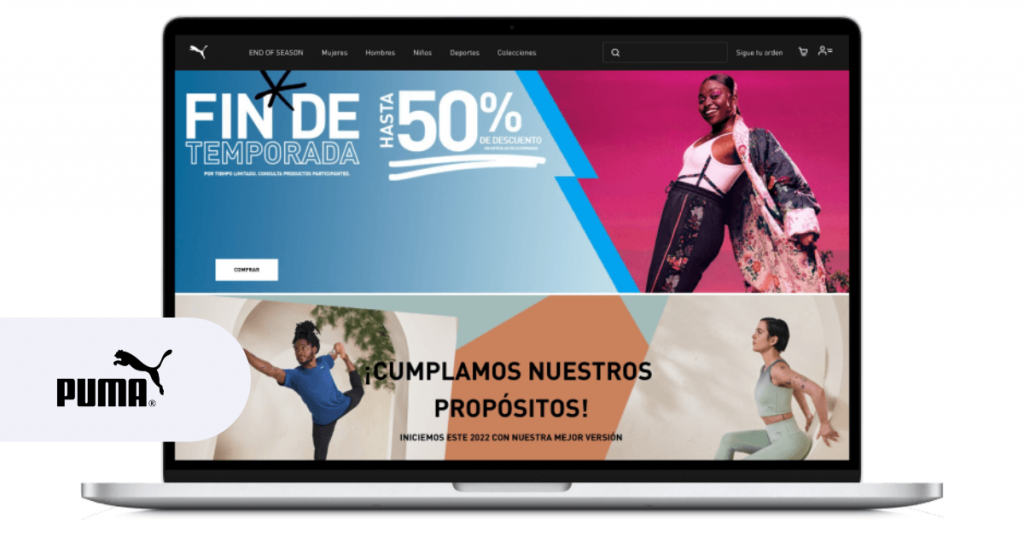
PUMA, a global sportswear leader, runs a Magento-based store with ScandiPWA, set up as a Progressive Web App for fast, responsive shopping across three key markets. The build adapts to regional needs while keeping one consistent brand experience.
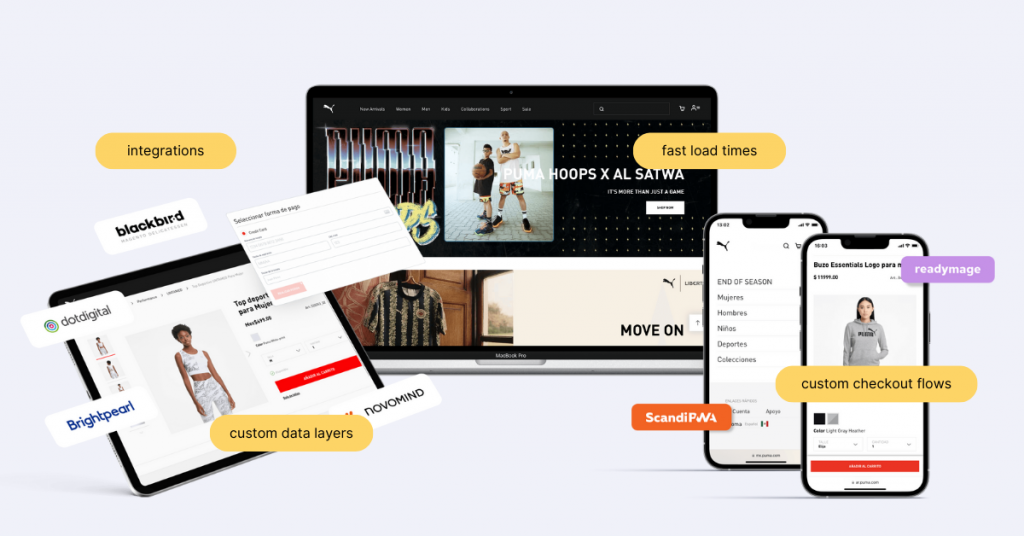
Technology
- Platform: Magento 2 with ScandiPWA for headless, responsive browsing
- Hosting: Readymage, scalable for PWA needs
- Integrations: Adobe Commerce, Blackbird CMS, BrightPearl, DotDigital, and more
- Data management: custom data layers with GTM adjustments to meet PUMA’s global standards
- SEO monitoring: ContentKing for consistent performance and visibility
Highlights
- The PWA framework delivers fast load times and smooth interactions across devices, which makes mobile shopping easier
- Custom checkout flows, ID validation, and invoicing adapt to regional needs like those in Argentina and the Middle East
- Custom data layers keep tracking accurate and consistent across markets
- Integration with Adobe Commerce, PIM, OMS, CRM, and ERP supports product and order management as demand grows
- The architecture keeps inventory updated and response times fast, even during peak traffic
Approach and results
PUMA’s main challenge was a scalable store that kept brand standards consistent across regions. Different teams managed each market, so the project needed solid management and technical support to stay aligned. Working with scandiweb’s Magento development team, PUMA received a custom frontend, tailored features, ongoing SEO monitoring, tool integrations, and improved security. The results:
- First orders arrived just 2 minutes after launch
- The site scored above 80 on Lighthouse with 99.9% uptime
- An SEO health score of 700+ supported organic growth
🚀 Quick takeaway
PUMA’s headless PWA shows the pattern that repeats across this list: decouple the frontend for speed, then localize checkout and tracking per market. The payoff was an above-80 Lighthouse score, 99.9% uptime, and first orders within two minutes of launch.
2. Beauty Works’ mobile-first Magento shop for influencer traffic
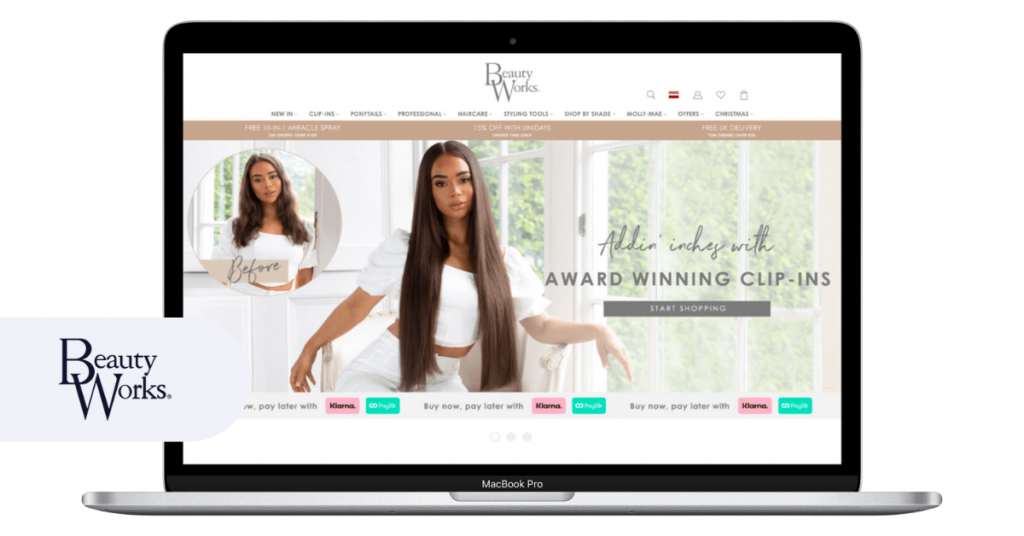
Beauty Works, a luxury hair brand with 800K+ Instagram followers, built its store on Magento with mobile-first browsing that feels as intuitive as a social feed. Powered by ScandiPWA, the site handles influencer-campaign traffic, supports global expansion, and delivers an app-like shopping experience.
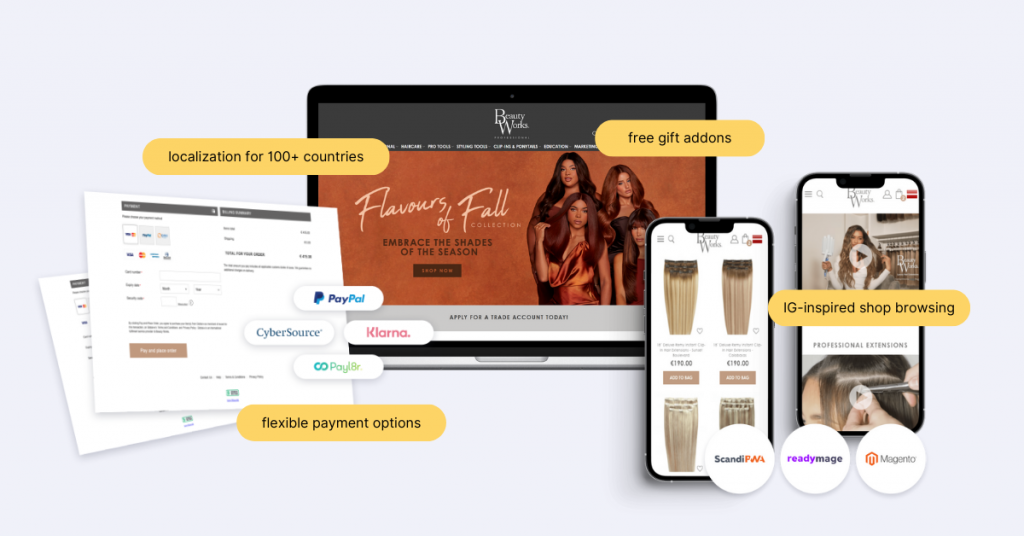
Technology
- Platform: Magento 2 with ScandiPWA for responsive browsing
- Hosting: ReadyMage, built for high-traffic performance
- Internationalization: Global-e for multi-currency and localized checkout
- Social integration: Instagram feed on product and CMS pages
- Payment integrations: PayPal, CyberSource, Klarna, and Payl8r
Highlights
- The site has an app-like feel, well suited to Beauty Works’ 96% mobile audience
- The platform handles traffic spikes up to 20x during major influencer campaigns
- Global-e supports localization with currency and checkout options for over 100 countries
- An Instagram-inspired “social shop” shows IG posts on product pages
- Flexible payment options add convenience for luxury customers
- A smart cart adds free gifts based on promo conditions for a more personalized experience
Approach and results
The challenge was a high-performance, mobile-first store that could absorb big traffic spikes from influencer promotions, a common need in beauty and cosmetics. Beauty Works partnered with scandiweb’s Magento developers to migrate from Magento 1 to a mobile-focused Magento 2 PWA. The new platform delivered:
- A 32% year-over-year revenue increase after moving to Magento 2 PWA
- Reliable performance under high traffic
- Expansion to over 100 countries with localized pricing and checkout
- More traffic from social media through an interface that mirrors social browsing
3. Rockar’s eCommerce platform, pioneering online car sales
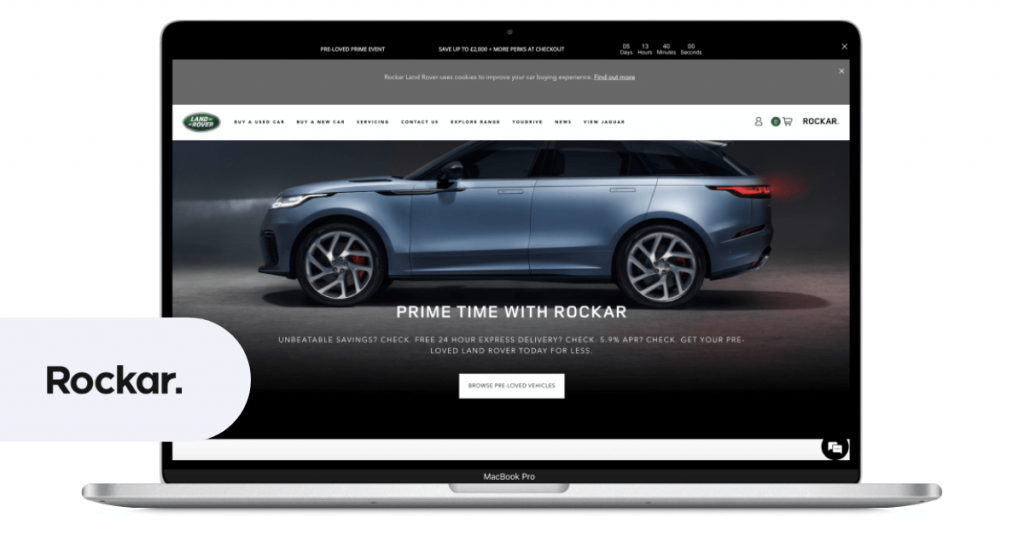
Rockar changed car buying by creating the first fully digital platform in the automotive industry, where customers can configure, finance, and purchase premium vehicles entirely online. Its Magento site offers a smooth omnichannel experience that puts buyers in control.

Technology
- Platform: Magento with multi-tenant SaaS on a microservices architecture using NodeJS, GraphQL, NextJS, and React
- Frontend: NextJS and React for a responsive, interactive UX
- Automation: test automation covering 700+ financial scenarios
- Omnichannel support: real-time integration across online, in-store, and call-center channels
Highlights
- Customers can fully customize and buy cars online, much like regular online shopping
- Multichannel flexibility lets customers switch between online, in-store, or phone, with a “Save Checkout” option
- Instant trade-in valuations and multiple financing options with real-time approvals speed up the process
- The multi-tenant SaaS scales as new brands join
- 700+ automated financial scenarios keep calculations fast and accurate across channels
Approach and results
Rockar’s main challenge was a detailed, user-friendly platform that could handle the vehicle purchase process while supporting an omnichannel approach. Working with scandiweb’s Magento designers, developers, and CRO specialists, a multi-tenant SaaS platform was built. For Rockar, that meant:
- The first car ever sold online via the Magento site on opening day
- A new market category, with additional premium car brands ready to launch on the platform
- A stable, scalable system integrating real-time trade-ins, financing, live inventory, and in-store support
🚀 Quick takeaway
Rockar shows Magento can carry a purchase journey far heavier than a typical cart, financing, trade-in valuation, and 700+ automated calculation scenarios, all in real time. If your catalog involves configuration or financing, the platform’s custom logic is the reason to choose it over a hosted setup.
4. Läderach’s eCommerce platform, blending luxury and performance
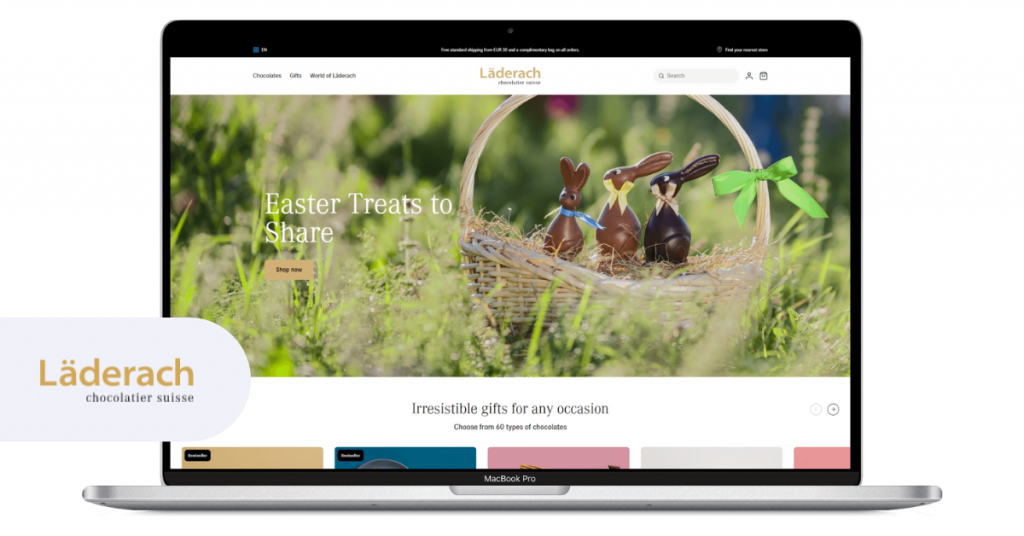
Läderach, the premium Swiss chocolatier, rebuilt its store to pair luxury design with performance, lifting conversions and simplifying management across 50+ countries. The Magento store won the Design Curve Award at the 2023 Meet Magento NYC event for its ROI-focused design.
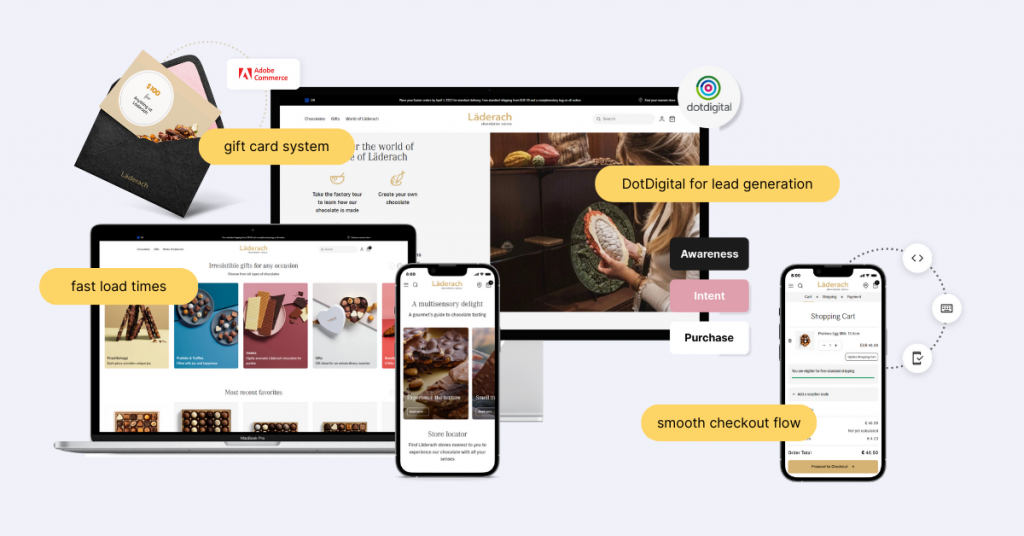
Technology
- Platform: Adobe Commerce (Magento) with a unified setup for global content management
- Frontend: Hyvä themes for fast load times and a high-end interface
- Optimization: Varnish, PHP updates, and backend work for SEO and CMS
- Lead generation: DotDigital for customer marketing and lead nurturing
- Analytics: Google Analytics 4 with custom tracking for user behavior
Highlights
- Hyvä templates keep load times fast while preserving the luxury brand identity
- A smooth journey with an easy store switcher and clear checkout supports conversions
- DotDigital simplifies lead generation and targeted email marketing
- An easy-to-use gift card system encourages repeat purchases
Approach and results
Before the upgrade, Läderach ran a fragmented system split between WordPress and Adobe Commerce, which created inefficiencies. scandiweb built a streamlined, scalable platform, improved performance, and updated the design to match the brand while optimizing for conversions. The results:
- +25.5% average engagement time and +4.5% engaged sessions per user
- Conversions up 47.8%, with a 39% rise in total revenue
- 52.9% more total users, with over 50% new leads from DotDigital
- A 93 PageSpeed score on desktop for the homepage and 99 for product listing pages
🚀 Quick takeaway
Läderach is the clearest case for pairing a Hyvä frontend with focused performance work. Faster load times and a cleaner journey lifted conversions 47.8% and total revenue 39%, which shows design and speed are conversion levers, not cosmetics.
5. Airthings’ Magento website with Hyvä
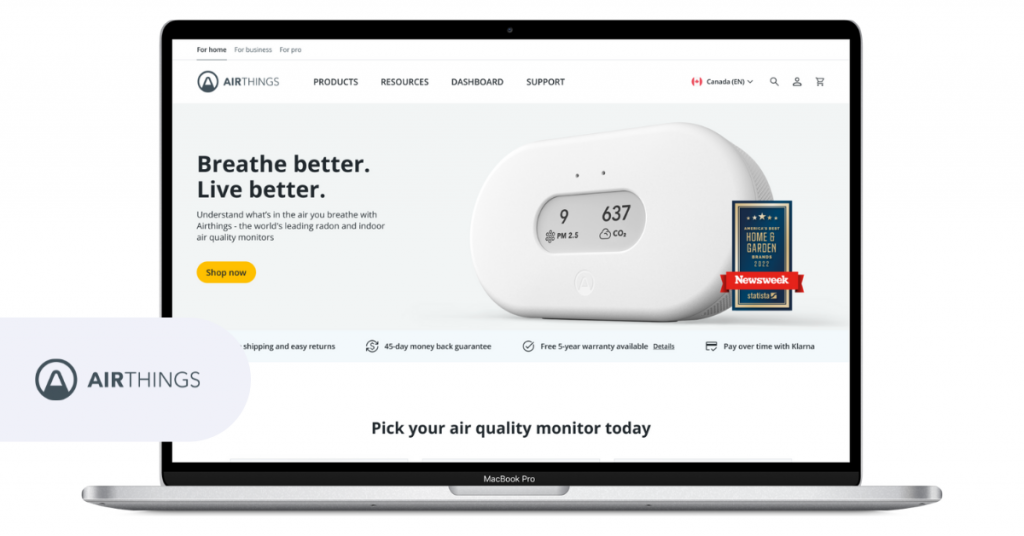
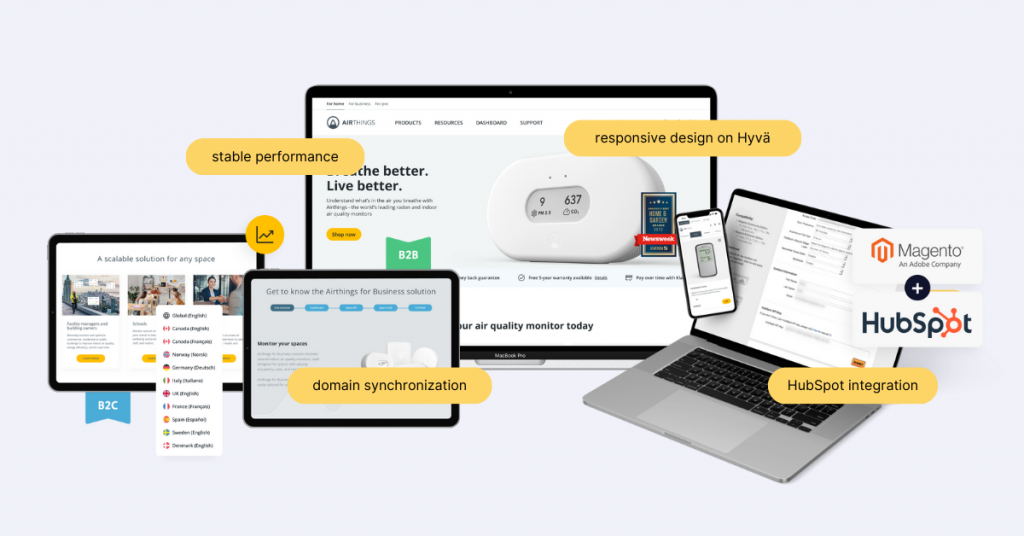
Airthings, a global leader in indoor air quality, serves B2B and B2C segments across North America and beyond. Its Magento upgrade improved the user experience, added marketing integrations, and synced subdomains, earning the Design Pioneer Award at the 2024 Meet Magento NYC event.
Technology
- Platform: Adobe Commerce (Magento) with Hyvä for a unified, responsive design
- Hosting: managed hosting with Readymage for scalable performance
- Analytics: Google Analytics 4 with GDPR-compliant data tracking
- Integration: HubSpot and Cloudflare for domain synchronization
Highlights
- The site connects eCommerce and marketing through HubSpot for an uninterrupted journey
- Hyvä’s responsive design keeps navigation easy on desktop and mobile
- Managed hosting on Readymage keeps load times fast and performance stable during spikes
- Domain synchronization and 1,000+ server-side redirects keep traffic and navigation consistent across merged subdomains
Approach and results
The main challenge was one cohesive site across multiple platforms and subdomains. Airthings partnered with scandiweb for a smooth migration, better site performance, and consistent tracking across domains while meeting GDPR requirements. Strong Magento performance tuning made the difference:
- The Hyvä migration improved engagement, including a 3.56% rise in overall engagement rate and a 17.11% rise in views per user
- Mobile engagement rose 2.31%, and the homepage saw a 7.71% rise in interaction thanks to more relevant content
- A better checkout flow and navigation lowered cart abandonment
6. The Met Store’s optimized Magento checkout
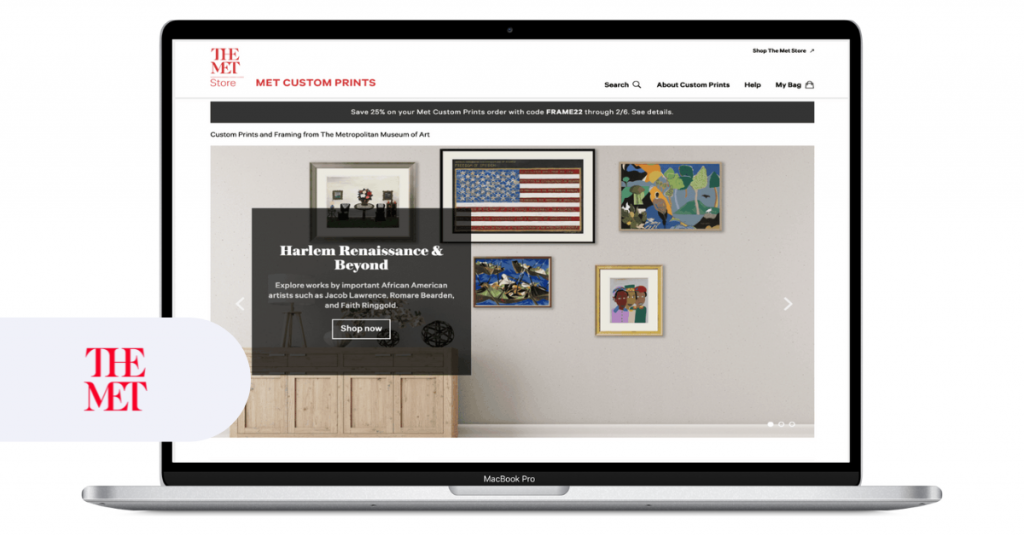
As the official store of the largest US museum, The Met Store sells unique, museum-inspired products and is one of the strongest specialty Magento stores. Its Magento site delivers a smooth, intuitive checkout for a wide customer base.
Technology
- Platform: Adobe Commerce (Magento) for a stable foundation
- Tools and testing: onsite polling, checkout tracing, and user tests on desktop and mobile
- Data analysis: review of checkout behavior, funnel performance, and error tracking
Highlights
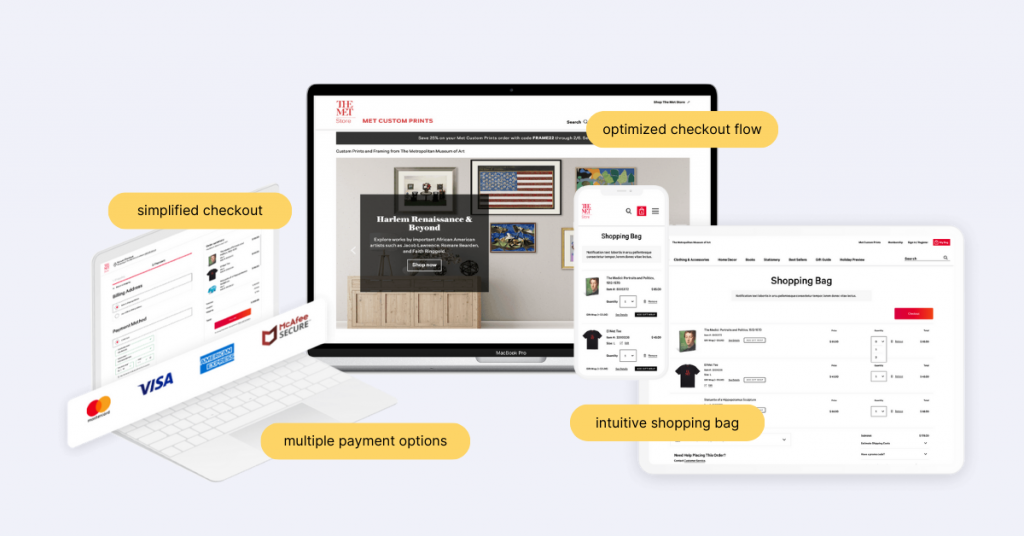
- A simplified checkout form with a progress bar, mobile-friendly keyboards, and autocomplete keeps purchasing fast
- The shopping bag design lets customers add, remove, or adjust items easily
- Multiple payment methods give customers quick, low-friction choices
- The checkout flow is tuned with customer feedback and data to remove friction points
Approach and results
The Met Store faced high checkout abandonment from usability issues. With scandiweb’s work in Magento development and UX and CRO, the friction points were resolved with evidence-based insights and a cleaner purchase path. The outcome:
- Checkout audits and user tests pinpointed pain points, leading to streamlined fields, express checkout, and flexible cart updates
- Competitive benchmarking and 10 user tests informed the changes, making purchases easier to complete
- Streamlined fields, express checkout, and simpler bag updates reduced checkout abandonment
7. Sportland’s Adobe Commerce setup for 50,000 SKUs and 5 markets
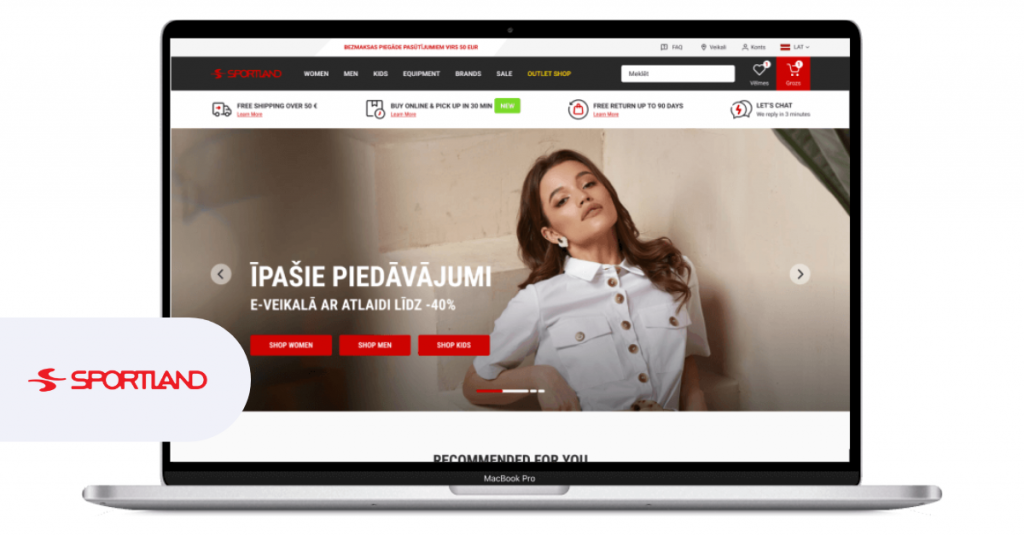
As the Baltic region’s top sportswear retailer, Sportland runs a fast, user-friendly platform on Adobe Commerce, tuned for high product volumes and an engaging experience across five markets.
Technology
- Platform: Adobe Commerce with ScandiPWA for a high-speed interface
- Hosting: Readymage for rapid deployment and stable performance
- ERP integration: Python middleware and Citrix Virtual Apps for omnichannel connectivity
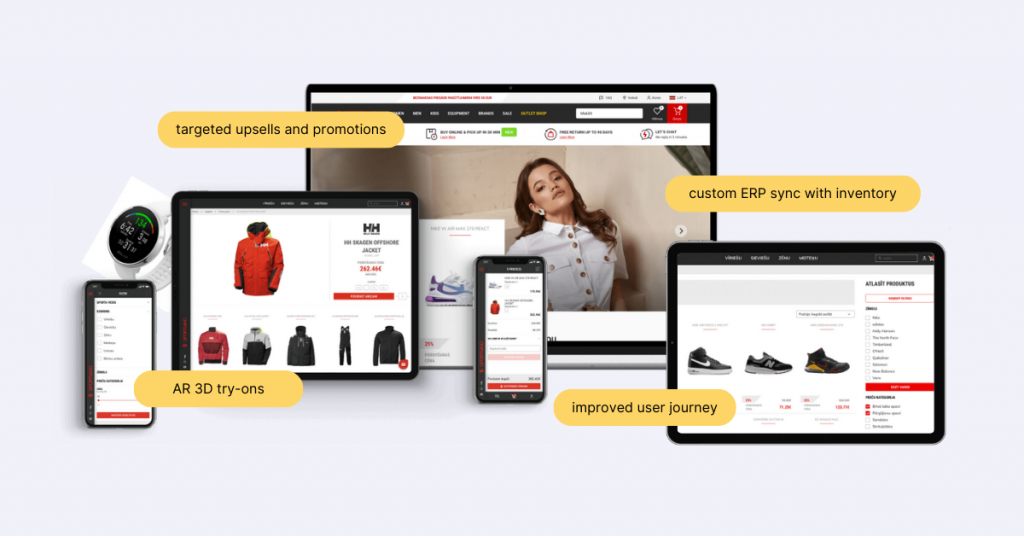
- User engagement: AR try-ons, 3D capabilities, and a Roblox Metaverse experience
Highlights
- The platform handles heavy traffic spikes with stable, responsive performance
- Targeted upsells, discounts, and clear navigation help customers find products and lift conversions
- A custom ERP syncs inventory and customer data across online and in-store channels
- AR try-ons and a Roblox Metaverse experience capture younger audiences with interactive features
Approach and results
The main challenge was launching a platform for 50k+ SKUs and multiple markets quickly. Partnering with scandiweb’s Magento developers, designers, and eCommerce specialists, Sportland launched its MVP across Latvia, Lithuania, and Estonia in just 20 days, later expanding to Finland and other markets. Key results:
- 1,000 orders within the first two days, a sign of strong demand and platform readiness
- Higher engagement and conversions with ScandiPWA’s fast storefront
- Six times longer engagement on product pages and 15% more conversions from AR try-ons
- 34,000 Roblox Metaverse visits in 30 days, with 82% new traffic from TikTok influencers
🚀 Quick takeaway
Sportland is the speed-to-market case: 50,000 SKUs and an MVP live across three markets in 20 days, then 1,000 orders in the first two days. A PWA frontend plus a custom ERP sync let the catalog scale without a slow, drawn-out launch.
8. Macron’s Magento platform for global B2B and B2C growth
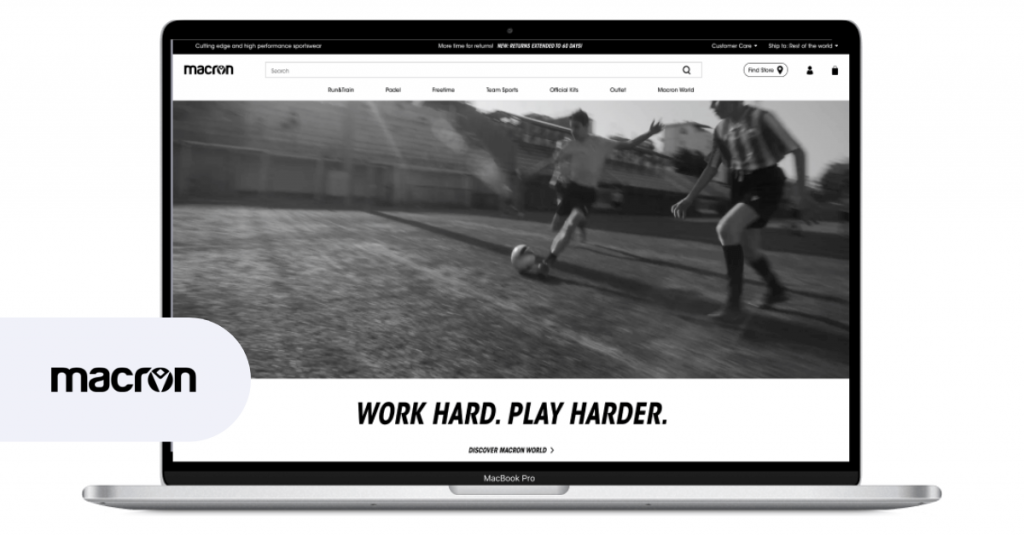
Macron, a top European sportswear brand, runs both B2C and B2B sites with five international store views. Its Adobe Commerce (Magento) platform is a full B2B and B2C solution with customizations and integrations built for a complex, multinational customer base.
Technology
- Platform: Adobe Commerce (Magento) with a Hyvä frontend for flexible B2B and B2C capabilities
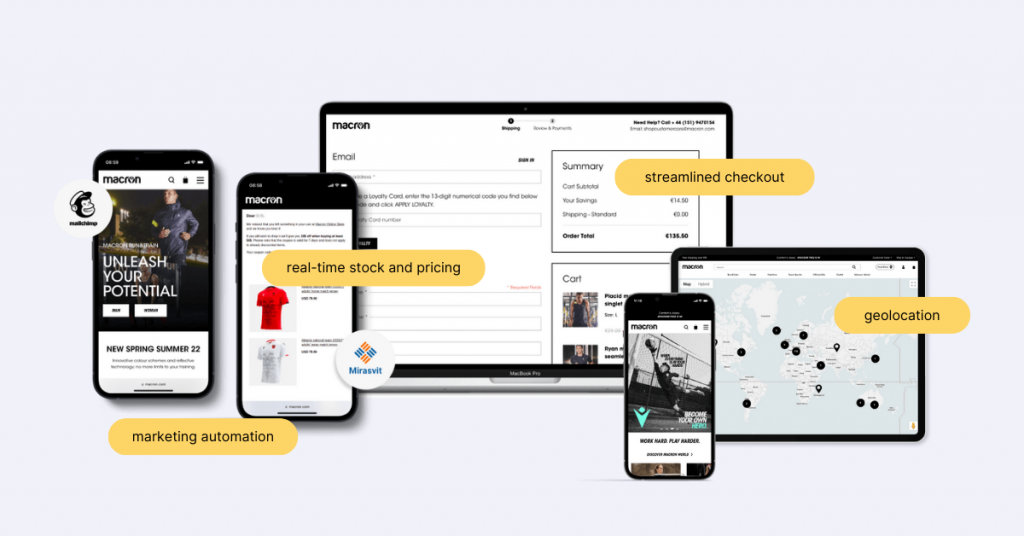
- Integrations: SAP ERP for real-time stock and pricing, Pimcore for centralized product catalog management
- Analytics: Data Studio for reporting, SEO audits, and custom Google Analytics tracking
- Security: Sansec Security Scanning for proactive threat detection
Highlights
- Accurate stock and pricing in tailored product listings improve the experience across segments
- Region-specific content lifts global brand relevance and SEO
- Streamlined checkout with Google Address Autocomplete reduces cart abandonment and improves conversion rates
- Integrated ERP keeps stock updated across warehouses for efficient order management
Approach and results
Macron faced slow performance and limited scalability, and needed a custom, heavy-duty solution for real-time data integration, SEO, and both B2B and B2C demands. Macron turned to scandiweb for a full Adobe Commerce re-platforming focused on performance, UX, and integrations, all vital for the B2B platform that drives 90% of revenue in that segment. A goal-oriented SEO program ran alongside it. The impact:
- 132.5% rise in conversion rates from direct traffic, a 14.1% rise in transactions, and a 29.8% year-over-year revenue increase, with 32.8% more returning visitors
- 44.79% more keywords in top positions and a 65.8% rise in revenue from organic traffic, plus +57% clicks and +60.4% impressions
- 600% rise in mobile conversions from a mobile-friendly redesign and geolocation work
- Order creation time cut by 40%, making new client onboarding more efficient
🚀 Quick takeaway
Macron proves Magento’s B2B strength. Running B2B and B2C from one Adobe Commerce build, with SAP ERP and Pimcore feeding accurate stock and pricing, the B2B side drives 90% of revenue in its segment and direct-traffic conversions rose 132.5%.
9. JYSK Canada’s omnichannel Magento solution
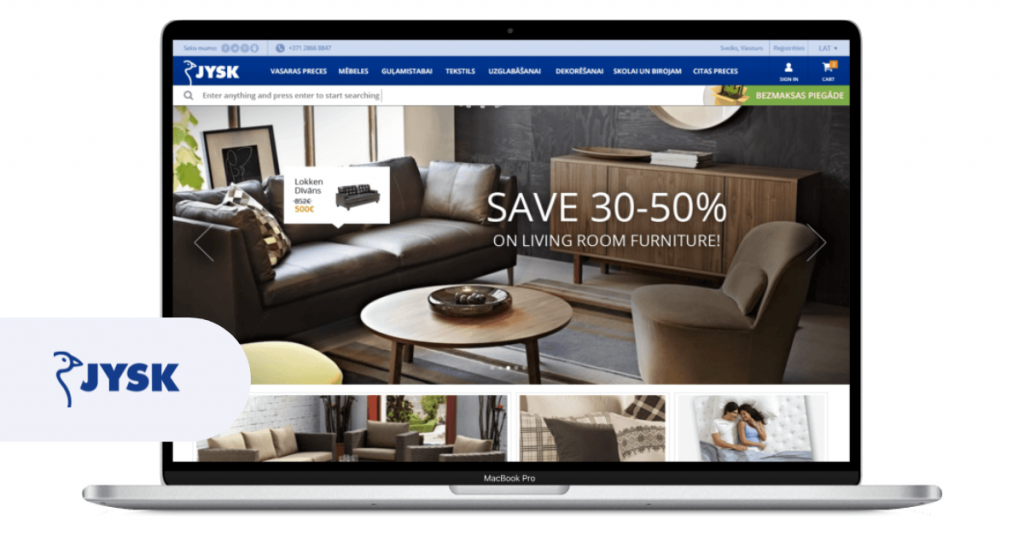
JYSK, a global retailer with more than 3,000 stores worldwide, connects its Canadian online and physical channels through Adobe Commerce for a unified shopping experience.
Technology
- Platform: Adobe Commerce with Navision integration for synchronized inventory and pricing
- Data insights: Google Analytics and heatmaps for data-driven design improvements
- Omnichannel support: store locator, in-store pickup, and call-center integration
Highlights
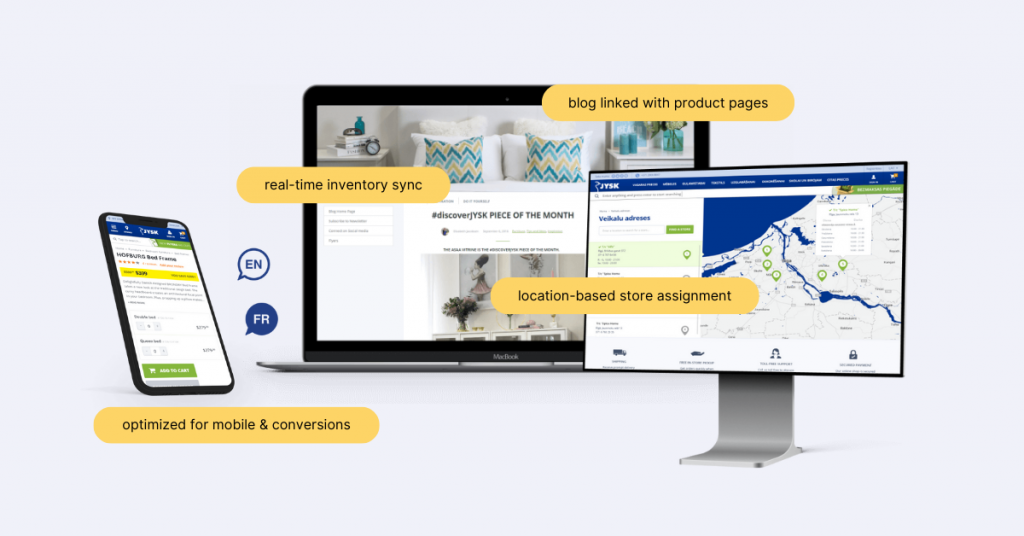
- Real-time inventory sync keeps stock and pricing accurate across online, call centers, and stores, building trust
- The omnichannel setup offers in-store pickup and store assignment, making shopping easy at every touchpoint
- The #discoverJYSK blog links with product pages, blending content and commerce
- The design is optimized for desktop, tablet, and mobile, supporting engagement and conversions across devices
Approach and results
JYSK’s main challenge was consistency and connectivity between digital and in-store shopping. Partnering with scandiweb, JYSK integrated Adobe Commerce with Navision and built a responsive, conversion-driven design based on data. The impact:
- Online revenue rose 12%, reflecting strong integration between digital and in-store
- Mobile conversions increased 600% from a mobile-friendly redesign
- Flexible options like in-store pickup and call-center support lifted conversion rates further
10. Zumiez’s Magento site with stronger performance, security, and speed
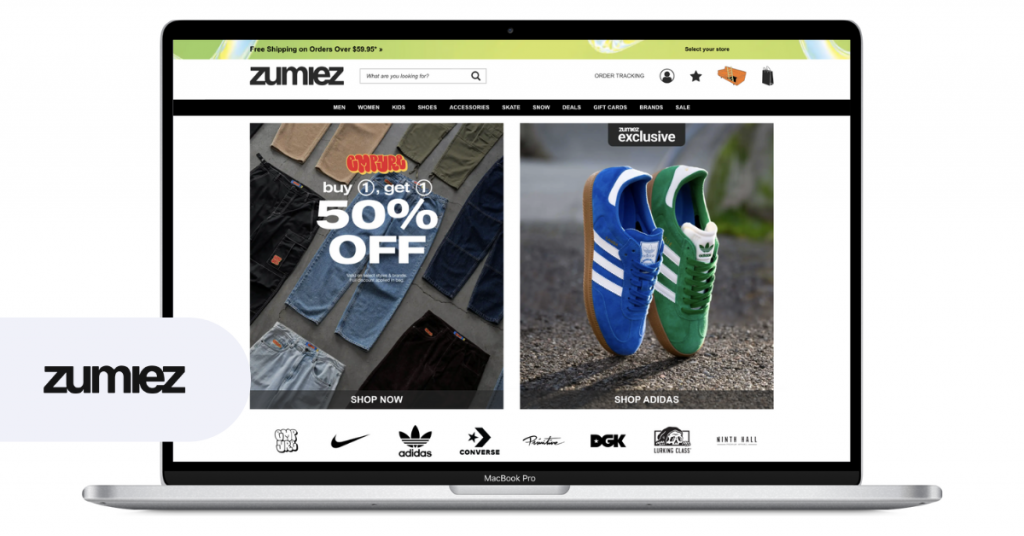
Zumiez, a major action sports retailer across the US, Canada, and Europe, runs a high-performance Magento site tuned for faster speeds, strong security, and a smooth user experience.
Technology
- Platform: Magento, ScandiPWA
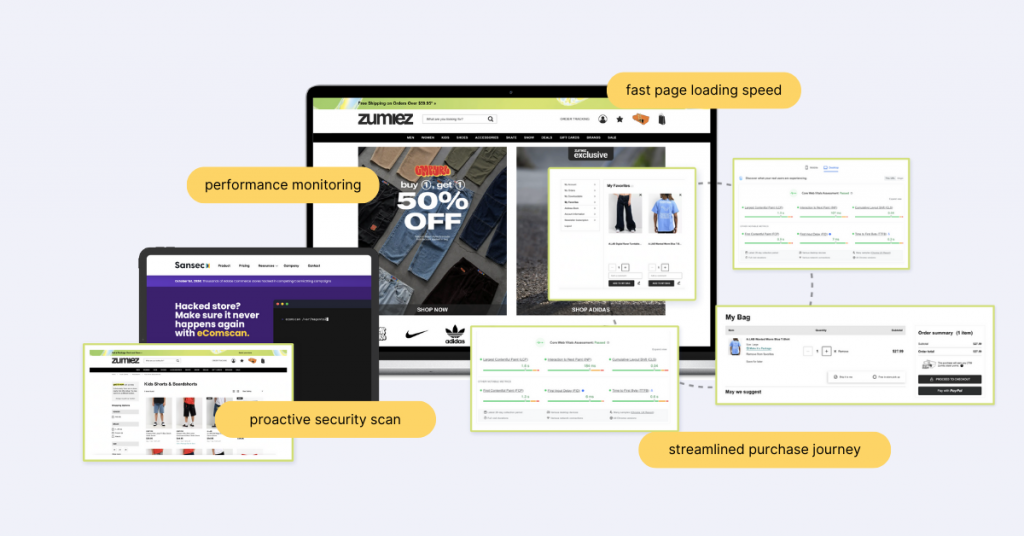
- Performance monitoring: New Relic for transaction auditing and Core Web Vitals tracking
- Security: Sansec Security Scanning to detect and mitigate threats
- Frontend optimization: PWA adjustments and Page Builder work for faster load times
Highlights
- Targeted performance upgrades on menus, brand listings, and product pages cut load times and lift engagement
- Streamlined wishlists, product pages, and cart make browsing quicker
- Sansec Security Scanning detects and resolves threats, keeping the site secure for users and admins
- New Relic monitors GraphQL queries in real time for ongoing optimization and troubleshooting
Approach and results
Zumiez needed to fix performance issues affecting load times and user experience. With scandiweb’s performance optimization approach, Zumiez achieved:
- Faster loading and interaction, with page load speeds up 38.46% and interaction up 65.74%
- A 34% reduction in rendering time on category pages
- Continuous security and performance documentation that keeps the site stable and optimized
Magento themes and retail templates, including free options
Theme choice shapes how fast a Magento store loads and how much custom work the frontend needs. Merchants searching for Magento themes, Magento 2 templates, or free Magento templates have more options now than a year ago, mostly because the standout modern theme became free.
🚀 Quick takeaway
Hyvä became free and open source on November 10, 2025 (v1.4.0), removing the roughly $1,000-per-store license fee. Live Hyvä stores grew from about 2,000 at the open-source announcement to roughly 4,900 to 6,400 by early 2026 (Hyvä theme guides 2026, mgt-commerce, Elogic, Mageplaza). For most merchants it is now the strongest free, modern starting point for a Magento frontend.
A quick way to think about the options:
- Luma, the default Magento theme, is free and ships with the platform. It works for a basic store but is heavier and slower than modern alternatives.
- Hyvä, now free and open source, is built on Tailwind CSS and Alpine.js for lean, fast frontends. It is the theme behind the Läderach, Airthings, and Macron stores above, and the route most new builds take.
- Paid and premium Magento 2 templates from marketplaces give a ready-made design, but often carry the performance weight Hyvä was created to avoid.
Because the Hyvä core is now free, the cost of a modern Magento frontend has shifted from license fees to the development partner you choose. If you are comparing specialists, our roundup of Hyvä theme companies is a useful starting point. scandiweb is a Hyvä Gold Partner, and Hyvä builds here target around a 98 PageSpeed score with roughly 30% faster load times.
Does anyone still use Magento?
Yes. Magento (Adobe Commerce) still powers roughly 130,000 to 163,000 live stores and about 8% of the global eCommerce platform market (BuiltWith trends, Meetanshi Magento statistics 2026). The active store count is smaller than at its peak, but the platform stays a strong fit for merchants with complex catalogs, custom integrations, and B2B requirements that hosted platforms cannot match.
What sites use Magento?
Magento powers stores across sportswear, beauty, luxury, automotive, museums, and home retail. The 10 examples above, including PUMA, Beauty Works, Rockar, Läderach, Airthings, The Met Store, Sportland, Macron, JYSK Canada, and Zumiez, are all real Magento (Adobe Commerce) storefronts. They range from global enterprise brands to specialty retailers, which shows how widely the platform stretches.
Is Magento good for eCommerce?
Magento is a strong choice for merchants who need control over catalog logic, custom integrations, and store architecture. It scales for large catalogs and multi-market operations, and it is a leading B2B platform, with B2B stores reporting average order values around 2.5x higher than B2C (Meetanshi Magento statistics 2026). For very small stores with simple needs, a hosted platform may be a faster fit, which is why a platform comparison is worth doing first.
Key features of the best Magento websites
Across all 10 stores, the same core features keep showing up. The best Magento websites tend to share:
- Clear navigation and organized categories that make shopping smooth
- Fast load times that keep users engaged and reduce bounce rates
- Filtering options that make products easy to find
- Mobile-first design for the growing share of shoppers buying on phones
- Personalization that creates an on-brand experience and encourages repeat purchases
Magento fits brands from small businesses to global enterprises, across beauty, automotive, sportswear, and specialty retail. The best stores look impressive and deliver an engaging, customer-centric experience with strong performance and security. If you are choosing who to build with, our guide to choosing a Magento partner walks through what to look for.
FAQ
Is Magento cheaper than Shopify?
It depends on the build. Magento Open Source has no license fee, and Hyvä is now free too, but you pay for hosting, development, and maintenance. Shopify charges a monthly subscription plus transaction fees but needs less custom engineering. For complex catalogs Magento often costs less over time, while small stores usually run cheaper on Shopify.
Is Magento free?
Magento Open Source is free to download and use, and the Hyvä theme became free and open source in November 2025. You still pay for hosting, development, extensions, and maintenance. Adobe Commerce, the paid enterprise edition, carries a license fee on top of those costs.
How long does it take to build a Magento store?
It varies with complexity. A focused MVP can launch fast, as Sportland did across three markets in 20 days. A full enterprise build with custom integrations, multiple store views, and ERP connections usually takes several months. The catalog size, integrations, and number of markets are the biggest factors.
What makes a Magento website convert well?
The strongest converters share a fast frontend, often Hyvä or a PWA, a checkout reworked around real user data, mobile-first design, and back-office integrations that keep stock and pricing accurate. The Met Store cut abandonment by fixing checkout, and Läderach lifted conversions 47.8% through design and performance work.
Can Magento handle B2B and B2C on one store?
Yes. Magento (Adobe Commerce) supports B2B and B2C from one platform, with separate store views, pricing, and catalogs per segment. Macron runs both models on a single Adobe Commerce build, where the B2B side drives 90% of revenue in that segment.
Which Magento theme should I use?
For most new builds, Hyvä is the strongest starting point now that it is free and open source. It is built for speed and powers the Läderach, Airthings, and Macron stores above. Luma, the default theme, still works for basic stores, but it is heavier and slower than modern alternatives.
About scandiweb
scandiweb is a full-stack agency with certified Magento developers who build high-performance Magento stores that drive growth. From user-friendly design and SEO to integrations and mobile optimization, scandiweb builds solutions tailored to each brand’s goals. Trusted by 600+ eCommerce brands and a Hyvä Gold Partner with 2,100+ projects delivered, scandiweb pairs technical skill with sites that look great and convert.
Want to steal these conversion ideas for your own store? Talk to scandiweb’s design team and level up your storefront.