

We have been thrilled to work with your team and hope to continue long-term – you have been doing fantastic work!
Steve Mayne, Executive Commerce Director
About The New York Times
The New York Times is a global media organization offering editorially driven products – custom books, archival prints, and unique gifts tied to its extensive content archive. Through its eCommerce channel, customers can order personalized items, including birthday front-page books, reprinted articles from over 50,000 issues, framed photography, and printed NYT Cooking recipes. Personalized products are a top-performing category, so ensuring operational clarity and control is just as important as delivering a premium user experience.
Problem
At the NYT scale, standard Shopify patterns would have introduced risky manual workarounds and instability under peak load, making the existing platform a growth constraint.
As personalized products became a larger part of the commerce mix, the existing setup began to strain. What worked at low volume became fragile under peak demand. Black Friday exposed the risk clearly, with higher traffic and order volumes, increased pressure on customer service, and workflows that could not afford to break. It had become a risk scenario that leadership had to actively manage. If these flows had failed during Black Friday, the cost would have resulted in missed peak revenue, customer frustration, operational overload, and reputational risk.
The issues showed up as:
- Personalized products relying on workflows that failed under peak load
- Rising risk of order errors and misconfiguration at scale, especially during promotions
- Customer service agents requiring broad Shopify admin access to resolve routine issues
- High onboarding friction for seasonal agents during peak periods
- Internal teams spending time stabilizing fragile processes instead of driving performance.
Solution
Flexible product architecture
Custom product logic was designed to support deep personalization without SKU explosion or manual intervention. This removed the risk of fragile product configurations failing under volume while allowing editorially complex products to scale safely during peak traffic.
Personalized product workflows
Purpose-built workflows were implemented for custom books and archival prints, enabling customers to select content, framing, and formats directly in the storefront. This way, we eliminated manual handling at the order level and reduced the risk of errors during promotions.

Standalone order management panel
A dedicated order management panel was built for customer service agents, separated from the full Shopify admin, allowing high-volume order handling without exposing sensitive store controls – critical for reducing operational risk.
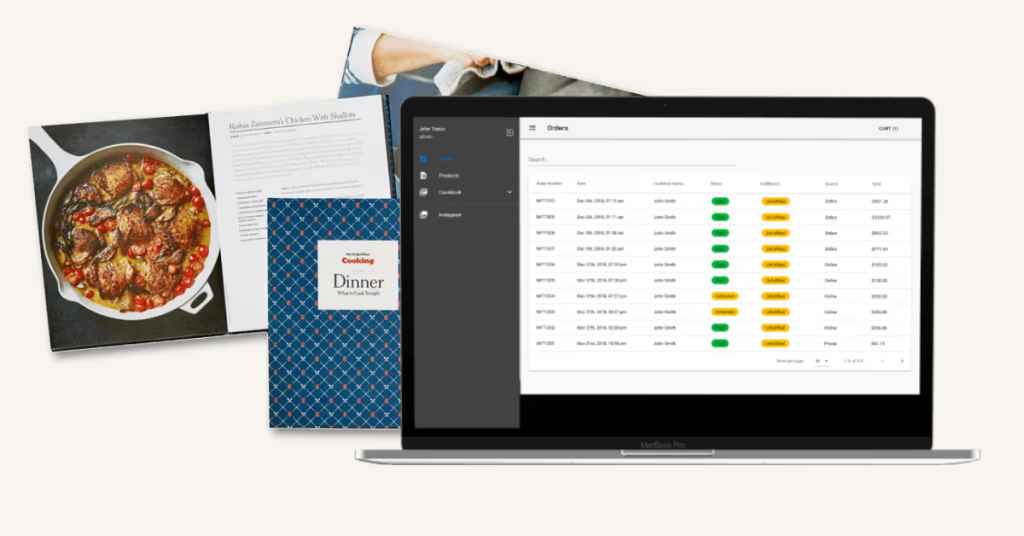
Controlled internal access model
The access model was restructured to support fast onboarding of seasonal agents with limited permissions, reducing dependency on senior staff, lowering the risk of accidental changes in the admin, and allowing the support team to scale safely for Black Friday demand.
Outcome
- Personalized products handled volume spikes without introducing manual bottlenecks.
- Black Friday risk reduced by removing fragile workflows from order handling and customer support.
- Customer service agents could resolve issues quickly without requiring full Shopify admin access.
- Faster onboarding of seasonal agents with controlled permissions during high-volume periods.
- Internal teams moved out of firefighting mode and able to focus on performance and execution.
Dealing with a legacy setup that’s becoming a business risk? We help teams stabilize fragile commerce foundations and get platforms back into a state where growth is possible again. Book a 50-min ROI roadmap session with scandiweb.


Share on: