About Beauty Works
Beauty Works is a UK-based luxury hair extensions brand operating both direct-to-consumer and wholesale channels. The business works with more than 7,000 accredited salons in the UK and over 700 partner salons internationally, alongside a high-volume influencer-driven D2C store. Their eCommerce setup supports B2C and B2B customers, frequent campaign spikes driven by influencers, ERP synchronization, and international payments.
Problem
Beauty Works wanted to expand into new countries quickly, but each rollout was slow and expensive.
Each new market required significant setup work. B2C and B2B were maintained as separate systems, increasing development and support effort. Mobile traffic made up the majority of visits, yet funnel performance under real traffic spikes was inconsistent. Expansion became a series of one-off projects instead of a repeatable process.
The issues showed up as:
- Market launches taking too long to sustain planned expansion pace
- Rising cost and effort for each additional country
- Duplicated development and maintenance across B2C and B2B
- Funnel instability during influencer-driven traffic surges
- Engineering capacity tied up in upkeep rather than expansion
- Growth targets increasing while execution capacity stayed flat.
Solution
Shared B2C and B2B foundation
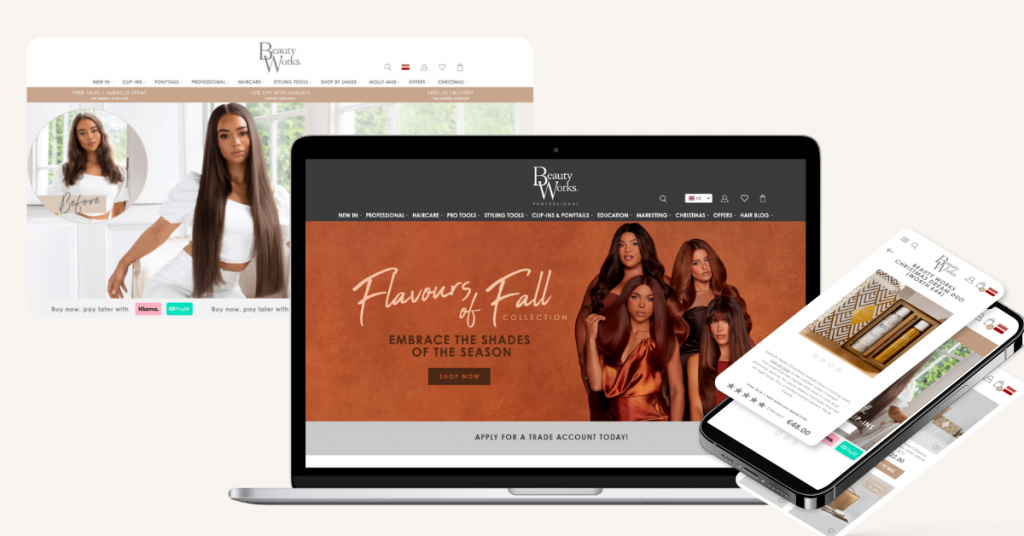
We consolidated B2C and B2B onto a shared technical base. Instead of rebuilding the wholesale store separately, the existing B2C storefront was duplicated to create the B2B site using the same codebase. This allowed one team to manage both channels without parallel development and release cycles.
B2B-specific requirements were added on top of the shared base, including logged-in pricing visibility, customer-specific pricing, store credit, event-based logic, and ERP synchronization.
Execution sequencing focused on expansion speed
Work was sequenced to remove the main causes of slow rollouts. We deprioritized cosmetic changes and isolated feature requests and focused on eliminating what made each launch expensive:
- duplicated development work
- fragile mobile performance under peak traffic
- country-specific implementations that could not be reused.
Only changes that reduced rollout time or operating cost were addressed first.
Mobile-first funnel stabilization
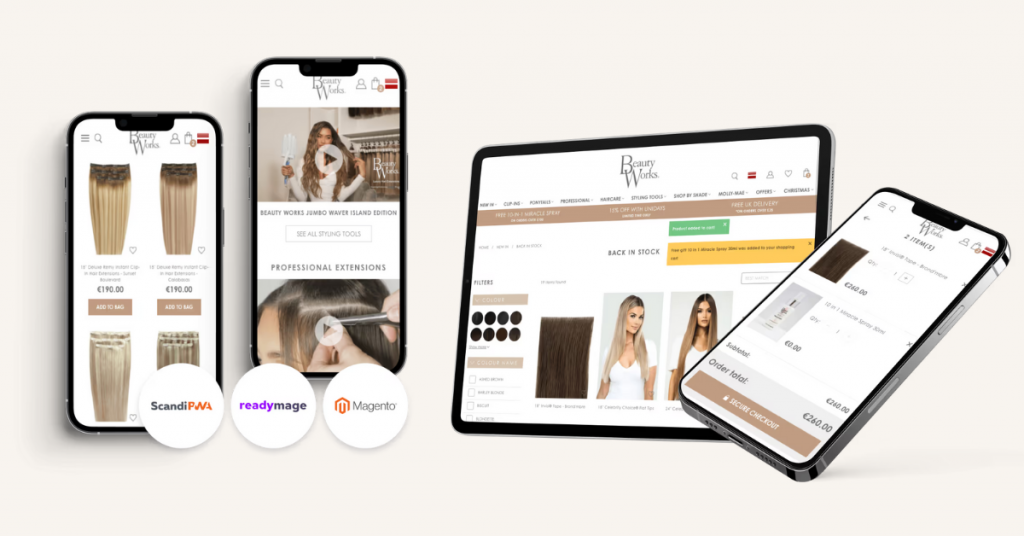
With 96% of traffic coming from mobile devices, we migrated from Magento 1 to Magento (Adobe Commerce) with ScandiPWA. The PWA frontend improved performance and stability under real-world conditions, including poor network coverage and sudden traffic spikes from influencer campaigns.
Repeatable international rollout model
A centralized cross-border setup was implemented to handle international pricing, payments, taxes, and localized checkout logic in one place. This removed the need to rework the funnel for each new country and turned market expansion into a standardized setup rather than a custom build every time.

Outcome
- Expansion speed increased without adding operational overhead.
- B2C and B2B consolidated under one shared codebase.
- Development and maintenance effort reduced through reuse.
- Mobile funnel stabilized under influencer-driven demand.
- International launches shifted from projects to a repeatable process.
- Measured impact after stabilization:
- 4x faster market launches, enabling expansion into a new country roughly every three months
- +32% YoY revenue growth post-migration
- +41% sessions after launch
- +13% users after launch
- +121% organic search sessions post-relaunch.

Growth slowing while costs keep rising? We help teams identify what’s blocking scale, reduce wasted effort, and restore efficient growth. Book a 50-min ROI roadmap session with scandiweb.


Share on: