4.9
Akeneo PIM implementation for large, multi-market catalogs
scandiweb has implemented Akeneo PIM since 2017 on storefronts including Adobe Commerce and Shopify, using a connector we built ourselves and maintain.


Trusted by 700+ leading brands worldwide


Trusted by 700+ leading brands worldwide
Akeneo PIM services, in numbers


When an Akeneo PIM implementation pays for itself
Akeneo earns its licence fee at the point where product data stops being a content task and becomes an operations problem. Most teams cross that line without noticing, because no single quarter makes the case on its own. The symptom is usually a launch that slips for reasons nobody can name.

Catalogs that outgrew spreadsheets
A spreadsheet holds a few thousand SKUs. At tens of thousands, with variants and regional pricing, nobody can say what is ready to publish.
Product data arriving in every format
Each supplier sends a different structure and its own naming. Someone reformats all of it by hand, every time a range is refreshed.
Several teams editing one catalog
When several people enrich the same product at once and no field has an owner, the last save wins and nobody notices which change was lost.
What an Akeneo PIM implementation includes
The install is the quick part of an Akeneo PIM implementation. The attribute model underneath it is where projects stall. Every import that follows inherits how you structured families and variants, and what you decided counts as a complete product.

Catalog and attribute modelling
We map families and variants against how you actually sell, so the structure still holds when you add a category or a new market later.

Supplier and ERP data import
One import profile per source, with rules that categorize new products and fill default values without anyone reformatting a supplier file.

Enrichment workflows and completeness
We assign every field an owner and set completeness rules that decide what is publishable. Anyone can see which products are ready to go.

Translations and locales
Because each locale has its own view of the catalog, translators see only what is missing and a market launch stops waiting on one spreadsheet.

Storefront and channel sync
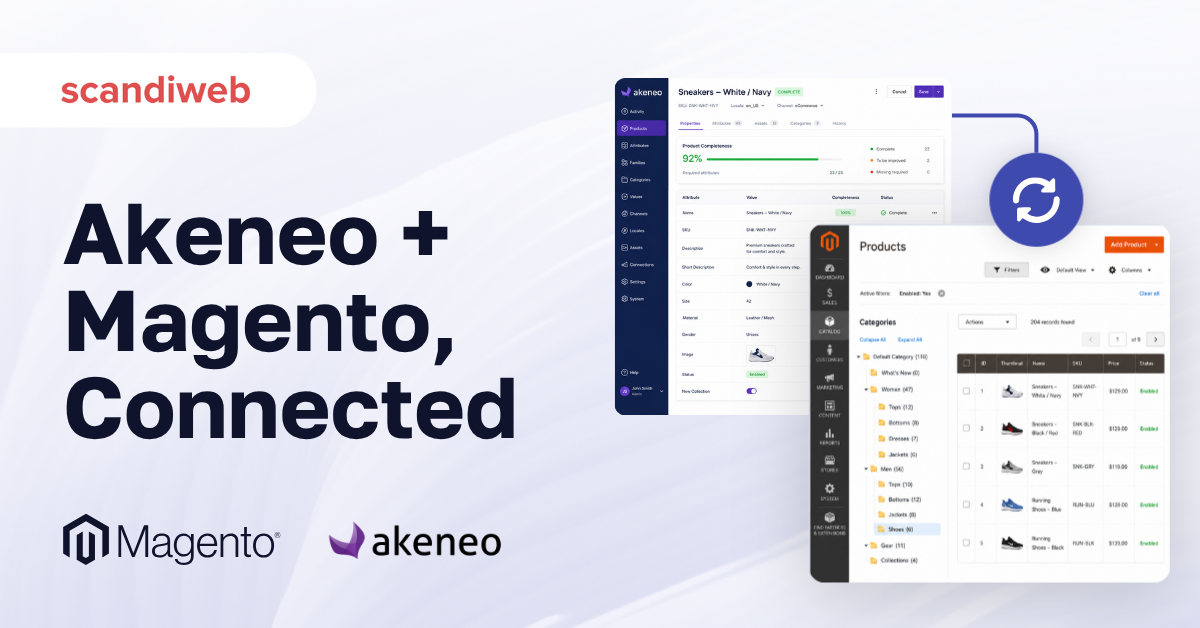
Akeneo becomes your source of record and pushes to the storefront on a set schedule, and for Adobe Commerce we use our own connector.

Go-live and handover
Documentation your staff can train new joiners on, plus a first production sync that we monitor together with your in-house team.
Get your Akeneo project scoped
.png)
The Akeneo connector we built and maintain
Most Akeneo to Adobe Commerce projects use a marketplace module, and most of those modules stop at products and categories.
We wrote our own connector because clients kept hitting the same gaps. It synchronizes URLs with automatic redirects, so search rankings survive a re-slug. Images and category trees come across with the products, and bulk updates apply without a manual re-export. Attributes stay manageable across multiple store views, which is where multi-market catalogs usually break.
Why brands pick scandiweb for Akeneo

Top 3 in the world for Akeneo PIM
Our Akeneo PIM implementation placed in the top 3 at the 2020 APS Akeneo Summit, judged against more than 50 agencies worldwide, on a live enterprise catalog.

40+ PIM projects across 15 verticals
We have built product information management systems since 2016, across B2B and B2C catalogs, so the data problems your project hits are familiar ones.

Akeneo Solution Partner Award winner
Akeneo gave scandiweb its Solution Partner Award in 2020, which the vendor judges on delivery quality across live client implementations worldwide.

894+ Adobe certifications on staff
Akeneo is only half the project. The storefront side comes from the world's most certified Adobe Commerce team, so one team owns both ends of the sync.

Independently certified delivery
Because a PIM holds your entire product catalog, enterprise procurement asks, and scandiweb holds ISO 9001, ISO 27001, and ISO 27017 certification.

One Delivery Manager, start to finish
One accountable contact keeps the Akeneo and storefront teams aligned to your KPIs, so you spend less time re-explaining context and more time reviewing software.
How we deliver an Akeneo PIM implementation
Your incoming data decides the timeline more than your catalog size does. A 20,000-SKU catalog arriving clean from one ERP is a faster Akeneo implementation than an 8,000-SKU catalog arriving from nine suppliers in nine different formats.

Discovery workshop

A working session on your catalog structure and where product information originates before it reaches the storefront. You leave with an Akeneo implementation concept and a scoped plan.

Scope and estimate
You get a written scope, a timeline, and a fixed number before any build starts. If discovery turns up data problems that change the estimate, you hear it then.

Attribute model and build
We configure families, attributes, locales, and channels first, then build the import profiles and the storefront sync on top of a structure that has been agreed.

Sprint demos on your real data
Every week or two you see working software using your actual product data, with a written sprint report showing where the project sits against the roadmap.

Go-live and handover
We pick a launch window with the least traffic, monitor the first production syncs, and hand over documentation your team uses to train new joiners.
.png)
What our clients say

.webp)






.png)


Frequently asked questions about Akeneo PIM implementation
How much does an Akeneo PIM implementation cost?
Two costs sit side by side. Akeneo's own licence starts around $45,000 a year for the paid editions, set by Akeneo against your catalog size and channel count. Implementation is quoted separately and depends on how many source systems feed the catalog and how much data cleanup is needed first. You get a fixed scope and a number before any build starts.
What companies use Akeneo PIM?
Akeneo is used across retail and manufacturing by companies managing large, multi-language catalogs. Among our own projects, Technodom manages more than 60,000 active products and 15,000 attributes on Akeneo PIM Enterprise across 34 store views, and applied price changes to 15,000 products at once during Black Friday.
How long does an Akeneo PIM implementation take?
A standard project on a catalog under 50,000 SKUs takes 6 to 10 weeks from kickoff to the first production sync. Larger catalogs and multi-region setups add 4 to 12 weeks. What changes the date is usually the state of the incoming supplier and ERP data, which is why discovery comes before the estimate.
Is scandiweb an official Akeneo PIM partner?
Yes. scandiweb is an official Akeneo solution partner and has built on Akeneo since 2017. Partner status gives the team direct access to Akeneo's support and roadmap, which matters when an enterprise catalog raises a question the public documentation does not cover.
Is Akeneo open source?
In part. Akeneo PIM Community Edition is free and open source, and it is a reasonable starting point for a smaller catalog. It leaves out the workflow and asset-management features most teams need once several people are enriching products at once. The Growth and Enterprise editions are paid and hosted by Akeneo.
What are Akeneo's main competitors?
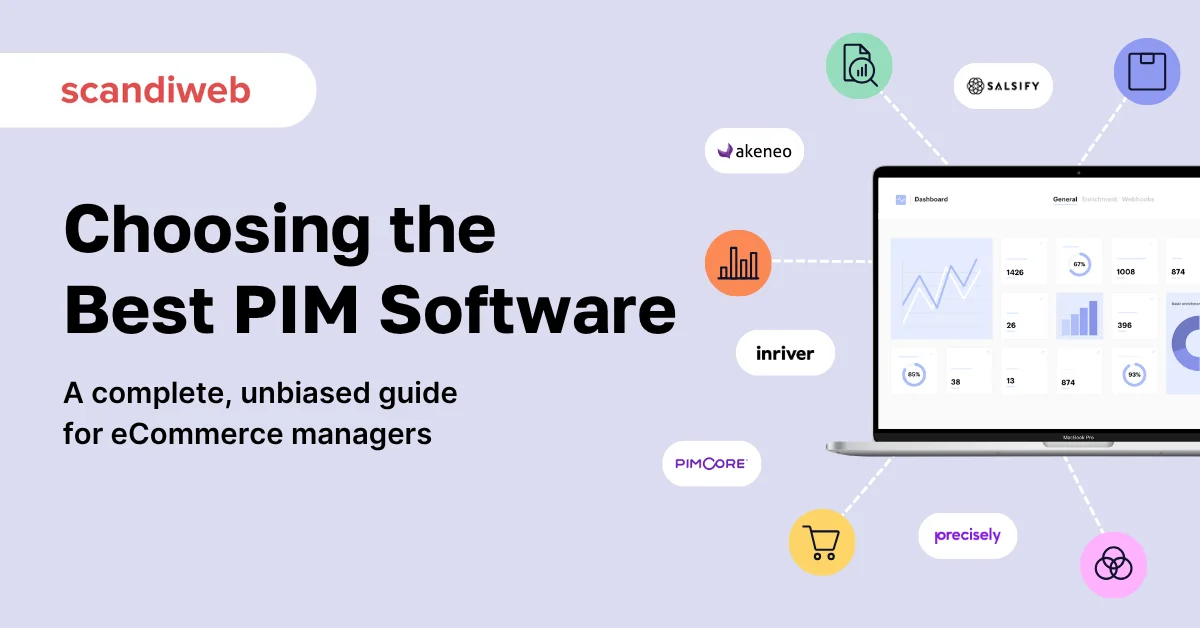
Pimcore and inRiver are the two it meets most often, with Salsify and Plytix at different ends of the market. Akeneo tends to win on ease of use and multi-language support. Pimcore wins where you need deep customization and built-in asset management. We work across these platforms, so the recommendation is open until we see your catalog. Our PIM software guide compares them properly.
Which platforms can Akeneo connect to?
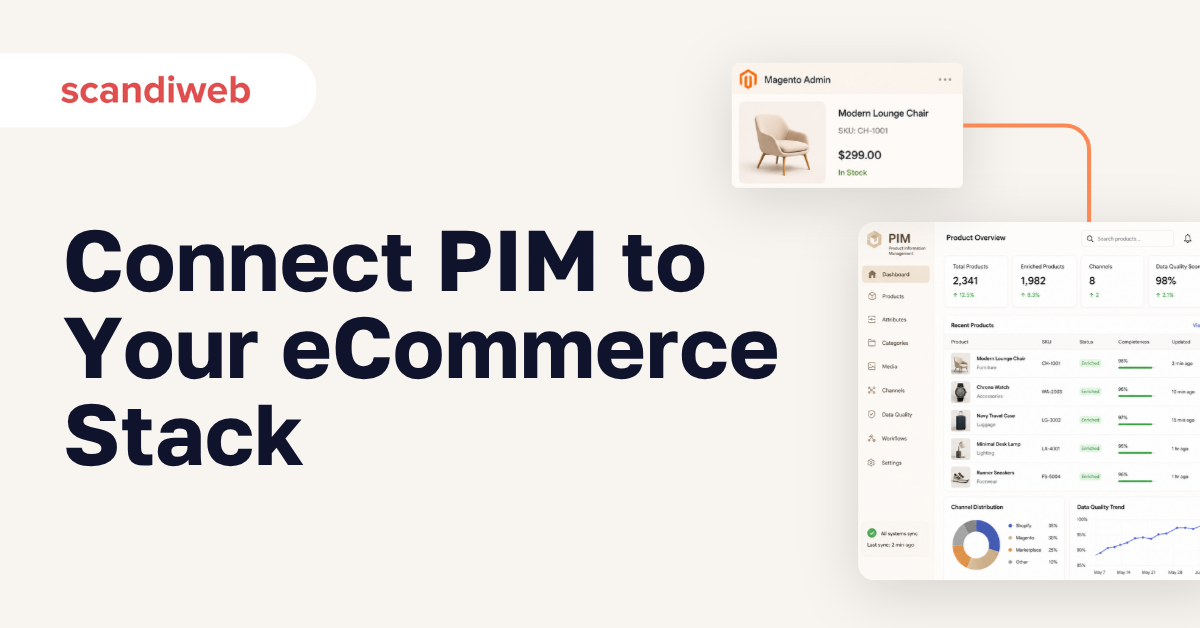
Akeneo connects to any storefront with an API, most often Adobe Commerce and Shopify among our projects. For Adobe Commerce we use our own connector, which we maintain ourselves. If your catalog also needs to reach an ERP or a marketplace, our Magento integration services cover the wider data flow.
Who does the work, and how is the project managed?
One Delivery Manager owns the project, joining at the discovery workshop and staying through handover. The build team pairs Akeneo specialists with Adobe-certified storefront developers, so nothing waits on a handoff between agencies. You see a sprint demo every week or two, using your real product data from the first sprint.

Get your Akeneo PIM implementation scoped
Tell us what your catalog looks like today and where the product data comes from. We come back with a scope and a fixed number. If Akeneo turns out to be the wrong fit for your catalog, we will say so.

Prefer to talk now? Book a call straight away, or email us at: [email protected]
More resources
Practical guides from the team that builds these systems.

Related services
Ready for your Akeneo PIM implementation? Let's start with your catalog.
Whether you are comparing PIM platforms or already have Akeneo licensed and waiting, start with a conversation.