4.9
Magento multistore for multi-brand, multi-market commerce
Run every brand, B2B and B2C site, language, and currency from one Adobe Commerce backend, with shared catalog, one admin, and per-store control. Built by the most Adobe-certified Magento team in the world.
Trusted by 700+ leading brands worldwide


Trusted by 700+ leading brands worldwide
How Magento multistore works
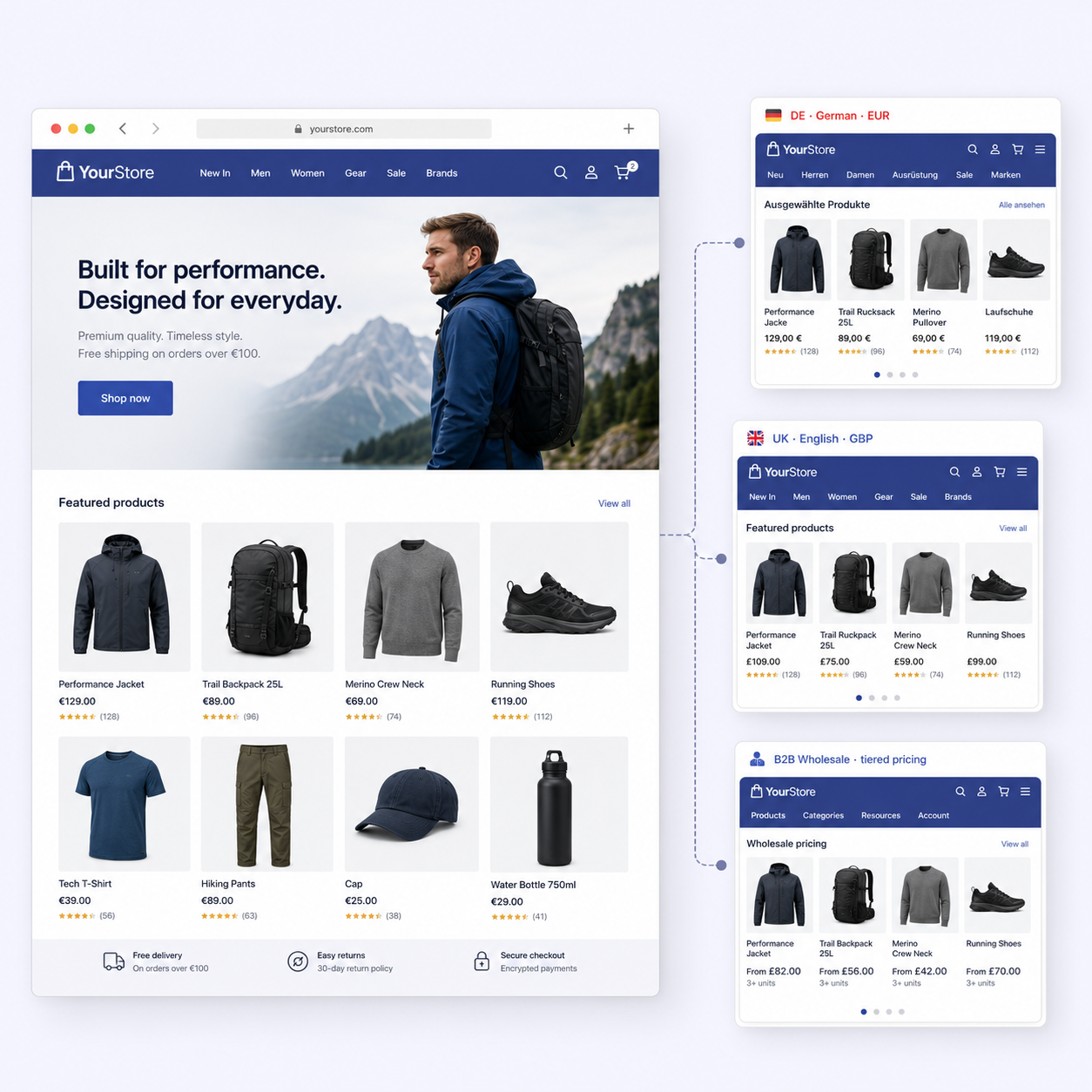
Magento multistore runs many storefronts on one installation. A single backend and admin serve any number of brands and markets, each storefront keeping its own theme, pricing, language, currency, and tax rules while drawing on a shared catalog and customer base. The hierarchy runs website, then store, then store view, so storefronts scale without new installations.
Teams usually move to multistore because of what separate installations cost them. Every upgrade, security patch, and integration has to be repeated per site, and the catalog data in each one slowly stops matching the others. One backend keeps that work in a single place while still letting each market look, price, and read the way it should. If you are still weighing the platform itself, our guide to Magento and Adobe Commerce covers what it is and who it suits.
The structure you set on day one decides whether the next store is a configuration step or a rework of the estate. That early structural work is exactly what scandiweb's 894+ Adobe-certified specialists do, as part of our wider Magento services.
One backend, many storefronts: the architecture
Magento organizes a multistore estate in three nested levels, and the level where you set a rule decides how widely it applies.

Websites
The top level. Each website carries its own currency, customer accounts, and root scope, so a brand or region can run on its own commercial terms.

Stores
Sit under a website and set the catalog root. This is where you decide which products and categories a market sees, all drawn from the one shared catalog.

Store views
The customer-facing layer for language and presentation. One store can carry many views, which is how a single market serves several languages without a separate install.
Built for multi-brand, multi-market, and B2B plus B2C

Multi-brand portfolios
Run several brands from one backend, each with its own look and domain, while sharing fulfillment and one team to maintain it all. to find gaps.

Multi-market expansion
Launch into new countries on store views that handle local language, currency, tax, and shipping, without standing up and patching a fresh install per market.

B2B and B2C together
Serve wholesale buyers and retail customers from one platform, with separate catalogs and account logic per audience, on one shared backend.

Multi-language, multi-currency
Present every market in its own language and currency from a shared catalog, so localization is configuration work per store view.
What a multistore project includes
A multistore project is mostly architecture decisions made early, then executed cleanly. The work that protects your budget is the part done before any storefront goes live: how the store hierarchy is mapped, how the shared catalog is scoped, and how SEO is handled across markets. Get those right and adding the next brand or market becomes a configuration step.
Multi-market results we have delivered
Verified results from live multi-brand and multi-market builds.
.svg)
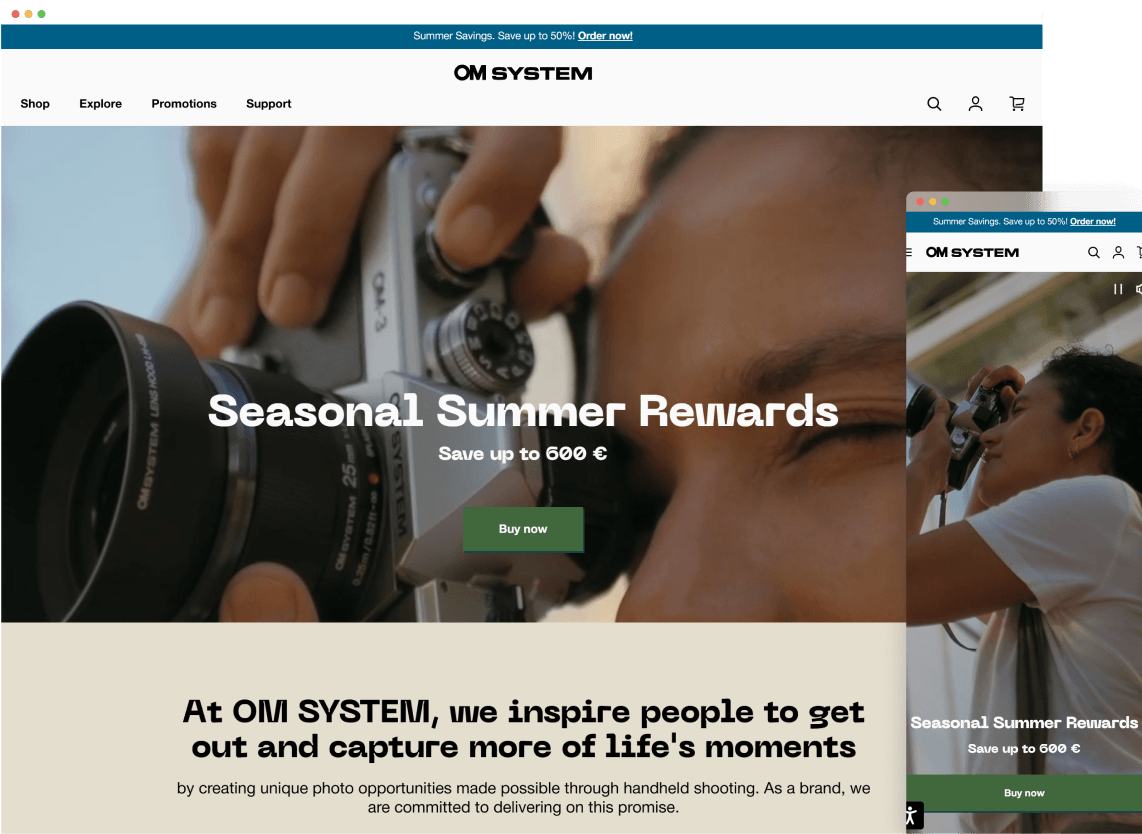
A single CMS brought in to govern a multilingual Adobe Commerce estate
70
Store views under one CMS
20
Languages supported
5 months
Design sign-off to go-live
Learn more
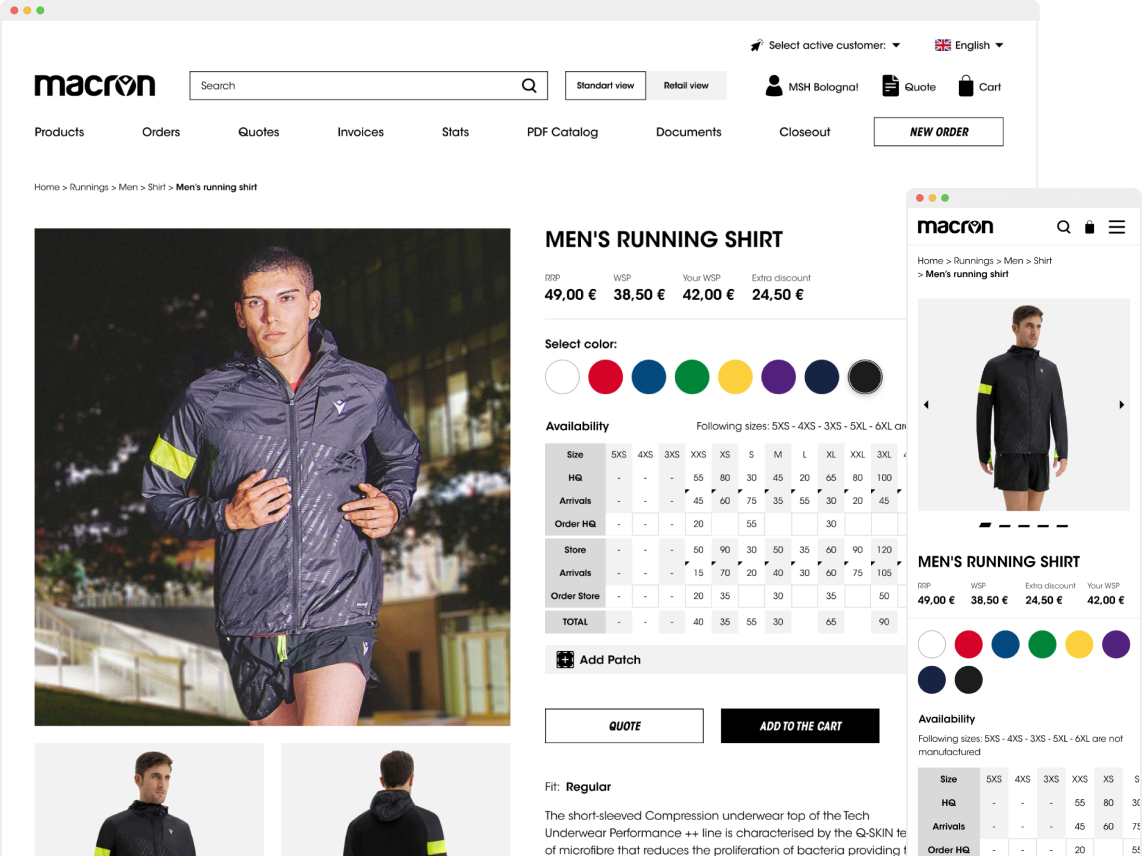

A B2B platform rebuilt on Adobe Commerce for buyers in 150+ countries
+132.5%
Conversion rate, direct traffic
+29.8%
Revenue YoY
-40%
Order creation time
Learn more
See what a governed multistore estate looks like for your brands
OM System runs 70 store views in 20 languages, with content governed from one CMS. Book a call to scope your own estate.

Why scandiweb for Magento multistore
700+
Clients served worldwide
2,100+
Projects delivered
894+
Adobe certifications

.svg)

Is Magento multistore right for you?
This is for you if

Not the right fit if

Frequently asked questions about Magento multistore
What is a Magento multistore setup?

Magento multistore lets you run multiple stores, brands, and markets from a single Magento or Adobe Commerce backend. One codebase and one admin power many storefronts, each with its own theme, pricing, language, currency, and tax rules, while sharing the catalog. The hierarchy runs website, store, store view, so storefronts scale without new installations.
Does Magento multistore hurt SEO across markets?
No, when it is built correctly. Each store view gets its own URLs, hreflang, canonical tags, and sitemaps, so markets do not compete or trigger duplicate content. We architected PUMA's cross-border setup to grow organic revenue 62% year over year across four markets. Clean multistore SEO comes down to configuration discipline.
Can I run B2B and B2C on the same Magento backend?
Yes. Magento and Adobe Commerce support B2B and B2C from one backend, with separate store views, pricing, catalogs, and account logic for each audience. We rebuilt Macron's B2B platform on Adobe Commerce for buyers in 150+ countries, lifting conversion rate from direct traffic 132.5%. One backend can serve wholesale and retail without separate systems.
Who should manage a Magento multistore setup?
Multistore work belongs with an enterprise Magento or Adobe Commerce specialist team. It touches catalog architecture, store hierarchy, localization, tax, and SEO at once, so getting it right the first time saves costly rework. scandiweb holds 894+ Adobe certifications, with named multi-market builds across fashion, sporting goods, and electronics.
How many stores can one Magento backend run?
A single Magento or Adobe Commerce installation can run many websites, stores, and store views, in practice dozens. Sports Group Denmark runs 20+ brands on one Magento framework, and OM System's estate spans 70 store views in 20 languages. The real limit is architecture and governance, which matters far more than the count.
Does one backend for many stores raise maintenance cost?
Done properly, it lowers it. One codebase means one upgrade, one security patch, and one set of integrations across every store, where separate installations repeat that work per site. Sports Group Denmark runs 20+ brands on one Magento framework. Multistore lowers the per-store cost of maintenance as you add brands and markets.
Is Magento multistore better than separate installations?
For most multi-brand or multi-market merchants, yes. Separate installations multiply upgrades, patches, integrations, and team effort per site. Multistore consolidates all of that into one backend while keeping per-store theming, pricing, and localization. Separate installs only make sense when stores must be fully isolated for legal or ownership reasons.
How long does a Magento multistore project take?
It depends on store count, catalog complexity, and localization scope. A focused multi-store rollout launches in months: OM System reached go-live within five months of design sign-off, and Sports Group Denmark launched its first three stores in seven months. We scope the timeline against your store count and integrations in the first call.

Scope your Magento multistore project
Run every brand and market from one Magento backend. Book a scoping call and we will map your store count and integrations into a clear plan.

Prefer to talk first? Book a call straight away or email us at: [email protected]
More on multistore
Guides for teams running Magento across brands and markets.




Related Magento services
Let's build something great together
Planning a new store, expanding to global markets, or looking to adopt latest technology? Reach out to us, and let's make it happen.