
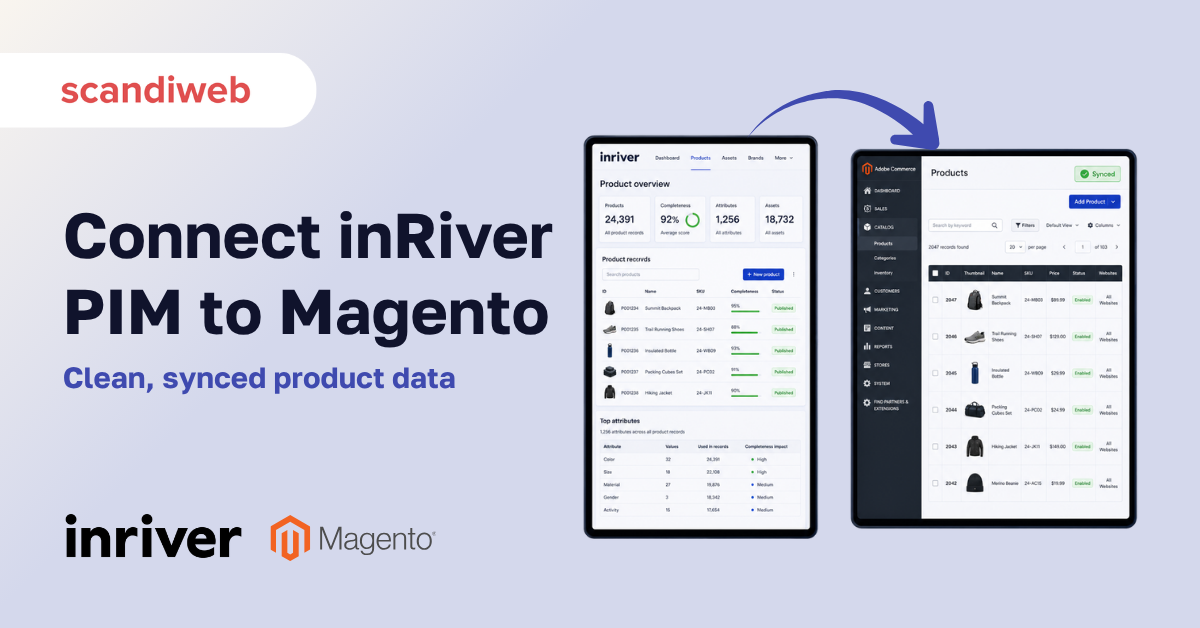
A few years ago, connecting inRiver to Magento meant writing a custom integration: someone had to build the importer, map the fields, and maintain the sync by hand. That is no longer true. inRiver now ships an official Adobe Commerce adapter, so the question has shifted from “how do we build the connection?” to “is inRiver the right PIM for our Magento store, and how do we wire it in cleanly?”
This guide answers both. It covers what inRiver does, why a PIM matters for a Magento catalog, how the integration actually works today, and how inRiver compares to the other PIMs Magento merchants weigh up.
Overview
- inRiver is an enterprise product information management (PIM) system that centralizes product data and syndicates it to channels, including Magento (Adobe Commerce).
- Connecting it to Magento no longer requires custom code: inRiver provides an official Adobe Commerce adapter that pushes enriched product content into the store.
- inRiver fits brands that syndicate to many channels. For Magento-only catalogs, a lighter PIM may be enough, so the choice is about scope, not just features.
🚀 Quick takeaway
The integration question is largely solved. inRiver’s official Magento adapter handles the sync, so the real decision is whether inRiver’s enterprise, multi-channel strengths match your catalog, or whether a simpler PIM would do the same job for less.
What is inRiver PIM?
inRiver is a cloud product information management platform. It gives a brand one place to store, enrich, and govern product data: descriptions, attributes, images, relationships, and channel-specific variations. Instead of product information living in spreadsheets and scattered across systems, the PIM becomes the single source of truth that every sales channel pulls from.
PIM is a category, not a single product, and inRiver is one option in it. If you are still deciding whether you need a PIM at all, or which one, our guide on how to choose a PIM covers the wider selection, and Akeneo for Magento walks through the main alternative. This article focuses specifically on inRiver and Magento.
Why connect a PIM to Magento?
Magento manages product data well enough for a single store, but it was not built to be the master of product information across many channels. As a catalog grows and spreads to marketplaces, social, and print, the same product ends up described differently in each place, and quality slips. A PIM fixes that at the source.
The payoff shows up in three ways merchants care about. Enriched, consistent product content lifts conversion, because shoppers buy what they understand. It shortens time-to-market, because launching a product across channels becomes one enrichment workflow instead of many manual ones. And it reduces returns, because accurate descriptions and specs set correct expectations before the order, not after.
🚀 Quick takeaway
A PIM is not a Magento feature, it is the layer above it. Magento sells the products. The PIM makes sure the product data is clean, consistent, and ready before it ever reaches the store.
How inRiver connects to Magento in 2026
This is where the article’s original premise has changed. inRiver provides an official adapter for Adobe Commerce that bulk-imports enriched product content from the PIM into the Magento store, so the integration is a supported product rather than a one-off build.
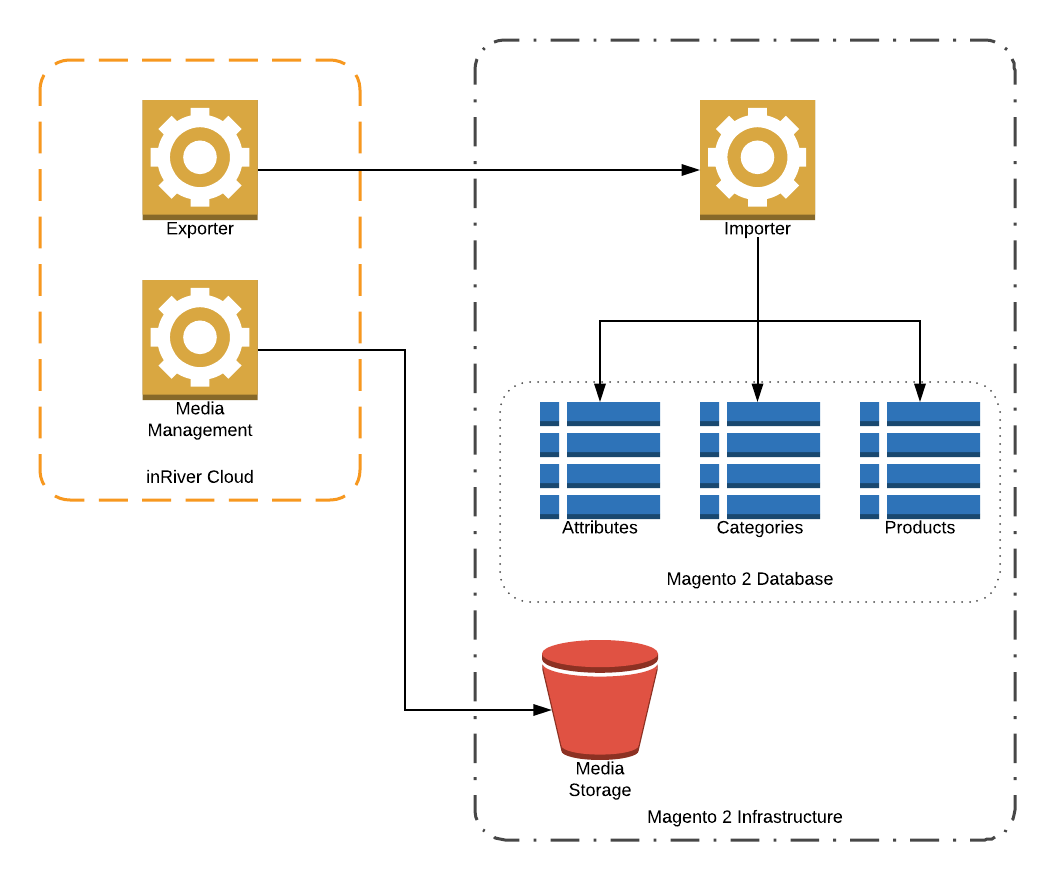
The data flow is deliberately one-directional. Product information is mastered and enriched in inRiver, then pushed into Magento, which stays the commerce engine for pricing, inventory, and checkout. Keeping the flow one way avoids the conflicts that happen when two systems both think they own the same field.
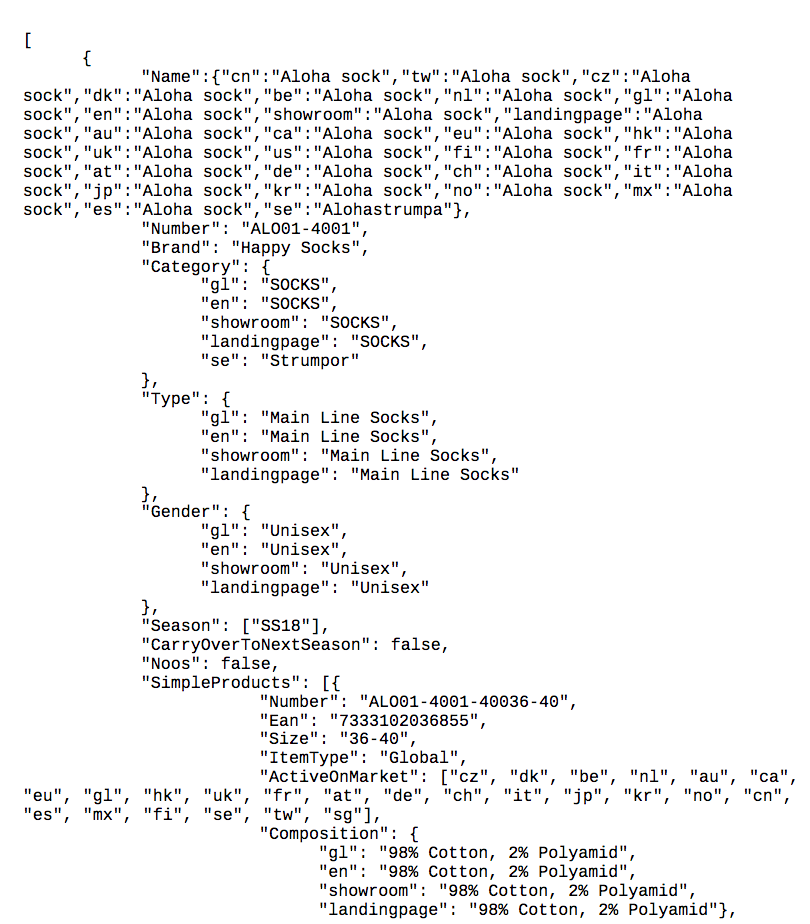
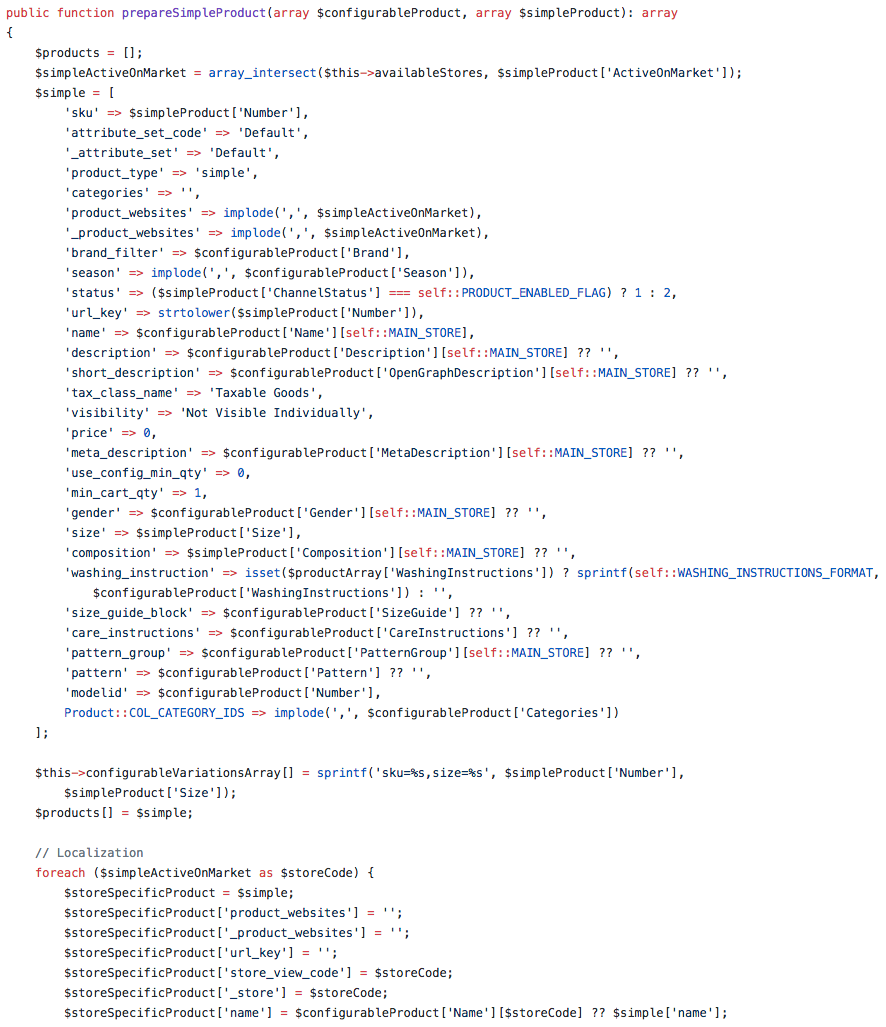
Where custom work still helps is mapping: deciding which inRiver fields populate which Magento attributes, how variants and relationships translate, and how often the sync runs. That mapping is the part worth getting right with a developer, because it is where a clean catalog is either preserved or quietly mangled.
🚀 Quick takeaway
Master product data in inRiver, push it one way into Magento, and keep Magento as the commerce engine. The official adapter handles the transport. The field mapping is the part that rewards careful setup.
inRiver vs other Magento PIMs
inRiver is not the only PIM Magento merchants consider. The three names that come up most are inRiver, Akeneo, and Pimcore, and they pull in different directions.
| PIM | Strength | Best fit |
|---|---|---|
| inRiver | Syndication to many channels, enterprise governance | Brands distributing the same catalog across many channels |
| Akeneo | Data enrichment and content quality, strong usability | Teams whose priority is cleaner, richer product content |
| Pimcore | Open-source PIM combined with DAM, MDM, and CMS | Stores wanting one open platform across data and content |
The honest read: inRiver earns its place when syndication breadth and enterprise governance are the problem. If your catalog lives mostly on Magento and the goal is better content quality, a PIM focused on enrichment may be the better-value choice. A dedicated PIM selection guide weighs them side by side in more detail.
🚀 Quick takeaway
There is no single best PIM, only the best fit. inRiver for broad syndication, Akeneo for content quality, Pimcore for an open all-in-one. Match the tool to where your product data actually hurts.
When inRiver is the right choice
inRiver makes sense when you are an enterprise or scaling brand selling the same products across many channels, you need governed workflows and approval steps over product data, and product information is genuinely slowing your launches or driving returns. If you are a single-store Magento merchant with a modest catalog, the enterprise weight of inRiver may be more than you need, and that is a legitimate reason to look at a lighter PIM.
How scandiweb approaches PIM and Magento
scandiweb has delivered over 2,100 eCommerce projects since 2003, many of them on Adobe Commerce, and product data is one of the most common places we find a store leaking conversion and time. Our approach starts with the catalog, not the tool: what product data you have, where it breaks, and which channels need it. Only then does the PIM choice follow, whether that is inRiver, Akeneo, Pimcore, or no new PIM at all. When inRiver is the right fit, our Magento support team handles the adapter setup and the field mapping so the Magento catalog comes out clean.
🚀 Quick takeaway
Pick the PIM from the problem, not the other way around. Map your channels and your product-data gaps first, and inRiver becomes an obvious yes or a clear no, rather than a guess.
Frequently asked questions
What is inRiver PIM?
inRiver is a cloud product information management platform that centralizes a brand’s product data, descriptions, attributes, images, and relationships, and syndicates it to sales channels. It acts as the single source of truth for product content, so every channel, including Magento, pulls consistent information.
Does inRiver integrate with Magento?
Yes. inRiver provides an official adapter for Adobe Commerce (Magento) that bulk-imports enriched product content from the PIM into the store. The integration is a supported product, so it no longer requires a fully custom build, though field mapping between inRiver and Magento attributes is still worth setting up with a developer.
Is inRiver better than Akeneo for Magento?
It depends on the goal. inRiver is stronger for syndicating one catalog across many channels with enterprise governance. Akeneo is often preferred for data enrichment, content quality, and usability. For a Magento store whose main need is cleaner content rather than broad syndication, Akeneo may be the better-value fit.
What is the ROI of a PIM for Magento?
A PIM pays back by lifting conversion through clearer product content, shortening time-to-market by turning multi-channel launches into one enrichment workflow, and reducing returns by setting accurate expectations before purchase. The size of the return scales with how many channels you sell on and how messy your product data is today.
Do I need a PIM if I only sell on Magento?
Not always. Magento manages product data adequately for a single store with a modest catalog. A PIM earns its cost once you syndicate to multiple channels, manage a large or complex catalog, or find product-data inconsistencies slowing launches and driving returns.
Not sure whether inRiver, another PIM, or none is right for your store? Map your product-data setup with us and we will show you where your catalog breaks, which channels need it, and the cleanest way to connect a PIM to Magento.