4.9
Adobe Commerce as a Cloud Service implementation
Builds, migrations, integrations, and support on Adobe's SaaS commerce platform. Delivered by an Adobe Gold Solutions Partner with the world's #1 most certified Adobe Commerce team.


Trusted by 700+ leading brands worldwide


Trusted by 700+ leading brands worldwide
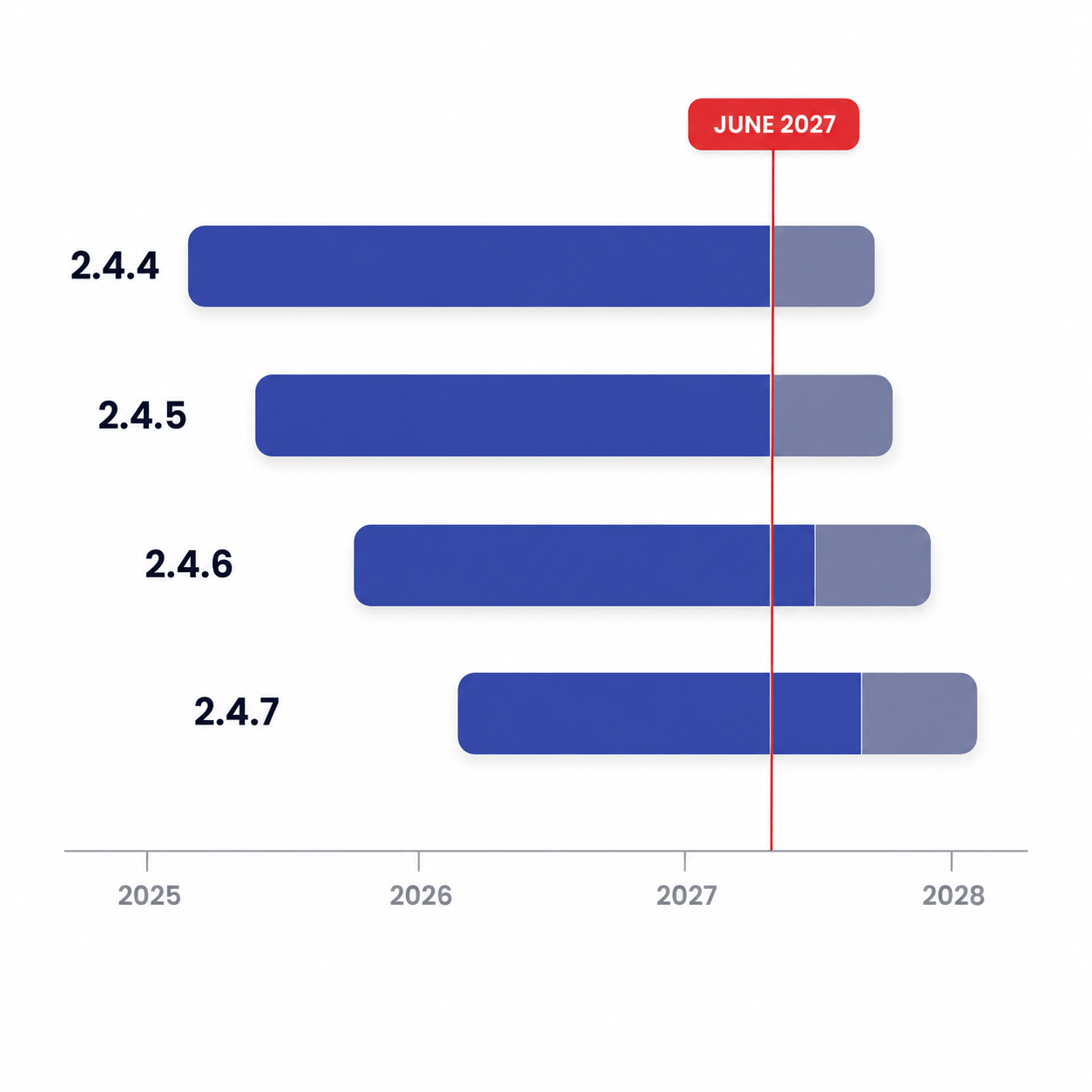
When is the right time to migrate to Adobe Commerce as a Cloud Service (ACCS)?
Your version sets the outer limit. Adobe Commerce 2.4.4 and 2.4.5 lose every tier of support on 31 May 2027, and from the next day Adobe stops maintaining Cloud environments on unsupported versions. 2.4.6 has until 31 August 2027, and 2.4.7 until 31 May 2028, so most stores still have a planning window.
Some stores are better upgrading in place, and our Magento upgrade services team covers that.
Adobe Commerce Cloud vs Adobe Commerce as a Cloud Service
On Cloud (PaaS)
Cloud Service (SaaS)
%202.svg)
Is Adobe Commerce as a Cloud Service right for you?
A good fit if

Not a fit yet if

What you get from migrating to ACCS
You are trading a rebuild you pay for once against maintenance you pay for every year. Book a free consultation and we will put real numbers on both sides for your store.
After the migration

Version projects and patch windows stop being line items in your roadmap, and skipped upgrades stop accumulating cost.
Adobe scales the platform for Black Friday traffic, so nobody on your side is sizing servers before the season.
Rebuilt as API contracts on App Builder, they are usually tidier than the in-application code they replace.
Pages are served from the edge, which is where the Core Web Vitals improvement on ACCS actually comes from.
What we do on Adobe Commerce as a Cloud Service
On Adobe Commerce as a Cloud Service, Adobe owns the platform and you still own everything built around it. That surrounding layer is where scandiweb works, before launch and long after it.

New builds on ACCS
Everything between an empty ACCS instance and your first live storefront, delivered by a team that has already done it on Adobe.

Migration onto ACCS
Your store rebuilt on ACCS from Adobe Commerce on Cloud or on-premise, with your data and your search rankings intact at launch.

Integrations on App Builder
We rewrite back-office connections such as ERP and OMS as API contracts on App Builder, then test the payloads against your real order volumes.

Storefront on Edge Delivery
Edge Delivery Services replaces your existing theme, and the performance numbers that matter come from your own product and category pages.

Support and development
When Adobe releases a new hook or drop-in, someone is already watching for it, and your App Builder code keeps pace without a new project.

SEO and analytics
Because ACCS has no URL rewrite tooling, redirects are planned before the build, by the team behind our Adobe Commerce development.
Find out what your ACCS project would involve
Adobe projects our ACCS team has delivered
An ACCS build asks the same things of an agency that these projects did. Our team delivered all three on Adobe Commerce, for merchants whose stores are as complex as yours.
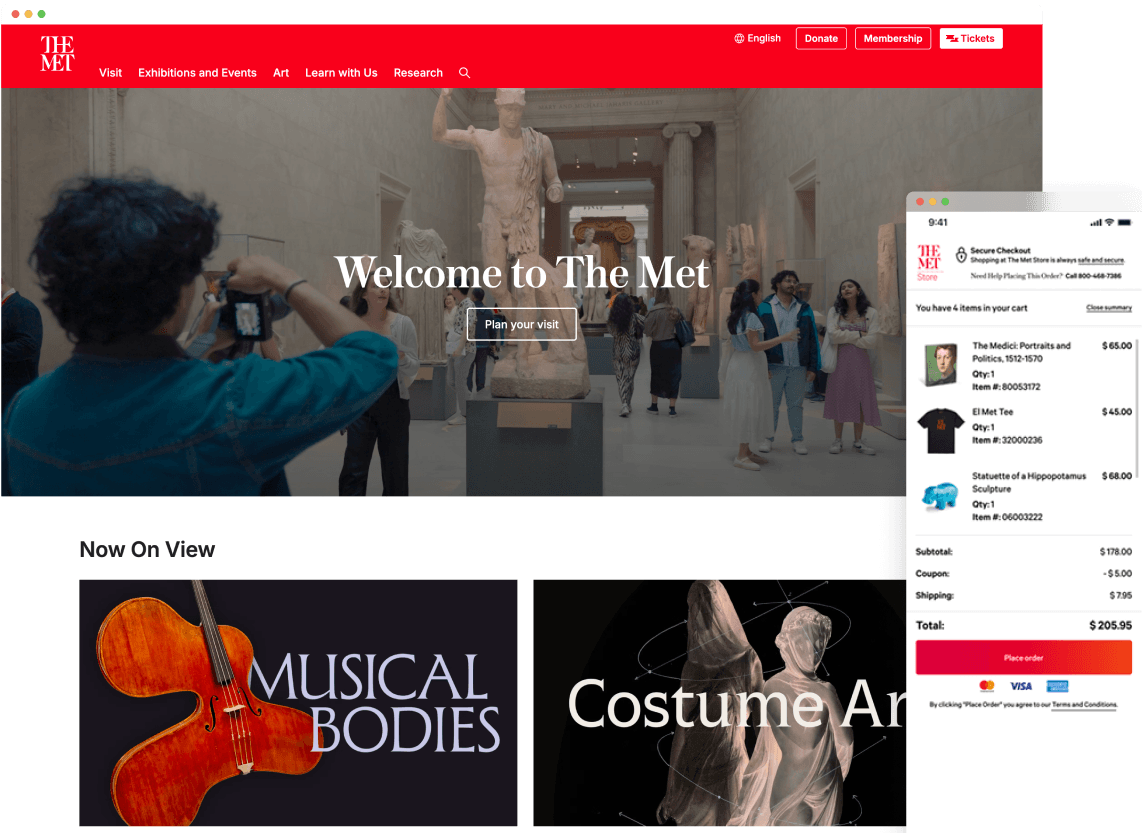

From CSV files to real-time ERP integration
scandiweb built The Met Store's ERP integration layer on Adobe App Builder, replacing CSV file exchange with API-based data flows to Dynamics 365 Finance & Operations. Stock levels and order status stay current across both systems without file handling, and failed exchanges recover on their own.
CSV → API
Data exchange rebuilt
8
Integration flows automated
Real-time
Inventory and order status sync
Learn more


60k products on a headless Adobe storefront
scandiweb rebuilt Technodom's storefront headless on an Adobe Commerce backend, migrating 60,000 products, 15,000 attributes and 4,000 categories. A custom redirect app served millions of legacy URLs at launch, so the catalog kept its rankings through the replatform.
<200ms
Product page load time
+20%
Organic traffic
+11%
Conversion rate
Learn more
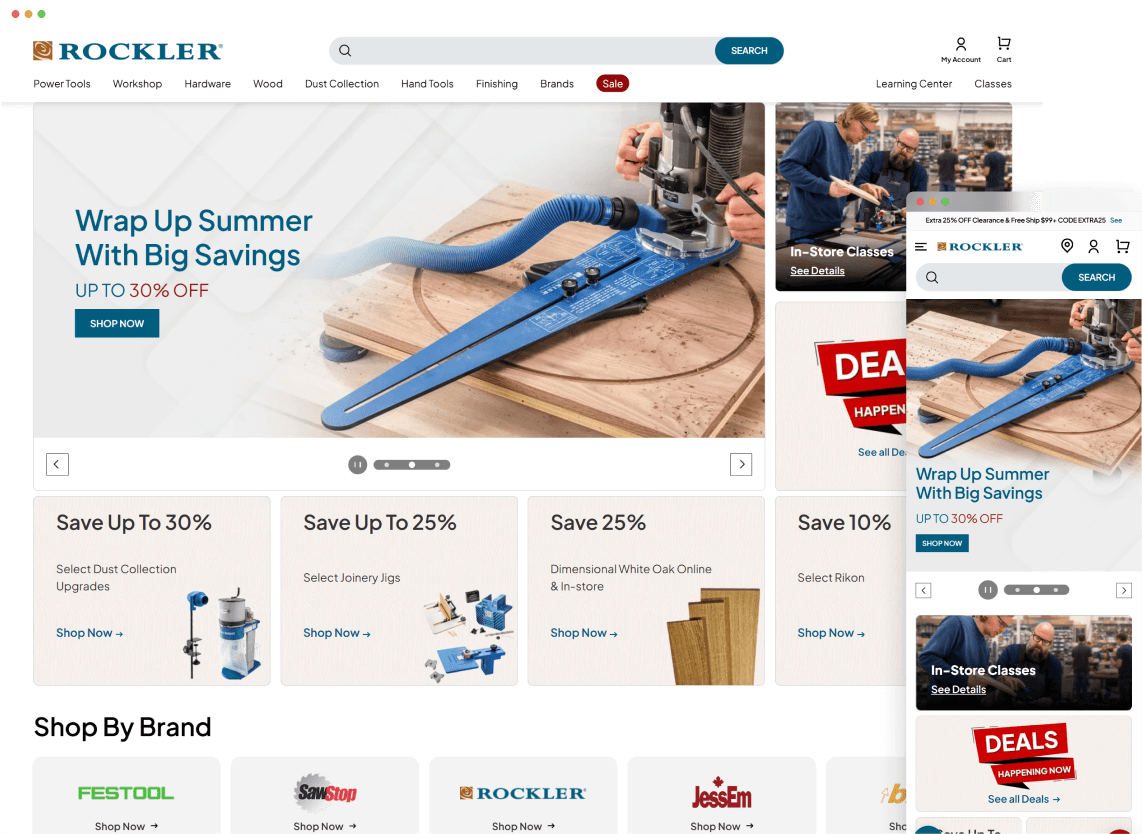

Every customization rebuilt on a headless frontend
scandiweb rebuilt Rockler's Adobe Commerce storefront on a headless frontend alongside their ERP replacement with Microsoft Dynamics 365. Every existing extension was reassessed and reworked for the new frontend before launch, and organic rankings improved across the catalog after go-live.
+33,932
Keywords with improved rankings
5,522
Keywords in the top 10
1,117
Keywords in the top 3
Learn more
How an Adobe Commerce as a Cloud Service project works
After the consultation, the work is broken into stages you approve one at a time. Each has its own scope and cost before it starts, so you can adjust the plan or stop without unwinding what is already built.

The free consultation

Book a call with an Adobe-certified architect who delivers ACCS work. You describe your current Adobe Commerce store and what you want to fix, and you get a straight read on what ACCS would change for you.

Scope and proposal
The parts you want first are sized separately, so a phased plan is as available as a single project. Nothing is invoiced until you have agreed that scope in writing.

Architecture signed off
The target design is agreed before anyone writes code. Adobe supports a predefined list of webhooks and events, so if your logic has no hook on that list, you find out at this stage.

Build, phase by phase
Each phase closes with your sign-off before the next one opens, and every build happens in an Adobe sandbox against your real catalog. Your live store is untouched until launch.

Go-live
Your customers start using the new store on a date and time you approve. We rehearse the launch beforehand, and where there is an existing store it stays online until you confirm everything works.

Support and monitoring
For the first quarter we watch your rankings and page speed weekly, and fix anything that drops. After that you continue on a support retainer, with the same team that built it and a named delivery lead.

.png)
The Adobe credentials behind your ACCS project
The engineers and consultants on your project are certified by Adobe at Professional and Expert level across Adobe Commerce and Adobe Analytics, renewed on Adobe's two-year cycle. Our team also attends Adobe's own technical programs, including the Adobe Commerce Advanced Technical Bootcamp and the partner workshops that cover new releases before general availability.
Every badge shown here is issued by Adobe or independently audited, and the certificates are available on request.
Why enterprises choose scandiweb for ACCS

#1 most certified Adobe Commerce team
894+ Adobe certifications across a 600+ person team, more than any other agency in the world, so your architecture is reviewed by people who have already built on Adobe.

Adobe Gold Solutions Partner
Adobe partner since 2009 and a Magento Association Gold Member. Our engineers built App Builder integrations on live stores before ACCS made them the only option.

Every discipline on one team
Strategy, UX, development, and analytics specialists work on the same project, so both the ACCS decision and the build behind it are properly informed.

One dedicated account manager
The same account manager stays with you from the first call onward. Nobody on your side re-explains the setup to a new face every quarter, and escalations have one address.

Clear sprints and clear billing
Because every sprint is planned and invoiced against agreed scope, you see exactly what each one delivered before you approve the next. Budgets stay predictable.

ISO 9001, 27001, 27017, PCI DSS compliant
Certified to ISO 9001, ISO 27001, and ISO 27017, and compliant with PCI DSS, scandiweb delivers every project that handles customer or payment data under those controls.
What our Adobe clients say

.webp)







The team behind your Adobe Commerce SaaS decision



Not sure whether ACCS fits, or when to migrate? Ask our experts.
A free call with one of our Adobe architects, who will tell you which way to go, including staying where you are.

Frequently asked questions about Adobe Commerce as a Cloud Service
What is Adobe Commerce as a Cloud Service?
Adobe Commerce as a Cloud Service is Adobe's multi-tenant SaaS edition of Adobe Commerce, generally available since June 2025. Adobe owns the application and upgrades it continuously. Your customizations live outside it, reached through APIs and App Builder, and the storefront is rebuilt on Edge Delivery Services.
How long does an Adobe Commerce SaaS migration take?
The storefront sets the timeline more than the platform does. Because ACCS is headless, the Edge Delivery Services rebuild is a second project inside the migration, and a lightly customized store gets through it faster than a heavily overridden one. Book a free consultation and we will put a realistic range on your project.
What are the SKU limits on ACCS?
Adobe's contractual product description entitles you to up to 250,000 SKUs. Adobe's launch blog for the platform quotes up to 250 million SKUs in a single instance, and several agency pages repeat that number. Check which figure appears in your own order form before you plan a catalog around it.
Will migrating to ACCS cost me organic traffic?
It does not have to, and this is the part we plan first. ACCS has no URL rewrite tooling, and an Edge Delivery Services rebuild changes your URL structures and hreflang at the same time, so every redirect is mapped and signed off before the build begins. The same SEO team behind our website migration servicesowns it through go-live.
Adobe Commerce SaaS vs PaaS: what is the difference?
The difference is who owns the application. Adobe Commerce on Cloud is single-tenant PaaS: Adobe hosts the servers, and your team still owns the upgrade cycle and the in-application PHP. On Adobe Commerce SaaS the application is Adobe's. PHP is not supported inside it, so every customization is out-of-process, meaning it happens outside the application.
Will my Magento extensions work on ACCS?
Not directly. Adobe Commerce as a Cloud Service supports no PHP inside the application, so a Magento extension cannot be installed the way it is on PaaS. Some vendors already publish App Builder equivalents, and everything else has to be rebuilt or dropped. The fit review sorts your specific list before you commit.
When does my Adobe Commerce version lose support?
Each release has its own dates. 2.4.4 and 2.4.5 reach the end of security-only support on 31 May 2027, 2.4.6 on 31 May 2028, and 2.4.7 leaves extended support on 31 May 2028. Worth separating from the platform question: Adobe has published no end-of-life for Adobe Commerce on Cloud itself, so the deadline applies to your version while the product keeps its roadmap.
What happens after we go live on ACCS?
Adobe patches and upgrades the platform, so there is no version maintenance left for your team. What stays with you is the App Builder code and the Edge Delivery storefront. scandiweb keeps both under support, and we monitor the ACCS release notes for the hooks your build is waiting on.

Book a free consultation with an ACCS expert
Send us your catalog size and the storefront you are on today. An Adobe-certified architect reads your setup and comes back within one business day with a time and an agenda.
Prefer to talk now? Book a call straight away, or email us at: [email protected]

%20(1).png)

Considering Adobe Commerce as a Cloud Service? Let's talk it through.
Whether you are early in the evaluation or already have a date from Adobe, the review starts the same way.