Wondering whether the Magento 2 Certified Solution Specialist exam still exists? Confused about why search results mention both a Solution Specialist badge and an Adobe Commerce Business Practitioner credential? Not sure how many questions the test has, what passing score you need, or which topics actually show up? Asking whether the certificate proves you are a Magento expert or just that you know the basics? This guide answers all of it, drawing on first-hand exam experience and the current Adobe certification structure.
I sat the Solution Specialist exam as part of an early Magento certification cohort, gave feedback on the question pool, and watched the program evolve into what Adobe runs today. Below is what the exam covers, how the format changed, and the study approach that worked.
🚀 Quick takeaway
The Magento 2 Solution Specialist certification has been rebranded to the Adobe Commerce Business Practitioner credential. It now runs as two tracks: Professional (exam AD0-E712) and Expert (exam AD0-E708). The legacy AD0-E700 exam has been retired. Both current exams have 50 questions and roughly 1 hour 40 minutes to complete.
Overview
- The Magento 2 Certified Solution Specialist is now the Adobe Commerce Business Practitioner credential, administered through Adobe Experience League.
- There are two tracks: Professional (AD0-E712, 50 questions, ~1h40m, 60% passing score) and Expert (AD0-E708, 50 questions, ~1h40m, 62% passing score).
- The exam validates business and configuration knowledge of Magento, not coding ability, so it suits consultants, project managers, and merchant-side roles.
What is the Adobe Commerce Business Practitioner certification?
The Adobe Commerce Business Practitioner certification is the current version of what used to be called the Magento 2 Certified Solution Specialist. It confirms that you can align business goals with Magento (Adobe Commerce) functionality, configure native features correctly, and avoid unnecessary customization. Adobe administers it through Experience League.
In Adobe’s own framing, a Solution Specialist is an expert user of the platform who draws on a business and eCommerce background to optimize native features. IronPlane describes the same exam content as covering Magento architecture, eCommerce best practices, and user and admin functionality (IronPlane). My honest read after taking it: the badge proves you know the platform well, but passing one multiple-choice exam does not by itself make someone an expert. The certificate is a recognized professional qualification, and a useful signal to merchants and agencies, but it sits alongside real project experience rather than replacing it.
🚀 Quick takeaway
The certification is a business and functional credential, not a developer exam. It is worth holding if you scope Magento projects, advise merchants, or run platform decisions. If you are weighing whether the platform itself is still a safe bet, our take on whether Magento is dying covers the market reality.
Why do you need a Magento certification?
A Magento certification is a recognized proof point that you understand the platform’s native capabilities and can apply them to business problems. For agencies it signals capability to merchants, for individuals it validates platform knowledge, and for merchant teams it sharpens the questions they ask when scoping work. For the bigger picture on Magento certifications and why they matter, start here.
That said, the exam deliberately stays at the business and configuration level. It does not go deep on the areas that real Magento work lives in every day, and those gaps are worth naming.
- Customization. Magento is rarely used exactly as it ships. Knowing when to reuse a native feature versus build something custom, how to handle repeated content blocks across product pages, and how data flows through PIM, ERP, and CRM integrations matters far more in practice than the exam tests for.
- Project management and workflow. Anyone working with Magento usually runs several projects a year and needs to scope budgets, choose a delivery model, and pick the right process, whether Agile, Scrum, Kanban, or a more structured approach.
These are simple ideas, but they separate someone who can answer a multiple-choice question about product types from someone who can run a build. The certificate is a solid foundation, not the finish line.
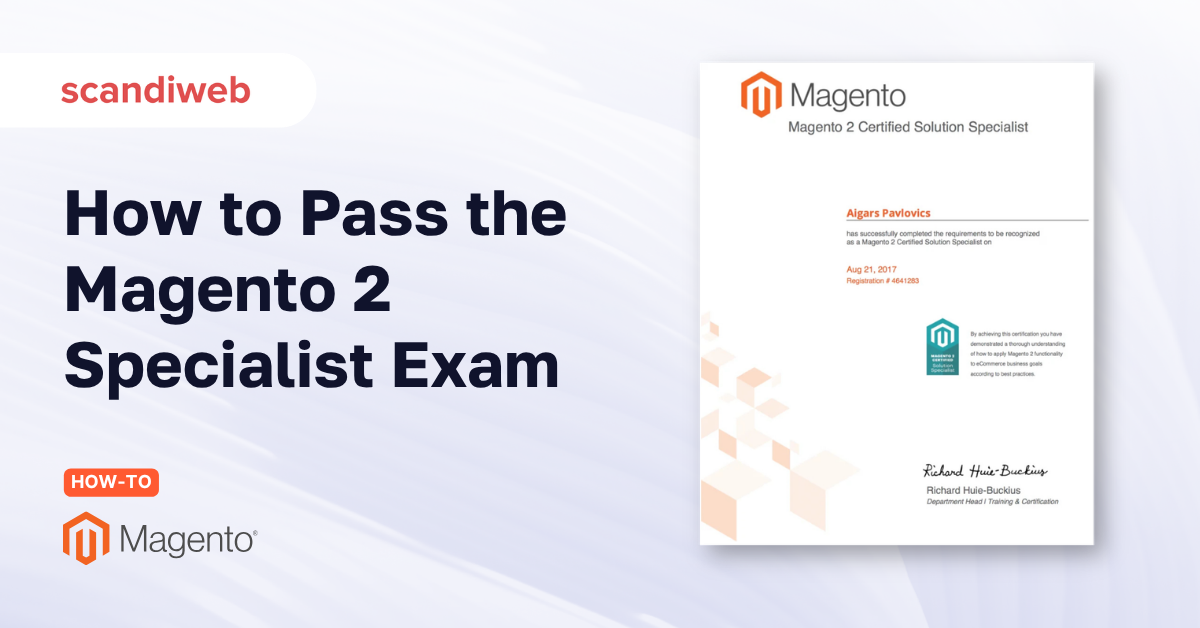
The Magento certification badge
When Magento refreshed its certification program, it introduced a green badge color scheme that later carried through to other certifications. The badge below shows the color set used across the Solution Specialist tier.
How many questions is the exam and what is the passing score?
Both current tracks have 50 questions with roughly 1 hour 40 minutes to complete. The Professional exam (AD0-E712) requires a 60% passing score, and the Expert exam (AD0-E708) requires 62%. The older AD0-E700 exam, with its larger question count, has been retired (SwiftOtter).
This is a meaningful change from the early rollout, which carried far more questions over a longer window. The current format is tighter and the question mix is published per track, so you can study against a known blueprint instead of guessing.
Professional track (AD0-E712)
The Professional exam weights toward Magento Open Source fundamentals. Per SwiftOtter’s breakdown, the 50 questions split roughly as: Open Source core (25 questions), Adobe Commerce basics (7 questions), digital marketing and eCommerce fundamentals (12 questions), and compliance and security (6 questions).
Expert track (AD0-E708)
The Expert exam covers core features and configuration, merchandising, add-on modules, systems architecture, and compliance and security. It is the closer successor to the original Solution Specialist exam in scope, with the higher 62% passing bar (SwiftOtter).
🚀 Quick takeaway
Pick the track that matches your role. Professional is the broader, business-oriented entry point. Expert goes deeper on configuration and architecture and is the closer match to the original Solution Specialist scope.
How do I pass the Magento solution specialist exam?
The fastest way to pass is to learn the platform by using it, not by reading about it. Install Magento, click through every admin area, and configure real features until you can picture each screen from memory. The exam rewards hands-on familiarity with native functionality far more than memorized definitions.
You will not find questions and answers here, because sharing them is neither legal nor ethical. What works is structured, hands-on preparation. Map your study to the published topic domains for your track, then spend most of your time inside a live install.
Core areas to cover across both tracks:
- eCommerce fundamentals: cookie and privacy law, VAT and taxes, SEO and duplicate content
- Compliance and security: SSL, PA-DSS, PCI
- Usability, CRO, and UX basics
- Magento add-ons and modules, including B2B and business intelligence
- Search, including Elasticsearch and OpenSearch
- Cloud, CDN, caching, and API basics
- Magento features, configuration, and architecture
For the functionality questions, you cannot shortcut with a blog post. Set up Magento locally and click through each feature. Know how products are created, which fields are mandatory, how stock control works, how shipping and payment methods are configured, how layouts are defined, plus segmentation, theme structure, catalog management, customers, imports and exports, reporting, discounts, orders, and the differences between Open Source and Commerce editions.
Before my own exam I clicked through an entire install so I could visualize most admin areas and the options available in each, then read through the documentation for the features that were new to that release. Architecture and upgrade knowledge maps directly onto several exam topics, so working through a real Magento 2 version upgrade is genuinely useful preparation. If you want to pass, you have to know Magento features and configuration options cold.
🚀 Quick takeaway
A local Magento install beats any study guide for the functionality questions. Click through every admin area, configure products, shipping, payments, and catalog rules, then use a third-party guide only to test recall against the published topic weightings.
Certification statistics
The figures below come from the early certification directory data I gathered during the Solution Specialist beta cohort. They are a historical snapshot of that rollout rather than current pass rates, but they still give a sense of who pursued the credential and how hard it was.
How many beta takers passed?
Per the certification directory at the time, 123 people out of 200 received the Solution Specialist badge in that cohort. That works out to a 61.5% pass rate. For anyone working with Magento daily who had read through the documentation, the exam read as fairly straightforward, even though it carried more non-Magento topics than the Magento 1 exam.
Most certificates per country?
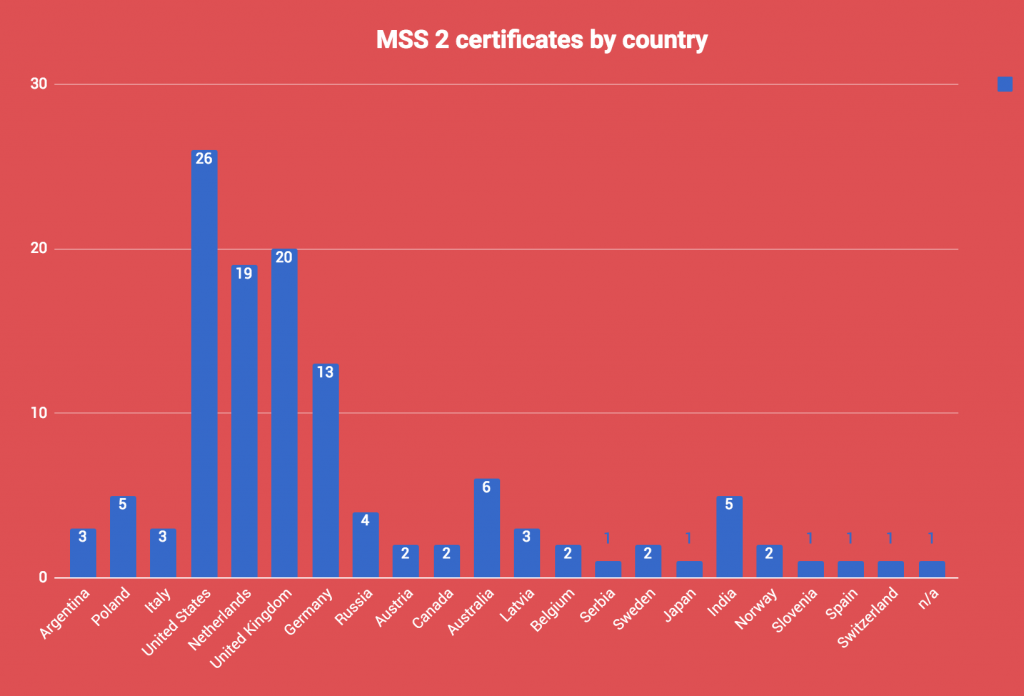
The United States (21%) and the United Kingdom (16%) held the most certificates, closely followed by the Netherlands (15%). Given its size, the Netherlands clearly leaned into Magento. Germany also held a notable share, while the remaining countries held only a handful each.
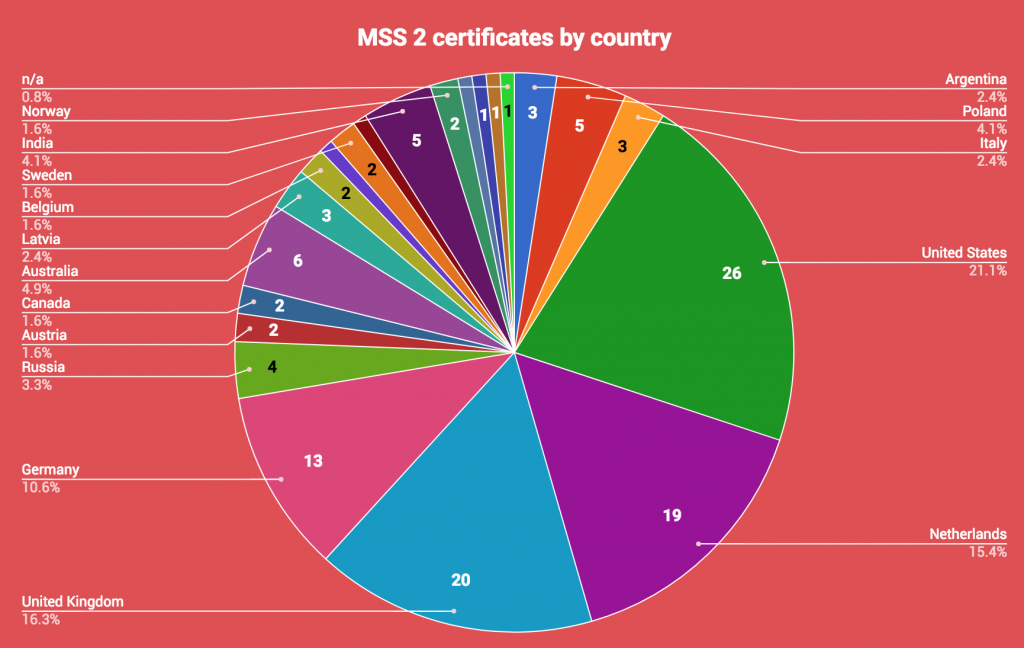
It was striking that Latvia, with a population of around two million, held three certificates, matching or beating much larger markets like Argentina, Italy, Sweden, Norway, Spain, Japan, and France. scandiweb is headquartered in Latvia and holds one of the largest pools of certified Magento talent in the world, which goes some way to explaining that result.
Current exam requirements and format
The current Adobe Commerce Business Practitioner exams replace the old beta format entirely. Both tracks run 50 multiple-choice questions in roughly 1 hour 40 minutes, with a 60% passing score for Professional (AD0-E712) and 62% for Expert (AD0-E708). The retired AD0-E700 exam, which had a much larger question count, no longer applies.
- Format: 50 multiple-choice questions per track
- Time: approximately 1 hour 40 minutes
- Passing score: 60% (Professional, AD0-E712), 62% (Expert, AD0-E708)
- Scope: Magento Open Source and Adobe Commerce features, configuration, and architecture, plus eCommerce fundamentals and compliance
- Delivery: proctored, with no devices, notes, or wearables allowed in the room
You typically receive your result at the end of the session, a notable improvement over the early beta cohort that waited weeks for the pass mark to be set.
🚀 Quick takeaway
Plan for 50 multiple-choice questions in about 1 hour 40 minutes, proctored, with no devices or notes. You need 60% to pass Professional (AD0-E712) and 62% for Expert (AD0-E708), and you usually see your result before you leave the session.
After you pass the exam
Once you pass, your Adobe certification profile updates with the new credential and you can generate a PDF certificate to share.
A passed exam is a strong personal milestone. For a merchant choosing a partner, though, what matters is a team with depth across certifications and shipped projects. If you need that depth without building it in-house, our Magento support team and full-cycle Magento development practice cover the work the exam only hints at.
Study resources and sources
The exam blueprint and official credential live on Adobe Experience League, and SwiftOtter remains the most useful third-party study resource for the current tracks.
- Adobe Experience League for the official Adobe Commerce Business Practitioner Professional credential and exam guide.
- SwiftOtter study guide for current topic weightings, practice questions, and the AD0-E712 and AD0-E708 breakdowns.
- A local Magento install, the single best preparation tool for the functionality and configuration questions.
Frequently asked questions
Is the Magento 2 Certified Solution Specialist exam still available?
Not under that exact name. The credential was rebranded to the Adobe Commerce Business Practitioner certification, administered through Adobe Experience League. The legacy AD0-E700 exam was retired and replaced by AD0-E708, and a Professional track (AD0-E712) was added. The substantive content area is largely the same.
How many questions is the Adobe Commerce Business Practitioner exam?
Both current tracks have 50 multiple-choice questions and allow roughly 1 hour 40 minutes. The Professional exam (AD0-E712) needs a 60% passing score, and the Expert exam (AD0-E708) needs 62%, according to SwiftOtter’s published breakdown.
What is the difference between the Professional and Expert tracks?
The Professional track (AD0-E712) weights heavily toward Magento Open Source fundamentals plus eCommerce basics and compliance. The Expert track (AD0-E708) goes deeper into configuration, merchandising, add-on modules, and systems architecture, with a higher 62% passing bar.
Is this a developer or a business certification?
It is a business and functional credential, not a coding exam. It validates that you can configure native Magento features and align them with business goals. Developer skills are tested through separate Adobe Commerce developer certifications.
How should I study for the exam?
Install Magento and click through every admin area until the screens are second nature, map your study to the published topic domains for your track, and use a third-party study guide like SwiftOtter to test yourself. Hands-on configuration practice matters more than reading.
How long does it take to get exam results?
For the current tracks you typically get your result at the end of the proctored session, unlike the early beta cohort that waited weeks while the pass mark was being set.
Serious about passing the Adobe Commerce specialist exam, or about staffing a team that already has? Build with certified experts and skip the long ramp-up.