Rated by 700+ brands
4.9
B2B eCommerce development for wholesale brands
We build the B2B stores wholesale buyers order from, with quote flows and catalogs synced to your ERP, backed by 22+ years in eCommerce.
Trusted by leading brands worldwide


Trusted by leading brands worldwide
B2B eCommerce development, in numbers
2,100+
projects delivered since 2003
$4B+
processed for clients yearly
600+
Projects coin-house eCommerce specialists



Where B2B ordering breaks down online
Most wholesale orders still come in by phone and spreadsheet, and the store is the last place to see what the ERP knows. Here are the three problems B2B merchants bring us most.

Orders still arrive by email
Sales reps retype emailed orders into the ERP while buyers cannot check stock or invoices themselves. A buyer portal removes that whole loop.
The ERP and the store disagree
Stock and customer terms live in the ERP while the store shows stale data. Two-way integration keeps both systems on the same numbers.
Pricing does not match your contracts
Contract pricing and approval chains rarely fit a stock B2C setup. We code the ordering rules written into your agreements, tier by tier.
Why B2B merchants build with scandiweb

Proof you can verify
Every case study we publish names the client and links the full story, so you can check each number before the first call.

All skills in-house
A B2B build takes ERP and integration skills next to storefront work. All of it sits with one in-house team under one delivery manager.

Platform-neutral advice first
We build B2B stores on Adobe Commerce, Shopify, and OroCommerce, so the platform recommendation comes from your requirements.

Integrations get full QA
ERP and CRM connections get the same treatment as storefront code: run against a copy of your live data and monitored after go-live.

Wholesale and retail since 2003
scandiweb has delivered B2B and B2C projects side by side since 2003, across 15+ verticals including automotive and electronics.

Certified for procurement reviews
ISO 27001 and 27017 certified, with PCI DSS compliance on payment work, documented for the security questionnaires B2B deals involve.
Our B2B eCommerce development services

B2B website development
Products, variants, categories, customers, and full order history move to Shopify connected the same way they are now, with nothing lost on the way.

Buyer accounts and quotes
Every important Magento URL gets a 301 redirect at launch, so the search rankings you spent years earning stay in place after the move.

ERP, CRM, and PIM integration
Your ERP, CRM, and PIM feed the store through tested connections, with middleware where volumes demand it.

B2B and B2C on one platform
One store serves wholesale and retail buyers, with separate pricing and checkout rules per customer group.

B2B replatforming
We move B2B stores off legacy platforms with every buyer account and open order preserved through the switch.

B2B analytics and CRO
Dashboards that join your store and ERP data, plus a customer experience audit and CRO aimed at wholesale metrics.
Get a plan for your B2B store
The B2B platforms we build on
Platform choice is part of the project itself, decided against your catalog and integration load before any build is scheduled. The B2B eCommerce solutions we deliver span four platform families.
Adobe Commerce B2B
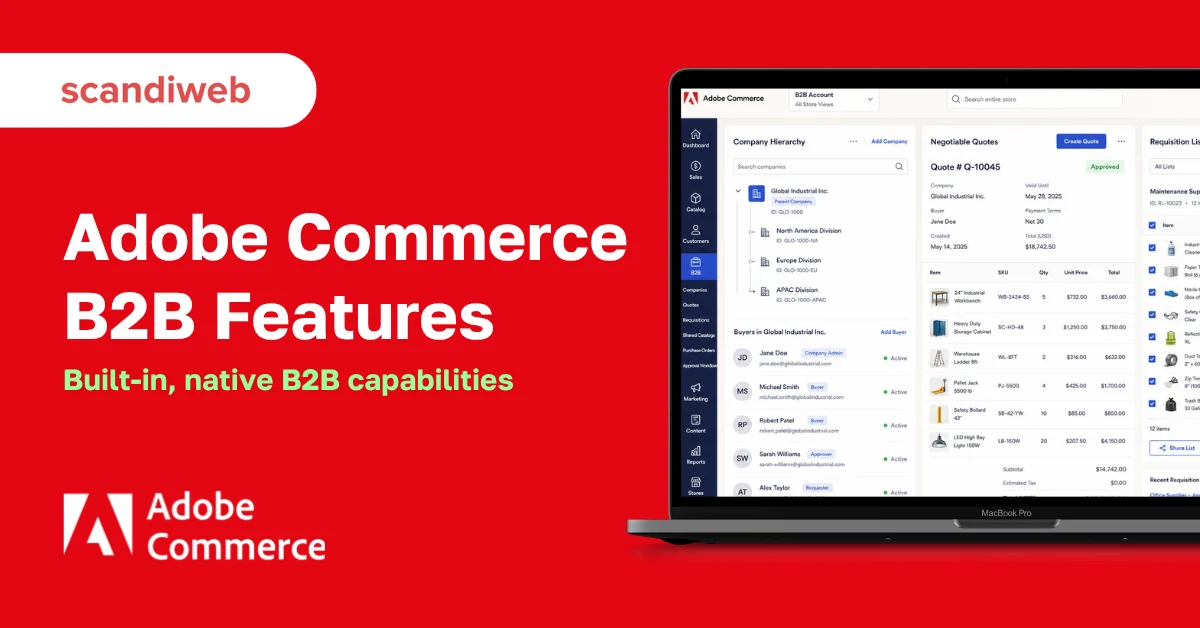
The deepest native B2B suite: shared catalogs, company hierarchies, punchout, and requisition lists. See our Magento B2B service, run by the most certified Magento team in the world.
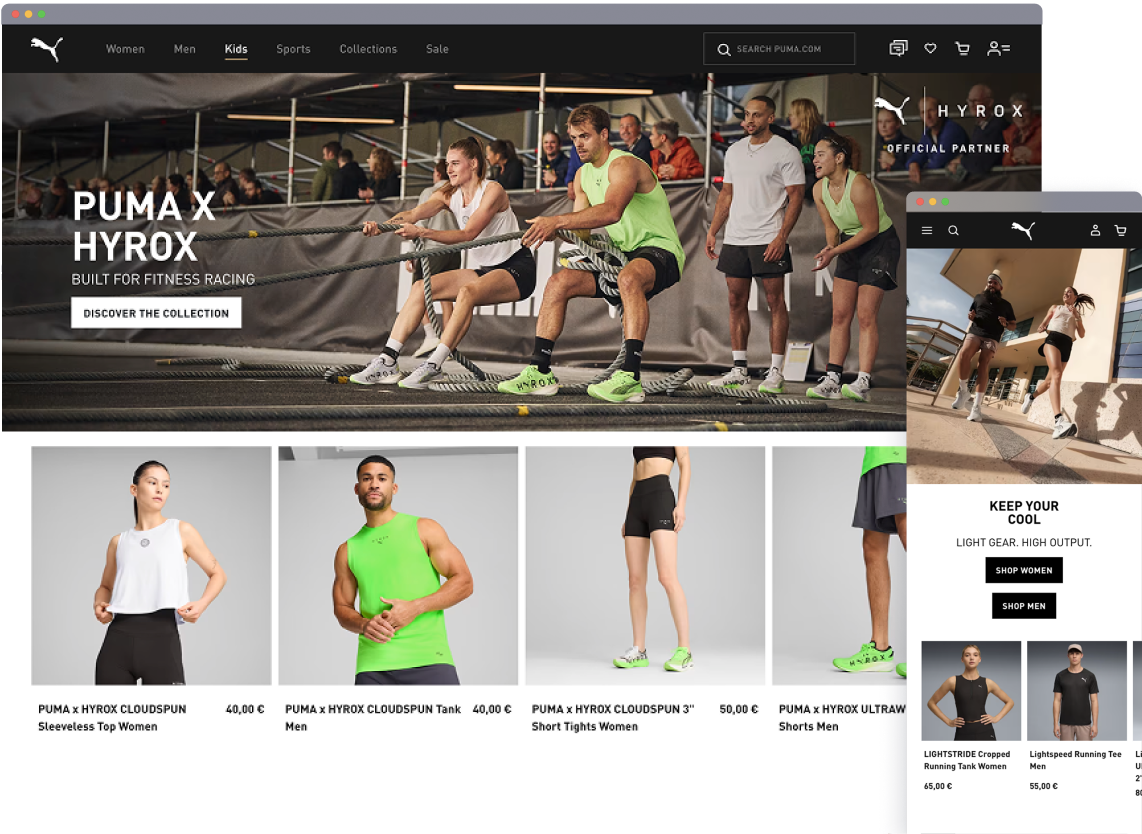
Shopify and Shopify Plus
As Shopify Plus Partners we set up B2B on Shopify with custom catalogs, quantity rules, and company profiles, a fit for leaner wholesale setups.

OroCommerce
OroCommerce was designed for B2B, with quote and RFQ flows native to the platform. We include it in shortlists where those flows fit the buying process.
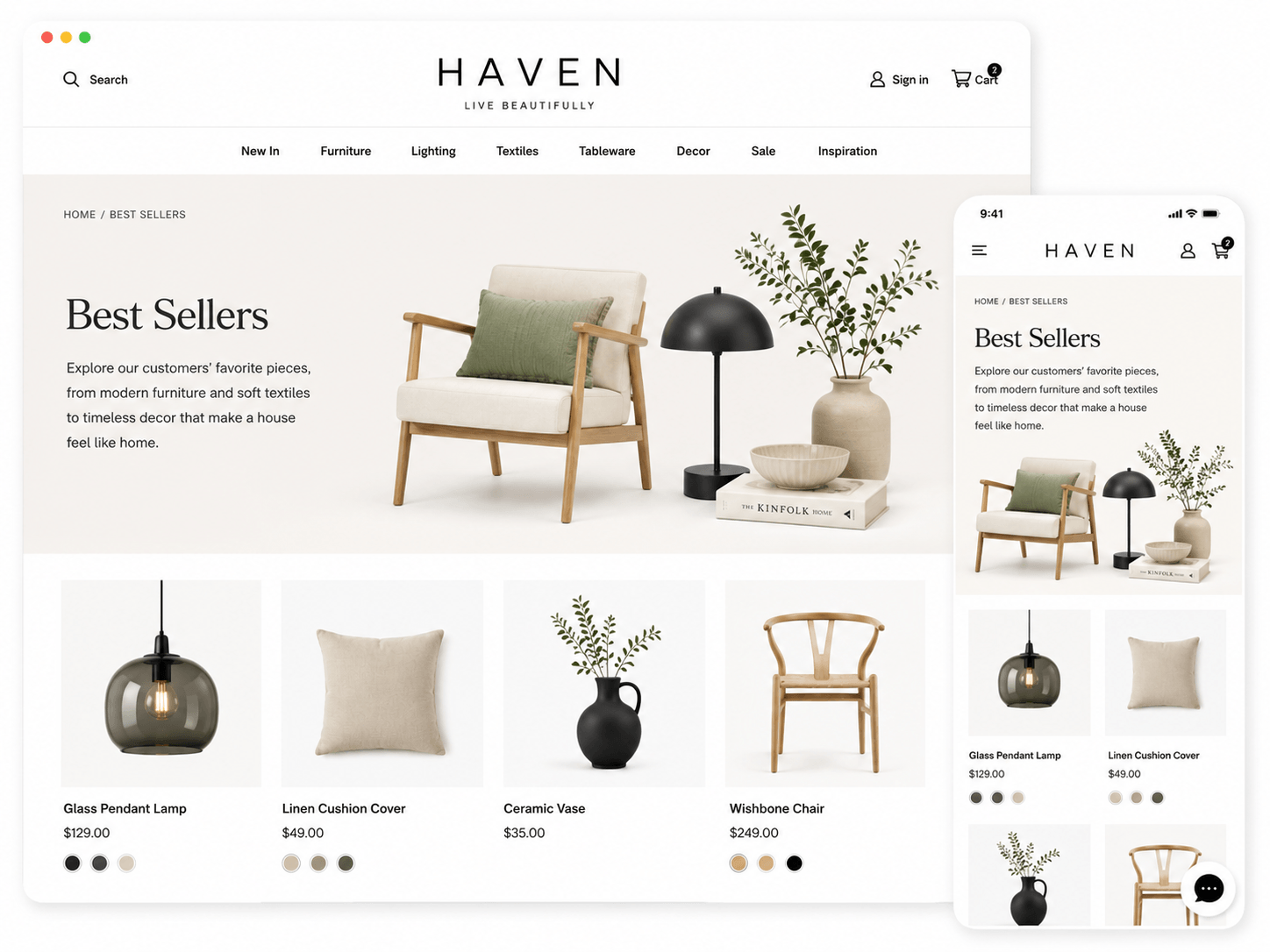
Headless and PWA storefronts
For catalogs and integrations a template cannot carry, we build headless B2B frontends on ScandiPWA, the open-source storefront we created.

Our B2B eCommerce development process
B2B projects carry more integration risk than retail builds, so the process is built around proving each connection early and keeping your team close to the work. Every major decision is signed off by you before the next step starts.

Discovery and requirements

We map your ordering flows and which systems hold the data, and you get the estimate and platform shortlist from this step, documented for your team.

Architecture and platform choice
Integrations are designed before the build, down to which system wins when data conflicts. You approve the architecture before development starts.

Sprints with working demos
Storefront and integration work run in parallel. Every sprint ends with a demo against real catalog data, so problems surface months before launch.

Buyer migration and go-live
Customer accounts and price agreements move before launch, and key buyers test the portal in staging. Go-live happens without interrupting order flow.

Support and growth
After launch the same team keeps releasing improvements and reports every month against the wholesale revenue targets agreed at the start.

What our B2B clients measured
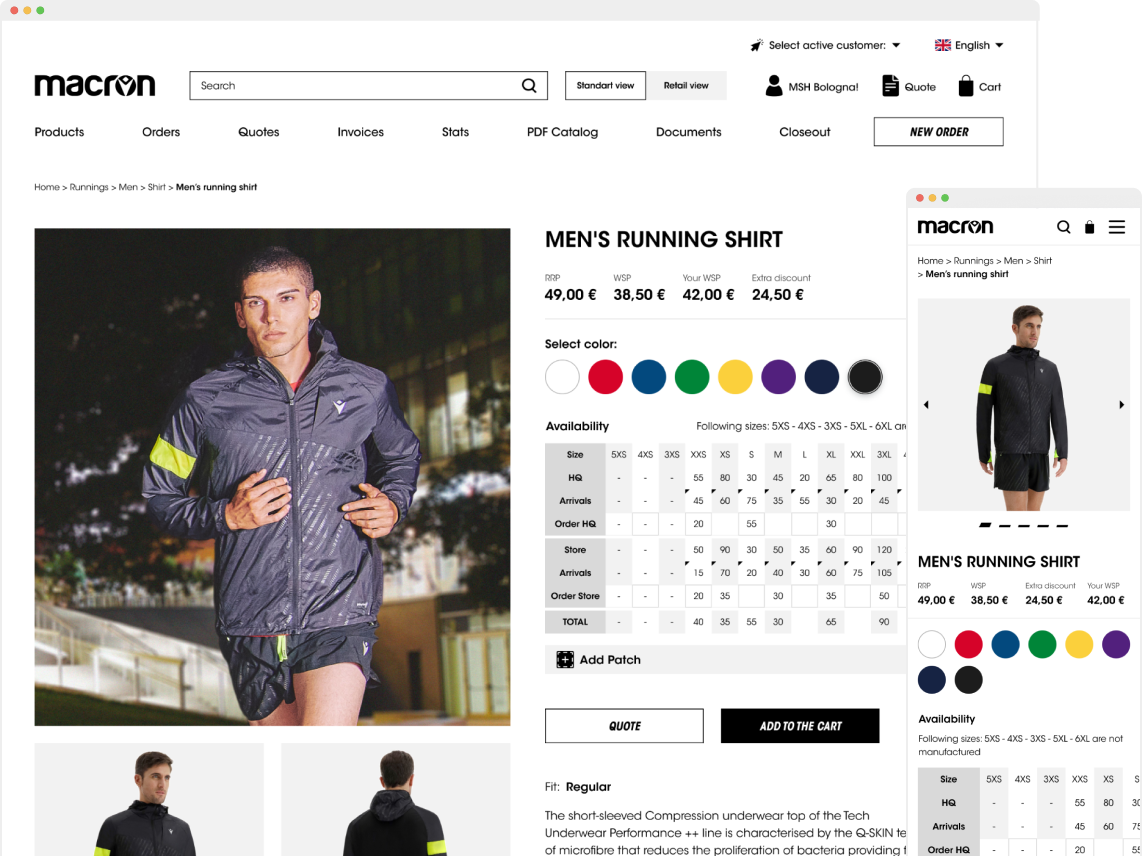

An ordering platform for a global teamwear brand's dealers
+14.1%
Transactions
+32.8%
Returning visitors
150+
Countries served
Learn more
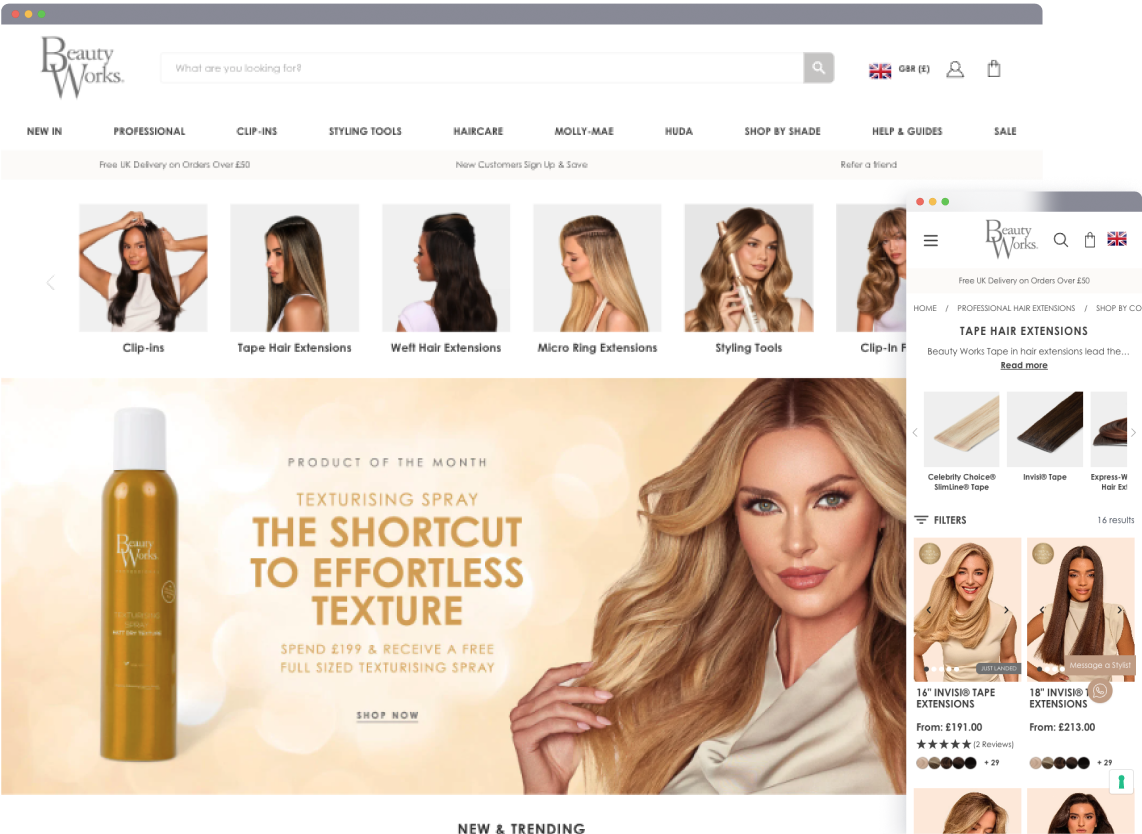

A hair extensions brand's replatform for international wholesale
4x
Faster market launches
+32%
Revenue YoY post-migration
+121%
Organic search sessions
Learn more
.png)
%201.png)
AI search visibility for a packaging wholesaler's storefront
110%
Traffic increase from ChatGPT
+96%
Engaged sessions from AI
+36%
Average engagement time
Learn more
What B2B clients say about the work

.webp)







Bring us the ordering process your buyers complain about
Tell us how orders reach you today and a specialist maps what a portal would automate, then sends an estimate for it.

Questions we hear from B2B merchants most often
What is B2B eCommerce development?
B2B eCommerce development is building online stores where businesses buy from businesses: buyer portals with company accounts, negotiated price lists, approval workflows, and ERP-connected catalogs. A typical project covers the storefront and the integrations behind it, plus the data migration when a store already exists.
Which platform is best for B2B eCommerce?
It depends on your catalog size and how your buyers order. Adobe Commerce has the most complete built-in B2B feature set, while Shopify Plus suits smaller wholesale catalogs and OroCommerce centers on quoting. We shortlist with you at the start and show working references on each before you choose.
How long does B2B eCommerce development take?
Expect 4 to 6 months for a build with one ERP integration, including testing with real buyers. Each additional system adds time, which is why integrations are scoped and sequenced before the build starts. Phased launches, with a pilot buyer group first, keep long projects on schedule.
Can you integrate the store with our ERP?
Yes, that is the center of most B2B builds we take on. We have connected stores to Microsoft Dynamics, SAP, and Salesforce, and we work against whatever API your system exposes, with a middleware layer when order volumes or multiple systems call for one. Each connection is tested in staging before go-live.
How is a B2B store different from a B2C store?
The buyer is a company. One account holds several people with different permissions, and prices come from negotiated agreements per customer. Orders often go through internal approval before they reach you. Underneath, the store has to reflect what the ERP holds, so integration work is a far larger share of the build than in retail.
What does B2B eCommerce development cost?
Integration scope sets the cost more than storefront size. A store on stock B2B features with one ERP connection sits at the lower end, while multi-system middleware builds cost more. You approve a transparent, scoped estimate before development starts.
Why choose scandiweb as your B2B eCommerce agency?
scandiweb is an Adobe Gold Solutions Partner and a Shopify Plus Partner, and holds more Adobe Commerce certifications than any agency worldwide. You can check all three in public partner directories. For B2B work specifically, the deciding factor merchants cite is integration depth.
Do you take over existing B2B stores?
Yes. We start with an audit of the store and its integrations that shows which parts are likely to break. From there we take over development and support, and many stores stay on their current platform for years. A replatform is proposed only when the platform itself is the blocker.

Plan your B2B store with a specialist
Describe your ordering process and the systems behind it. A B2B specialist replies with first recommendations and the questions we would ask before an estimate.

Prefer to talk now? Book a call straight away, or email us at: [email protected]

Related services
Let's do meaningful work together
Planning a new store, expanding to global markets, or looking to adopt latest technology? Reach out to us, and let's make it happen.