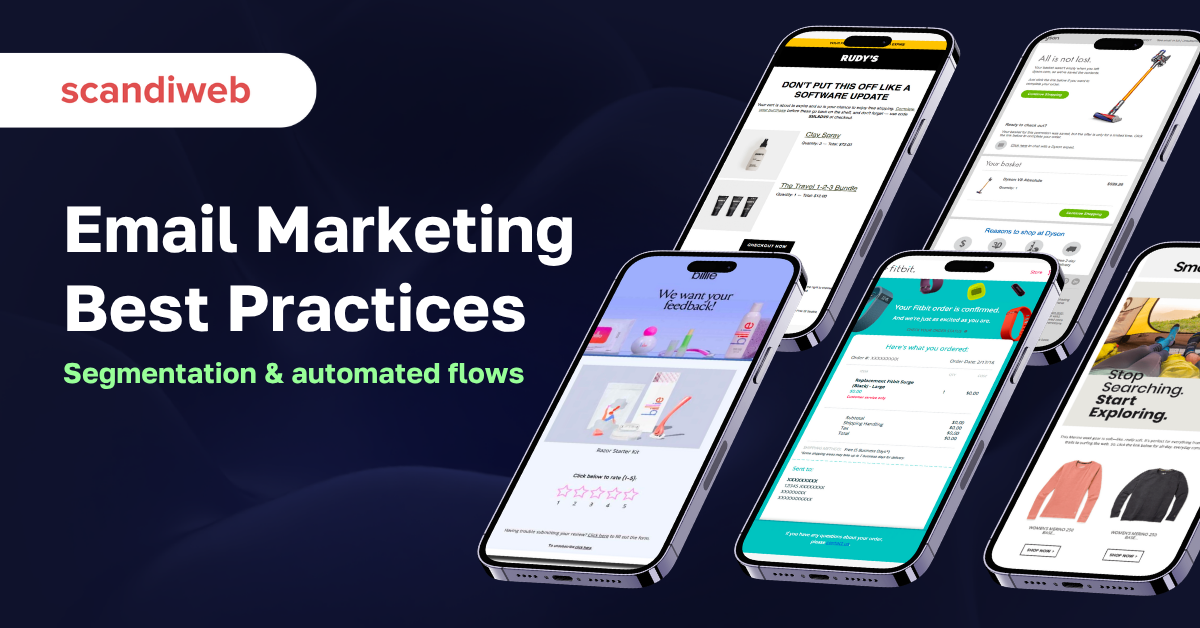
Email returns more per dollar than any other marketing channel. It is also the channel most stores run on autopilot, sending the same newsletter to the same list and quietly leaving revenue on the table. Both things are true at once, and the gap between them is where this guide lives.
The best practices below are the ones that actually move revenue, drawn from scandiweb’s email marketing management work: how to segment a list so messages land, how to keep emails out of spam, which automated flows make the most money, and which metrics still mean something now that open rates are unreliable.
Overview
- Email’s ROI is strong on average, but the revenue comes from segmentation, automation, and deliverability, not from sending more campaigns.
- Automated flows are a small share of sends and a large share of revenue, so they earn attention before one-off campaigns.
- Since Apple Mail Privacy Protection inflated open rates, clicks, conversions, and revenue per email are the metrics that tell the truth.
🚀 Quick takeaway
Revenue from email is not about volume. It is about sending the right message to the right segment at the right moment, getting it delivered, and measuring it on clicks and revenue rather than opens. Fix those four and the channel pays for itself.
Why email still earns the most per dollar
Email’s return is the reason it stays at the center of most eCommerce marketing. Litmus puts the average at around $36 for every $1 spent, with retail and consumer brands often higher. Unlike paid channels, you own the audience, so the cost of reaching them again does not climb every quarter.
The catch is that the average hides a wide range. Stores that segment and automate pull far above $36, while stores that blast one newsletter to everyone sit well below it. The practices below are what separate the two.
Build and segment your list
A targeted list is the foundation. Sending relevant content to a smaller, well-defined segment beats sending generic content to everyone, every time.
Grow the list with intent. Use a clear sign-up offer, confirmed (double) opt-in to keep the list clean, and capture the one or two data points you will actually use to segment later. A large list of disengaged addresses hurts deliverability more than it helps reach.
Then segment by signals that predict behavior:
- Purchase history – first-time buyers, repeat buyers, and high-value customers each need a different message.
- Behavior – opened-but-never-bought, browsed-a-category, lapsed-90-days. Each is a campaign.
- Lifecycle stage – new subscriber, active customer, at-risk, win-back.
- Demographics and location – only where they change the offer, such as a store event or regional promotion.
🚀 Quick takeaway
Segmentation is the single highest-impact email practice. A re-engagement email to a “lapsed 90 days” segment will outperform the same email sent to the whole list, and it protects your sender reputation by keeping disengaged contacts out of your main sends.
Write emails people open and click
Once a message reaches the right segment, the email itself has to earn the open and the click.
- Subject line. It decides the open. Keep it short, specific, and honest. Questions, numbers, and a personal touch help. Avoid the spammy capitalization and punctuation that filters and readers both distrust.
- Copy. Lead with the benefit, keep paragraphs short, write like a person. One email, one job.
- A single clear CTA. Put the main call to action above the fold, make the button obvious, and do not dilute it with five competing links.
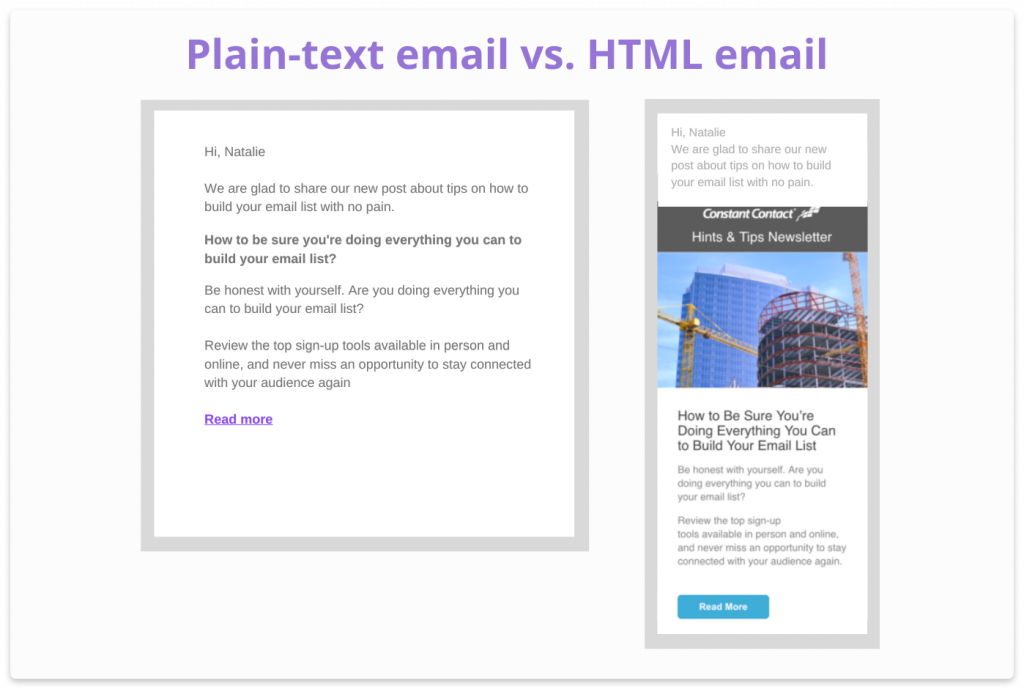
- Design for mobile and the inbox. Most opens are on a phone. Use a single-column layout, large tap targets, and test plain-text against light-HTML versions, which often deliver better and feel more personal.
For the full design breakdown, our guide on email templates covers structure, typography, and color for eCommerce.
Get your emails delivered
The best email earns nothing if it lands in spam. Deliverability is a practice, not an accident.
- Authenticate your domain. SPF, DKIM, and DMARC records tell inbox providers your mail is really from you. Without them, modern providers increasingly route you to spam or reject you outright.
- Protect your sender reputation. Send to engaged contacts, remove hard bounces, and sunset chronically inactive addresses. Reputation is built on engagement, so a smaller engaged list beats a large stale one.
- Use recognizable sender addresses. A named or purpose-specific sender (deals@, new@) earns more trust than noreply@.
- Warm up new sending domains gradually rather than blasting a full list on day one.
🚀 Quick takeaway
Authenticate with SPF, DKIM, and DMARC before you optimize anything else. It is the one deliverability fix that is both technical and non-negotiable, and most stores that “have a spam problem” simply never set it up.
Automate the flows that make the money
Automated flows are a small fraction of total sends and drive a large share of email revenue, because they reach customers at the exact moment intent is highest. Build these first.
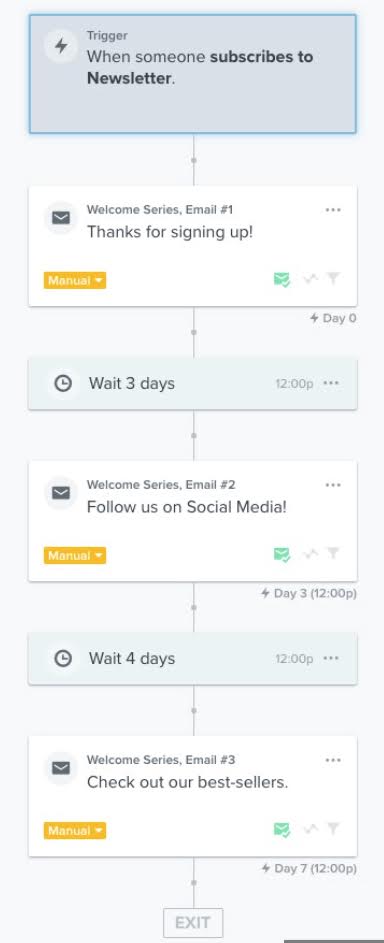
Welcome series. Triggered on sign-up. Introduce the brand, set expectations, deliver the sign-up offer, and show best-sellers. It is the highest-engagement email a subscriber will ever get from you.
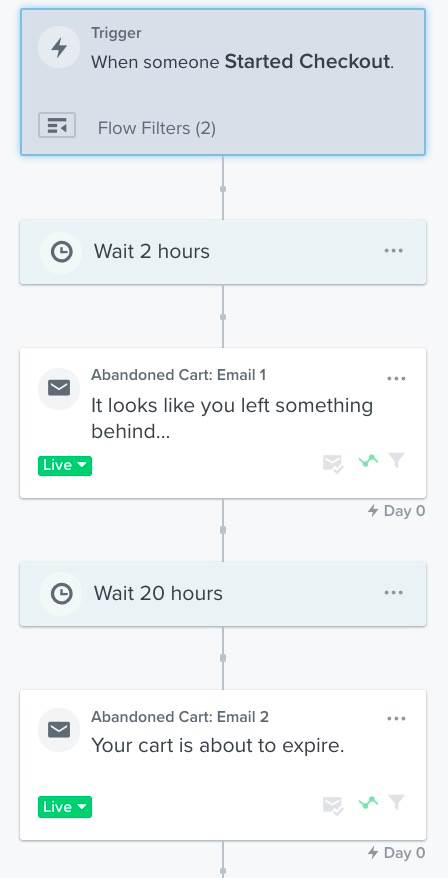
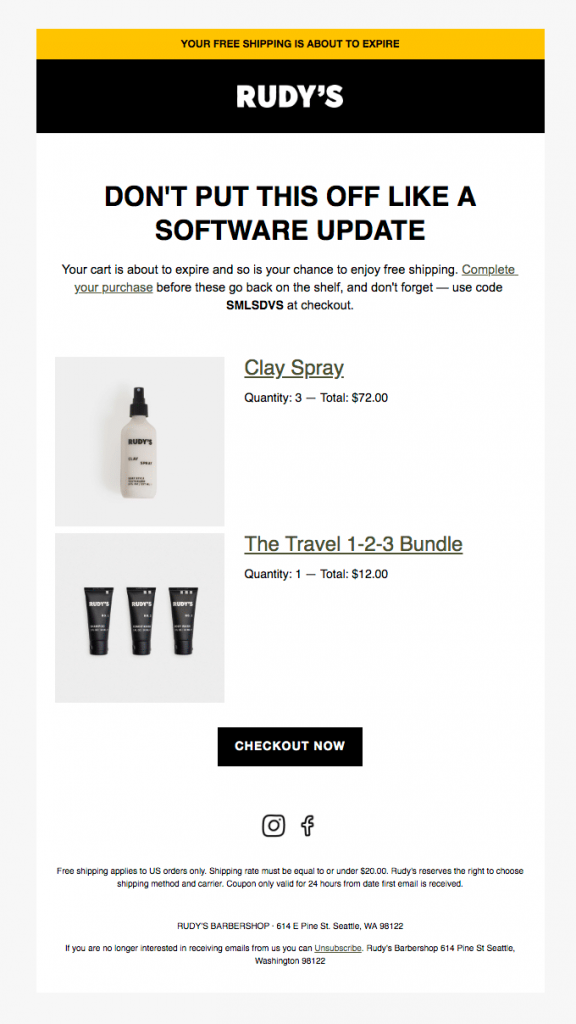
Cart abandonment flow. Around 70% of carts are abandoned, and a timed series recovers a meaningful slice. A common pattern is three emails: roughly one hour, then around twenty hours, then about three days after abandonment, with the main CTA above the fold, the cart contents shown, and an incentive only if needed.
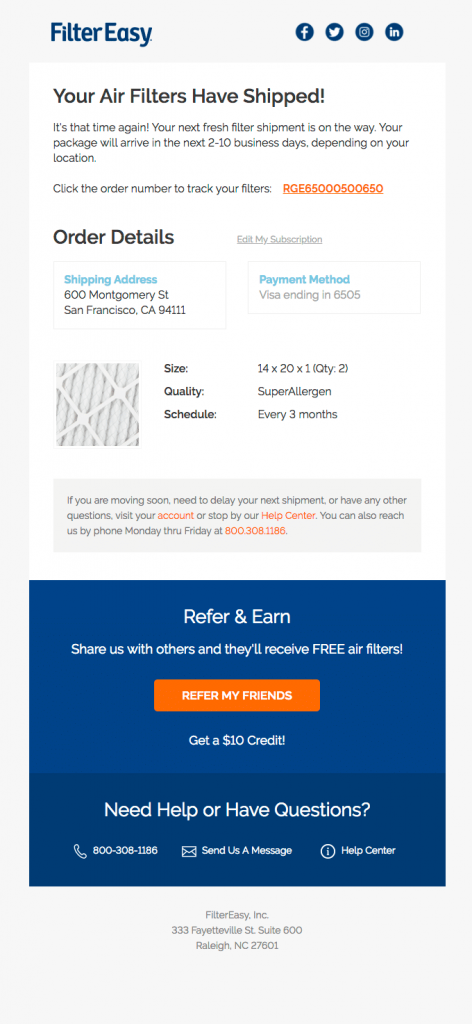
Post-purchase flow. Order confirmation, then shipping updates (one at dispatch, one at delivery, with a live tracking link), then product-usage tips, then a feedback or review request while the experience is fresh, and finally upselling emails once they have had time with the product.
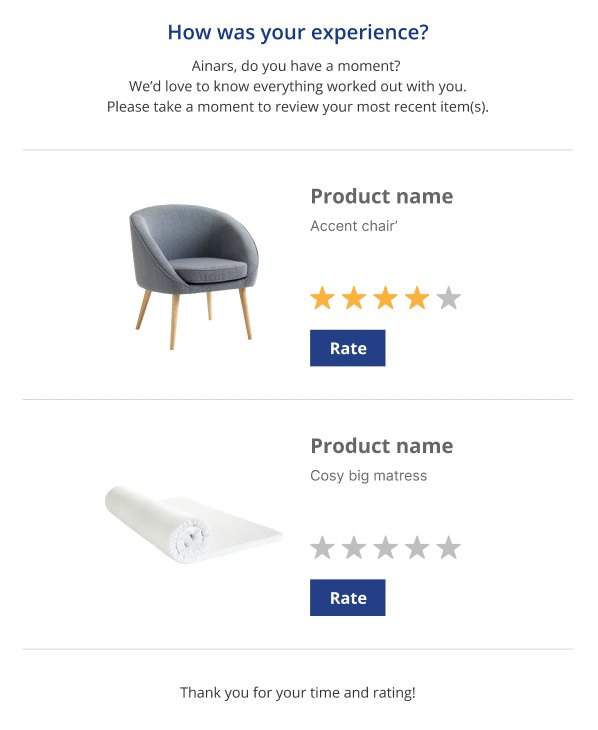
Review-gathering flow. Sent shortly after delivery. Keep the ask short, say it takes a minute, and a small incentive can lift response. Reviews compound into social proof that helps every future email and product page.
Win-back flow. For lapsed customers, a re-engagement series with a strong offer, then a clean break for those who still do not respond, so they stop dragging your deliverability down.
🚀 Quick takeaway
If you have limited time, build the welcome and cart-abandonment flows first. They reach people at peak intent and almost always return the most revenue per hour of setup, then the post-purchase and win-back flows extend the gains.
How often should you send email?
There is no universal number, but most eCommerce brands land around two to three sends per week to the active segment. Enough to stay top of mind, not so much that unsubscribes climb. The right answer for your list comes from watching the trade-off: more sends usually lift short-term revenue until unsubscribe and spam-complaint rates start to rise, which is the signal to ease off. A conversion rate optimization mindset applies here too, test frequency against revenue, not against opens.
Measure what actually matters
Apple Mail Privacy Protection now auto-opens a large share of emails, which means open rate is no longer a reliable metric. Build your reporting on signals it cannot fake:
- Click-through and click-to-conversion rate – did the email drive action?
- Revenue per email and per recipient – the number that justifies the channel.
- List growth net of unsubscribes and spam complaints – is the audience healthy?
- Flow-level revenue – which automation is carrying the program?
Tie email reporting into your wider eCommerce analytics so email revenue is attributed properly against everything else, not measured in a silo.
🚀 Quick takeaway
Stop steering by open rate. Since MPP, it overstates engagement and hides what is really happening. Clicks, conversions, and revenue per email are the metrics that survive privacy changes and tell you what to do next.
How scandiweb approaches email marketing
scandiweb has delivered over 2,100 eCommerce projects since 2003, and our email marketing management work starts with an audit: a prioritized read of where a specific program leaks revenue, from list health and deliverability to the flows that are missing or underperforming. We then set up and optimize the automated flows above and run campaigns with continuous A/B testing, measured on revenue rather than vanity metrics. The point is a program that earns its place in the marketing mix, not a busier sending calendar.
Frequently asked questions
What are the most important email marketing best practices?
Segment your list so messages are relevant, authenticate your domain with SPF, DKIM, and DMARC for deliverability, build automated flows (welcome, cart abandonment, post-purchase, win-back), and measure on clicks and revenue rather than open rate. Those four account for most of the revenue difference between strong and weak email programs.
How often should I send marketing emails?
Most eCommerce brands send two to three emails per week to their active segment. The right number for your list is the point just before unsubscribe and spam-complaint rates start rising. Test frequency against revenue per recipient, and segment so your most engaged contacts can receive more and your least engaged receive less.
What is a good email open rate and click rate for eCommerce?
Benchmarks shifted after Apple Mail Privacy Protection inflated opens, so treat open rate cautiously. Recent eCommerce benchmarks put average opens around 30% and campaign click rates in the low single digits, with automated flows performing far higher. Because MPP distorts opens, judge performance on click-to-conversion rate and revenue per email instead.
How do I improve email deliverability?
Authenticate your sending domain with SPF, DKIM, and DMARC, send only to engaged contacts, remove hard bounces, sunset long-inactive subscribers, use a recognizable sender address, and warm up new domains gradually. Deliverability follows sender reputation, and reputation follows engagement, so list hygiene is the lever.
What is the ROI of email marketing?
Litmus estimates an average return of around $36 for every $1 spent, with retail and consumer brands often higher. The figure varies widely: stores that segment and automate earn well above it, while stores sending one generic newsletter to the whole list earn far less. The practices in this guide are what move you toward the top of that range.
Not sure how much revenue your email program is leaving on the table? Audit your email program with us and you will get a prioritized plan covering deliverability, segmentation, and the flows most likely to pay back first.