eCommerce has the lowest average cost per click of any industry, around $1.16 against a cross-industry average near $5.26 (WordStream, 2026). Cheap clicks, and yet most stores still lose money on paid search. The clicks are not the problem. The structure, the bidding, and the profit math behind them are.
If you are running Search and Shopping campaigns and cannot say cleanly whether they make money after product cost and shipping, or you are staring at a Performance Max campaign that spends fast and reports little, this guide is built for you. It covers how eCommerce PPC actually works in 2026, the campaign and bidding decisions that matter now, and the math that tells you what a click is allowed to cost.
Overview
- The 2026 campaign mix is Search, Shopping, and Performance Max, and the smart move is no longer “PMax everything.” Search has been quietly winning back budget on ROAS.
- Broad Match Modifier is gone. Match types in 2026 are Broad, Phrase, and Exact, all read by intent and paired with Smart Bidding.
- Profitability comes from one discipline: knowing your margin, your break-even ROAS, and your maximum cost per click before you raise a single bid.
🚀 Quick takeaway
Cheap clicks do not make a profitable account. Margin-aware bidding and clean campaign structure do.
What does eCommerce PPC look like in 2026?
eCommerce PPC in 2026 runs across three main campaign types: Search (text ads on the results page), Shopping (product listings with image and price), and Performance Max (one campaign that spans Search, Shopping, Display, YouTube, Gmail, and Maps using Google’s automation). Most stores run a mix, and the budget split between them is the first real decision.
For three years the default was to push most spend into Performance Max. That is changing. PMax cost share peaked near 82% in May 2024 and has been declining since (smec State of PMax, 2025). The reason is performance: across 18,000 eCommerce brands, Search averaged a 5.17:1 return on ad spend while Performance Max averaged 2.57:1 (Triple Whale, 2025). PMax still earns its place for broad reach and creative scale, but the “automate everything and walk away” era is over.
🚀 Quick takeaway
Performance Max is a tool, not a strategy. In 2026, treat Search as your controllable, high-ROAS core and PMax as scalable reach around it.
Campaign and ad group structure that still works
Good structure is still the foundation, automation has not removed the need for it, it has raised the price of getting it wrong. Clean structure gives Smart Bidding clean data to learn from, and gives you reports you can actually read.
Organize ad groups around tight themes so each one maps to a clear slice of intent. The themes that work for eCommerce are usually:
- product categories and subcategories,
- brands you carry,
- high-margin product lines,
- branded versus non-branded search,
- and a separate group for your top-performing terms.
That last one matters. If a handful of keywords drive most of your revenue, pull them into their own ad group or campaign so you can fund them deliberately instead of letting a shared budget spread thin across everything. Branded search also belongs on its own, it converts cheaply and you do not want it averaged in with cold prospecting.
You will restructure as you learn, and that is normal. The structure you build during research is rarely the structure you keep after 90 days of conversion data.
🚀 Quick takeaway
One theme per ad group, branded search isolated, top performers funded on purpose. Structure is what makes automation trustworthy.
Keyword match types in 2026
Match types control how loosely Google maps a search to your keyword. There are three, plus negatives. If you read an older guide that lists “Broad Match Modifier,” ignore it: Google folded BMM into phrase match in February 2021 and stopped letting advertisers create new BMM keywords by July 2021 (Google Ads Help). It no longer exists.
Here is the current picture:
| Match type | Format | Example | Ads can show on | Best used for |
|---|---|---|---|---|
| Broad | keyword | running shoes | searches related to the meaning, including synonyms and intent matches | discovery, paired with Smart Bidding and tight negatives |
| Phrase | “keyword” | “running shoes” | searches that include the meaning of the phrase | controlled mid-funnel coverage |
| Exact | [keyword] | [running shoes] | searches matching the meaning of that exact term | highest-intent terms you want tight control over |
| Negative | -keyword | -free, -used | excluded from matching entirely | protecting budget from junk traffic |
Broad match used to be a budget trap. In 2026, with Smart Bidding reading conversion signals in real time, broad match plus a strong negative list is a legitimate discovery engine, it finds converting queries you would never have guessed. The discipline is the same as it always was: review your search terms report often and add negatives ruthlessly.
🚀 Quick takeaway
Broad, Phrase, Exact, plus a disciplined negative list. Broad match is finally usable, because Smart Bidding decides which broad queries are worth a bid.
Smart Bidding and the modern auction
Every search that is eligible for ads triggers a live auction. Your position is decided by Ad Rank, not by your bid alone. Ad Rank combines your bid, the quality and relevance of your ad and landing page, and the context of the search. Higher relevance can beat a higher bid, which is why a well-built campaign pays less for better positions.
A simplified illustration:
| Advertiser | Max CPC bid | Ad quality | Ad Rank | Position |
|---|---|---|---|---|
| Store A | $5.00 | Low | Lower | 3 |
| Store B | $3.50 | High | Higher | 1 |
Store B wins the top position while bidding less, because its ad and landing page are more relevant to the search. That gap is what Quality Score is trying to capture, and it is why landing-page work and ad relevance are bidding strategy, not a separate task.
Most eCommerce accounts now bid with Smart Bidding strategies such as Target ROAS or Maximize Conversion Value. These use Google’s signals to set per-auction bids you could never set by hand. They work well once they have data, which is the catch: a brand-new campaign or a thin conversion history will underperform until it learns. Feed Smart Bidding accurate conversion values (real revenue, ideally margin-adjusted), give it clean structure, and resist the urge to change targets every few days.
🚀 Quick takeaway
You do not set bids in 2026, you set targets and signals. Accurate conversion values and relevant landing pages are the levers that actually move cost per click.
Performance Max vs Search: which should you trust?
This is the question most eCommerce advertisers are wrestling with in 2026, and the honest answer is “both, in the right proportion.”
Run Search for the demand you can name. Branded terms, category terms, and high-intent product searches belong in Search campaigns where you control keywords, see the search terms report, and can protect margin. This is where the 5.17:1 average ROAS lives.
Run Performance Max for reach and discovery you cannot manually map, and to keep Shopping inventory in front of shoppers across Google’s surfaces. Give it strong creative assets and audience signals, exclude your branded traffic so it does not take credit for conversions Search would have won anyway, and watch its true incremental contribution rather than its self-reported numbers.
The mistake is letting PMax absorb branded and bottom-funnel traffic, where it looks brilliant on paper because it is harvesting demand other campaigns created. Separate the two, and you can judge each on what it actually adds.
🚀 Quick takeaway
Search owns the demand you can name. Performance Max finds the demand you cannot. Keep branded traffic out of PMax so you can see what it is really worth.
Writing ads that convert
A good ad is a trigger that meets a motivated person with low friction. That framing comes from Dr. BJ Fogg’s behavior model, which says behavior happens when motivation, ability, and a trigger arrive at the same moment. Your ad is the trigger. Your job is to raise motivation and lower perceived effort in the same few lines.
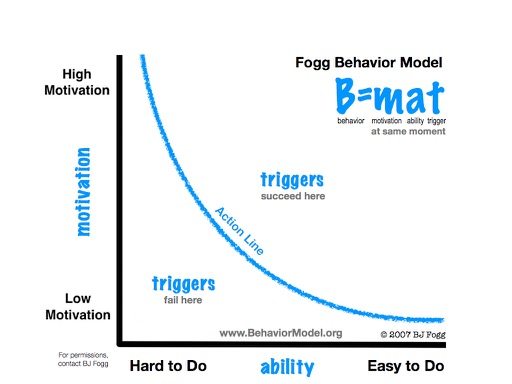
In practice, that means responsive search ads with headlines that name the product and the value, not vague brand slogans. If perceived effort is the barrier, your copy answers it directly: free returns, ships today, no account required. If motivation is the barrier, you lead with the proof, the discount, the guarantee, or the social proof that makes acting feel worth it.
Match the ad to the search term and the landing page. A search for a specific product should land on that product, with an ad that reflects it. The relevance you build here is the same relevance that raises Ad Rank and lowers your cost per click, copy and bidding are the same problem viewed from two angles.
🚀 Quick takeaway
Write to the barrier. If the click is not happening, the searcher is either not motivated enough or sees the action as too much effort. Fix the one that applies.
Remarketing and audiences in a privacy-first 2026
Most first-time visitors do not buy. The higher the price, the lower the odds on visit one. Remarketing is how you keep earning the chance to convert them, and in 2026 it runs on first-party data far more than third-party cookies.
The principle has not changed: build audiences from specific behavior, not just “all visitors.” A cart-abandoner who reached checkout is worth a higher bid and a sharper message than someone who bounced off the homepage. Build that list from the people who hit your cart URL without reaching the order-confirmation page, then bid up and offer them a reason to come back.
What has changed is the plumbing. Cookie-based lists shrink as browsers restrict tracking, so the durable approach is to feed Google your own first-party signals: customer lists, purchase data, and server-side conversion tracking through a clean analytics setup. Performance Max uses these as audience signals to steer its targeting, and Search uses them for bid adjustments. Stores that invested in conversion rate optimization and solid data collection have a real advantage here, the audiences are better because the data underneath them is better.
🚀 Quick takeaway
Remarketing in 2026 is a first-party-data game. Build audiences from real behavior and feed Google your own signals, not borrowed cookies.
The profit math: ROAS, ROI, break-even, and max CPC
This is the part too many accounts skip, and it is the part that decides whether any of the above makes money. The math has not changed and it does not need to.
ROAS (return on ad spend) is conversion value divided by ad spend. Sell $1,245 from $546 of spend and your ROAS is 2.28, every dollar spent returned $2.28 in revenue. ROAS ignores your costs, so a healthy-looking ROAS can still be a loss.
ROI (return on investment) accounts for margin. Take that same $1,245 in revenue at a 60% margin, so 40% ($498) is product cost. ROI works out to (1,245 − 498) ÷ 546 = 1.36. The 2.28 ROAS was really $1.36 back on the dollar after costs. That gap is exactly why you track both.
Break-even ROAS tells you the minimum return you can accept. Divide one by your margin: at a 40% margin, 1 ÷ 0.4 = 2.5. You need a 2.5 ROAS just to break even. Below that, every sale loses money.
Maximum cost per click turns all of this into a number you can bid to. Take your average conversion value, divide by your desired ROAS, and multiply by your conversion rate:
Max CPC = (average conversion value ÷ desired ROAS) × conversion rate
With a $225 average conversion value, a desired ROAS of 2, and a 4% conversion rate: (225 ÷ 2) × 0.04 = $4.50. That is the most a click is allowed to cost before the keyword stops being profitable. Feed that logic into your Target ROAS, and Smart Bidding does the per-auction work for you.
Three things have to be true for any of this to hold: conversion tracking is in place, conversions carry real values (use real per-order values for eCommerce, or a calculated lead value for forms), and you actually know your margins. Miss one and every number above is a guess.
🚀 Quick takeaway
Know your margin, derive your break-even ROAS, and set your max CPC before you raise a bid. The most profitable keywords are often the expensive ones, so bid by math, not by gut.
AI Overviews and the near future of paid search
AI Overviews now sit at the top of many commercial searches, pushing the classic results, and the ads around them, further down. For eCommerce that means two things. First, the highest-intent product searches still show Shopping and Search ads prominently, transactional queries are where Google protects ad inventory. Second, top-of-funnel informational queries are increasingly answered in the overview itself, so paid traffic from those terms will thin out.
The response is not complicated: concentrate paid budget on the commercial and transactional terms where ads still command attention and intent is high, and let content and AI search optimization carry the informational queries that AI Overviews are absorbing. Paid and organic stop being separate plans and start being one funnel.
🚀 Quick takeaway
Spend paid budget where intent and ad visibility are highest, and let earned content own the informational queries AI Overviews are swallowing.
How scandiweb approaches eCommerce PPC
The structure, bidding, and math above are the same playbook we run across active eCommerce accounts. A few results from that work: tripled ROAS at half the CPC for Rocket Industrial, +224% revenue during a client’s peak season, and +30% conversions after wiring real margin data into bidding in our margin-tracking case study. The common thread is never a single tactic, it is clean tracking, margin-aware targets, and a structure that lets the automation do its job. For the bidding side specifically, our guide to PPC bid management goes deeper on what you still control in an automated account.
FAQ
What is eCommerce PPC?
eCommerce PPC is paid advertising where an online store bids to show ads, mainly on Google Search, Shopping, and Performance Max, and pays when someone clicks. The goal is profitable sales, measured by return on ad spend after product and shipping costs, not just clicks or traffic.
Is Performance Max better than Search campaigns for eCommerce?
Not automatically. Search campaigns average a higher return on ad spend (around 5.17:1 versus 2.57:1 for Performance Max across 18,000 brands, 2025 data). Use Search for demand you can name and protect, and Performance Max for reach and discovery, while excluding branded traffic from PMax so its numbers are honest.
Does Broad Match Modifier still exist in Google Ads?
No. Google folded Broad Match Modifier into phrase match in February 2021 and stopped allowing new BMM keywords by July 2021. The current match types are Broad, Phrase, and Exact, plus negative keywords.
How much does eCommerce PPC cost?
eCommerce has one of the lowest average costs per click of any industry, around $1.16 in 2026 benchmarks, though it varies widely by product and competition. What matters is not the click price but your maximum profitable cost per click, derived from your margin, target ROAS, and conversion rate.
What is a good ROAS for eCommerce?
It depends on your margin. Your break-even ROAS is 1 divided by your margin, so a 40% margin needs a 2.5 ROAS just to cover costs. Anything above that is profit. A “good” ROAS is one comfortably above your break-even point, not a universal number.
How do I calculate my maximum cost per click?
Divide your average conversion value by your desired ROAS, then multiply by your conversion rate. For a $225 conversion value, a target ROAS of 2, and a 4% conversion rate, the max CPC is $4.50. Use that as your Target ROAS input and let Smart Bidding manage the per-auction bids.
If you are watching a Performance Max campaign eat budget and wondering whether plain Search would do better, that is exactly the question worth answering with your own numbers. Talk to our PPC team and we will pressure-test your structure, bidding, and margin math against where your spend is actually going.