McKinsey found that companies that get personalization right drive 40% more revenue from it than companies that do not. The catch for retailers with both a website and a store is that the data needed to personalize is split across the two, and a customer who browses online then buys in-store looks like two different people. Omnichannel retail personalization is the work of joining those halves back into one.
This guide is about the foundation that makes it possible: unifying offline and online customer data, then turning that single view into experiences that follow the shopper across channels rather than starting over on each one.
Overview
- Omnichannel retail personalization means tailoring the experience to one customer across every channel, online and offline, from a single unified profile.
- It depends on unified data: most retailers cannot personalize well because their in-store and online data never meet.
- A customer data platform (CDP) is the usual way to build that single customer view, and it is the practical first step before any personalization tactic.
🚀 Quick takeaway
You cannot personalize across channels until the data is unified across channels. Build the single customer view first, usually with a CDP, then layer personalization on top. Tactics without unified data just personalize each channel in isolation.
What is omnichannel retail personalization?
Omnichannel retail personalization is the practice of delivering tailored, consistent experiences to a customer across every touchpoint, website, app, email, and physical store, based on one unified view of who they are and what they have done. It differs from single-channel personalization, which tailors each channel on its own and treats the same person as a stranger when they move from app to store.
The difference matters because customers do not think in channels. They research on a phone, ask in a store, and buy on a laptop, and they expect the brand to remember them the whole way. Personalization that resets at each channel boundary feels broken. Personalization built on a unified profile feels like service.
Why unified data is the foundation
Most retailers already personalize somewhere, usually online. The reason it underperforms is that the online behavior and the in-store behavior live in separate systems that never talk. The result is a half-picture: you personalize based on what someone clicked, blind to what they actually bought at the counter.
Unifying the data fixes the foundation. When online and offline events flow into one profile, the recommendation engine, the email, and the store associate all draw on the same history. That is what turns personalization from a series of disconnected guesses into a coherent experience, and it is the difference McKinsey’s 40% revenue gap is really measuring.
🚀 Quick takeaway
Personalization that resets at each channel is the default failure mode. Unify online behavior and in-store purchases into one profile and the same history powers every channel, which is where the revenue difference comes from.
Map the customer journey across online and offline
Before unifying data, map where the customer actually crosses between channels, so you know which events matter. A typical retail journey moves through four stages, and each one generates data on a different channel.
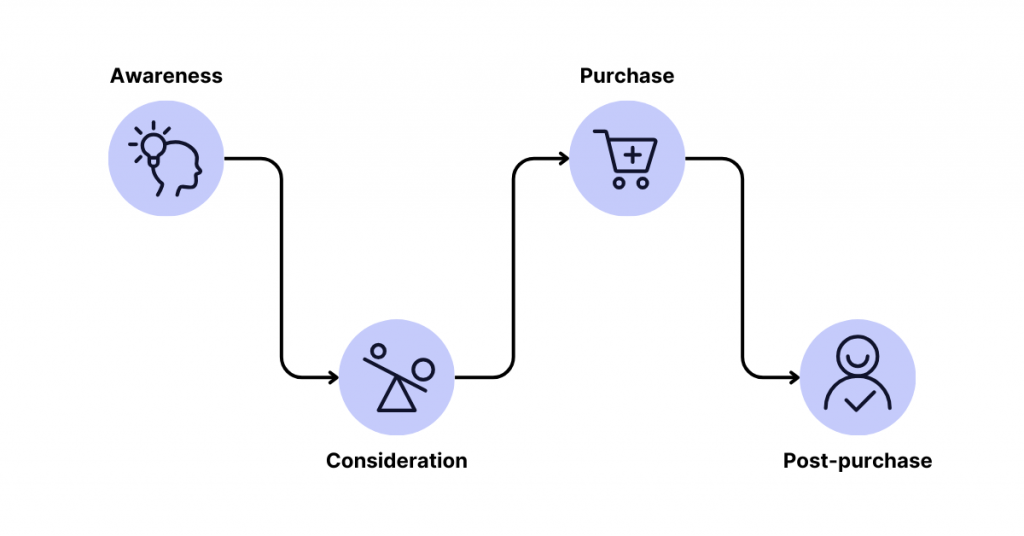
The point of mapping is not to be exhaustive. It is to find the handful of moments where online and offline meet, browse-online-buy-in-store, buy-online-return-in-store, research-in-store-buy-later, because those are the events that, once unified, drive the most personalization.
Build a single customer view with a CDP
The practical tool for unifying customer data is a customer data platform (CDP). A CDP ingests customer and sales data from every source, online behavior, point-of-sale, email, loyalty, and resolves it into one persistent profile per customer.
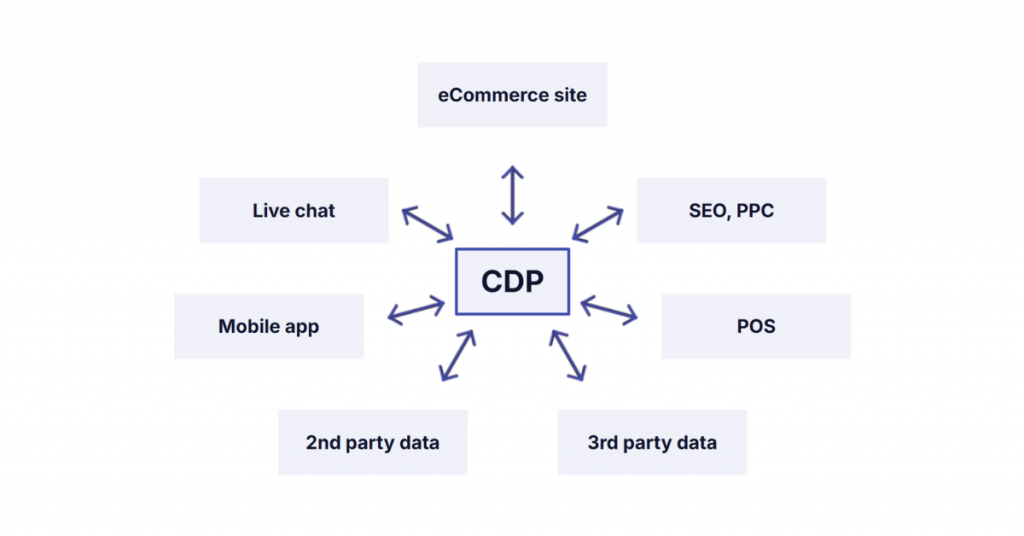
Retail is the largest single use case for CDPs, and adoption keeps climbing, because the single customer view is the prerequisite every personalization vendor assumes you already have. Tie the CDP into customer lifetime value so the profile is not just a history but a forward-looking measure of who is worth personalizing for most.
Listen, understand, act
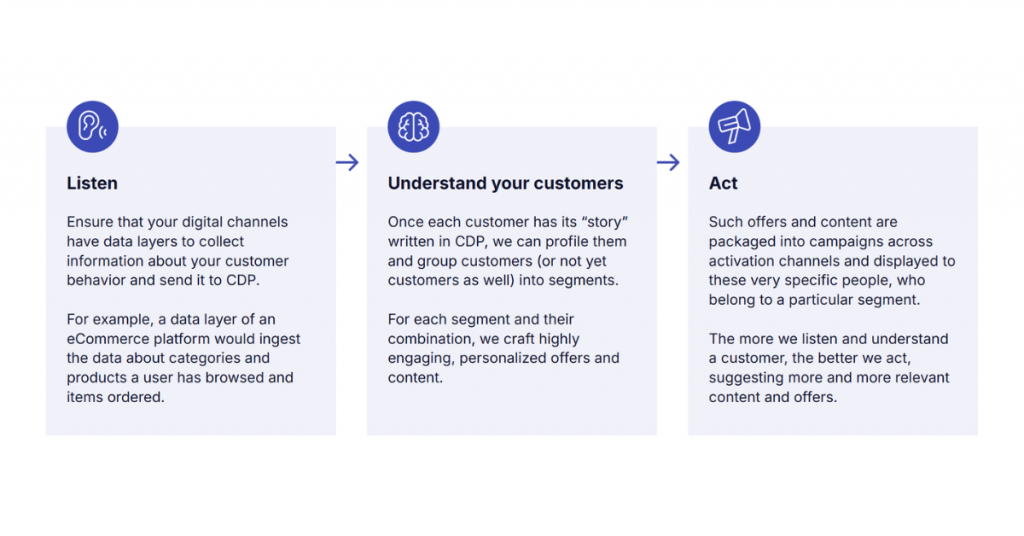
A useful way to run personalization on top of the unified profile is a simple loop: listen to the signals the customer gives across channels, understand what they mean for this individual, and act with a relevant experience, then measure and repeat.
🚀 Quick takeaway
The CDP is the foundation, not the finish line. It gives you one profile per customer. The value comes from the loop you run on top of it: listen across channels, understand the individual, act with a relevant experience, then measure and improve.
Use offline insights to improve online, and the reverse
Once the data is unified, each channel can improve the other. In-store purchase patterns refine online recommendations and merchandising. Online browsing behavior tells store staff what a customer has been considering before they walk in. The flow runs both ways, and that two-way exchange is the practical payoff of unification, not a vague “single view” benefit.
It pairs naturally with a loyalty program, which is often the mechanism that links an in-store purchase to an online identity in the first place, and with care taken to avoid cannibalizing one channel’s sales with another’s.
The payoff: experiences that follow the customer
When the data is unified and the loop is running, personalization stops feeling like marketing and starts feeling like memory. A customer who tried a pair of jeans in-store gets an email when their size is back online. Someone who abandoned a cart online is recognized by an associate in the store. The experience is continuous, and continuity is what drives the revenue difference.
The video below walks through how this works for brick-and-mortar retailers moving online.
🚀 Quick takeaway
Continuity is the product. A shopper recognized from store to inbox to app feels served, not marketed to, and that continuity, not any single tactic, is what lifts revenue.
Measure success and keep improving
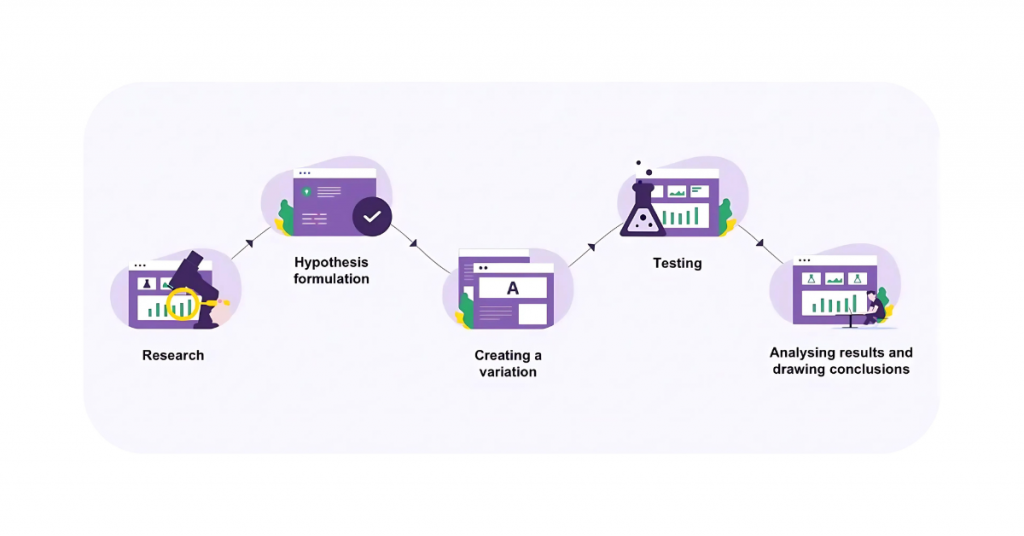
Unified data also makes measurement honest, because you can finally attribute an in-store sale to an online touch and the reverse. Track it through your eCommerce analytics: cross-channel conversion, repeat-purchase rate, and revenue per customer rather than channel-siloed metrics, and keep refining with structured A/B tests so personalization improves on evidence, not opinion.
Overcoming the common roadblocks
Two roadblocks stop most retailers.
The first is privacy and compliance. The rules have moved: Google has reversed its plan to remove third-party cookies from Chrome and has retired the Privacy Sandbox, so third-party cookies remain for now, but the durable strategy is still first-party data, collected with clear consent. Unifying your own customer data in a CDP is exactly the first-party foundation that survives whatever happens to cookies next.
The second is technology overload: too many tools, none of them joined up. The answer is not more tools but fewer, connected ones, anchored on the unified profile.
🚀 Quick takeaway
Do not wait for the perfect privacy answer or the perfect stack. Third-party cookies got a reprieve, but first-party data unified in a CDP is the strategy that holds either way. Start with the data you own and the consent you can get.
How scandiweb approaches omnichannel personalization
scandiweb has delivered over 2,100 eCommerce projects since 2003, and omnichannel personalization is one of the areas where the gap between ambition and data is widest. Our approach is to fix the foundation first: map the journey, unify offline and online data into a single customer view, then run the listen-understand-act loop with proper measurement. We treat personalization as a data and experience problem, not a plugin, because the tactic only works when the data underneath it is whole.
Frequently asked questions
What is omnichannel retail personalization?
Omnichannel retail personalization is tailoring the experience to one customer across every channel, website, app, email, and physical store, from a single unified profile. Unlike single-channel personalization, it treats the same person consistently as they move between online and offline rather than starting over on each channel.
Why is unified data important for personalization?
Because personalization is only as good as the data behind it. When online behavior and in-store purchases live in separate systems, you personalize from a half-picture. Unifying the data into one profile lets recommendations, emails, and store staff all draw on the same history, which is what makes cross-channel personalization coherent.
What is a CDP and do I need one for omnichannel personalization?
A customer data platform (CDP) ingests customer and sales data from every source and resolves it into one persistent profile per customer. It is the usual way to build the single customer view that omnichannel personalization requires, so for most retailers it is the practical first step before any personalization tactic.
How do I personalize across online and offline channels?
Map where customers cross between channels, unify the data from those moments into a single profile (usually with a CDP), then run a loop: listen to signals across channels, understand the individual, act with a relevant experience, and measure. A loyalty program often provides the link between an in-store purchase and an online identity.
Does omnichannel personalization still work without third-party cookies?
Yes, and it is more durable for it. Google has reversed third-party-cookie deprecation and retired the Privacy Sandbox, so third-party cookies remain for now, but the lasting strategy is first-party data collected with consent. A CDP built on your own customer data is exactly that foundation, independent of cookie policy.
Want to turn split data into experiences that follow your customer across channels? Unify your customer data with us and we will map the journey, build the single customer view, and stand up the personalization loop on top of it.