4.9
eCommerce personalization services that reach production
We implement and tune eCommerce personalization on the engine that fits your stack, with segment data and A/B testing that tie each change to revenue.
You get a written list of what to fix and test first.
Trusted by 700+ leading brands worldwide


Trusted by 700+ leading brands worldwide
Why eCommerce personalization stalls
Most personalization budgets go to the license, and the engine vendor's work ends at go-live. In many stores the license renews before the first tuned experience has reached more than a pilot segment.

Untuned recommendation blocks
Engines arrive with generic settings that show bestsellers to everyone. Until someone owns the rules, the blocks add little over a static grid.
Segments without the data
The engine only sees the data your stack sends it. A missing order feed or consent flag reduces every segment to "all visitors".
Wins nobody can prove
Rollouts without an A/B test behind them cannot show which change earned revenue. An unproven program loses its budget within a year.
Validated experiences and certified specialists
1000+
A/B tests launched and validated
858+
User tests completed
2100+
eCommerce projects completed
.png)
.png)
%201.png)
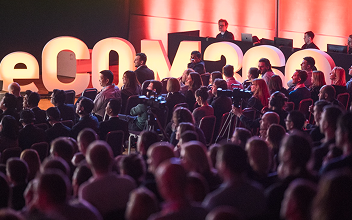
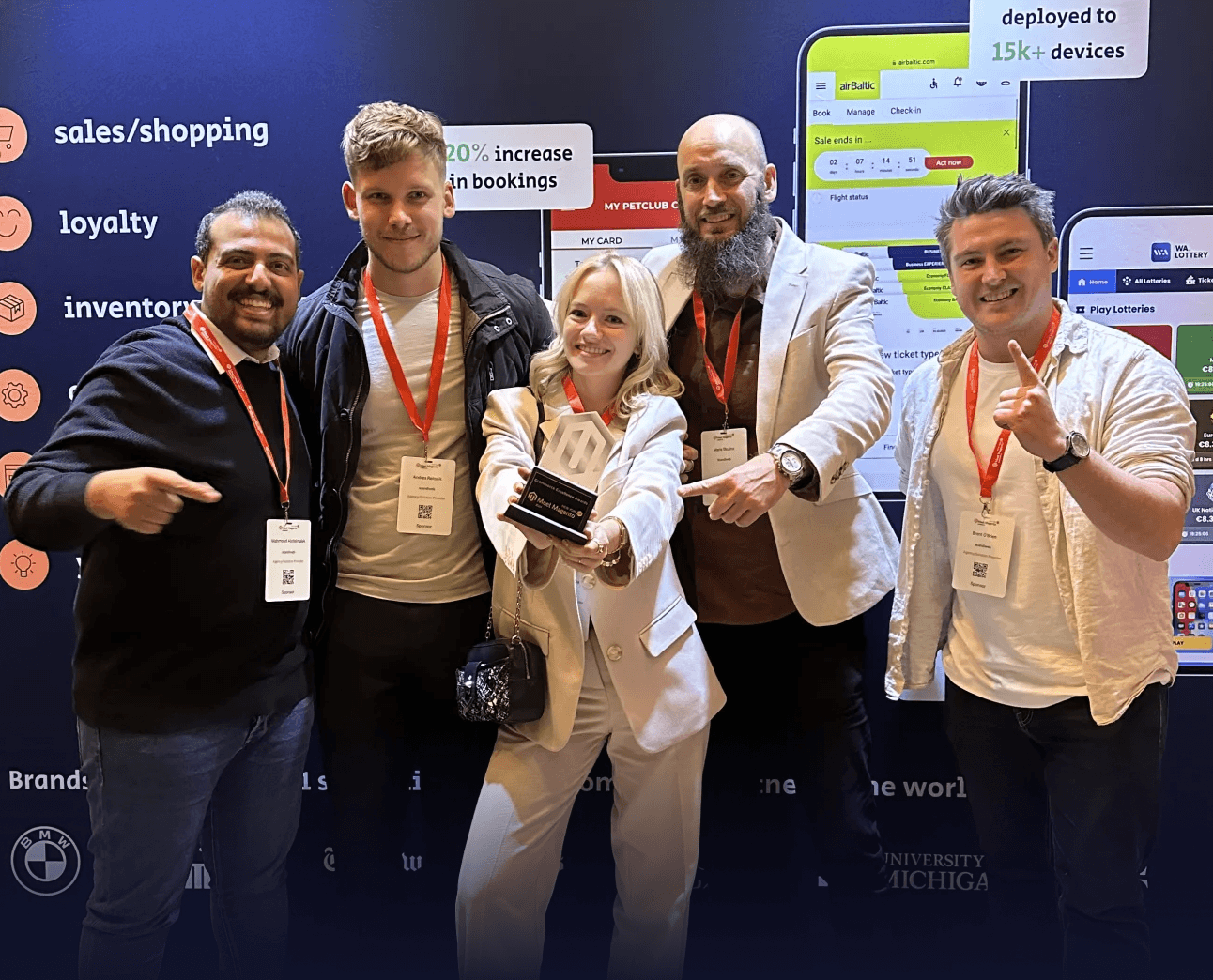
3 consecutive CX & design awards at Meet Magento



What our eCommerce personalization services cover
One team owns everything between the engine contract and the revenue report, under a single delivery manager, so no step waits on a second vendor. Scope adjusts to your setup, whether an engine is in place or still a shortlist.

Personalization engine selection
A scored shortlist of engines that fit your platform and budget, with license and running costs modeled before anything is signed.

Customer data and segmentation
Your engine only performs on complete profiles. We build the feeds for order history and consent, and keep segments accurate after launch.

Personalized product recommendations
Recommendation placements planned page by page, with merchandising rules that keep margin and stock logic in what shoppers are shown.

Search and content personalization
Search results and content blocks adapt to each segment. We render them inside your storefront code and measure page speed on every release.

A/B testing and measurement
Success metrics are agreed before an experience ships, and every result comes from your own traffic. A miss gets switched off early.

Ongoing tuning after launch
Monthly reviews check segment accuracy and recommendation quality. Rules that stop performing are retired and replaced from live results.
See what your setup is missing
AI personalization in eCommerce
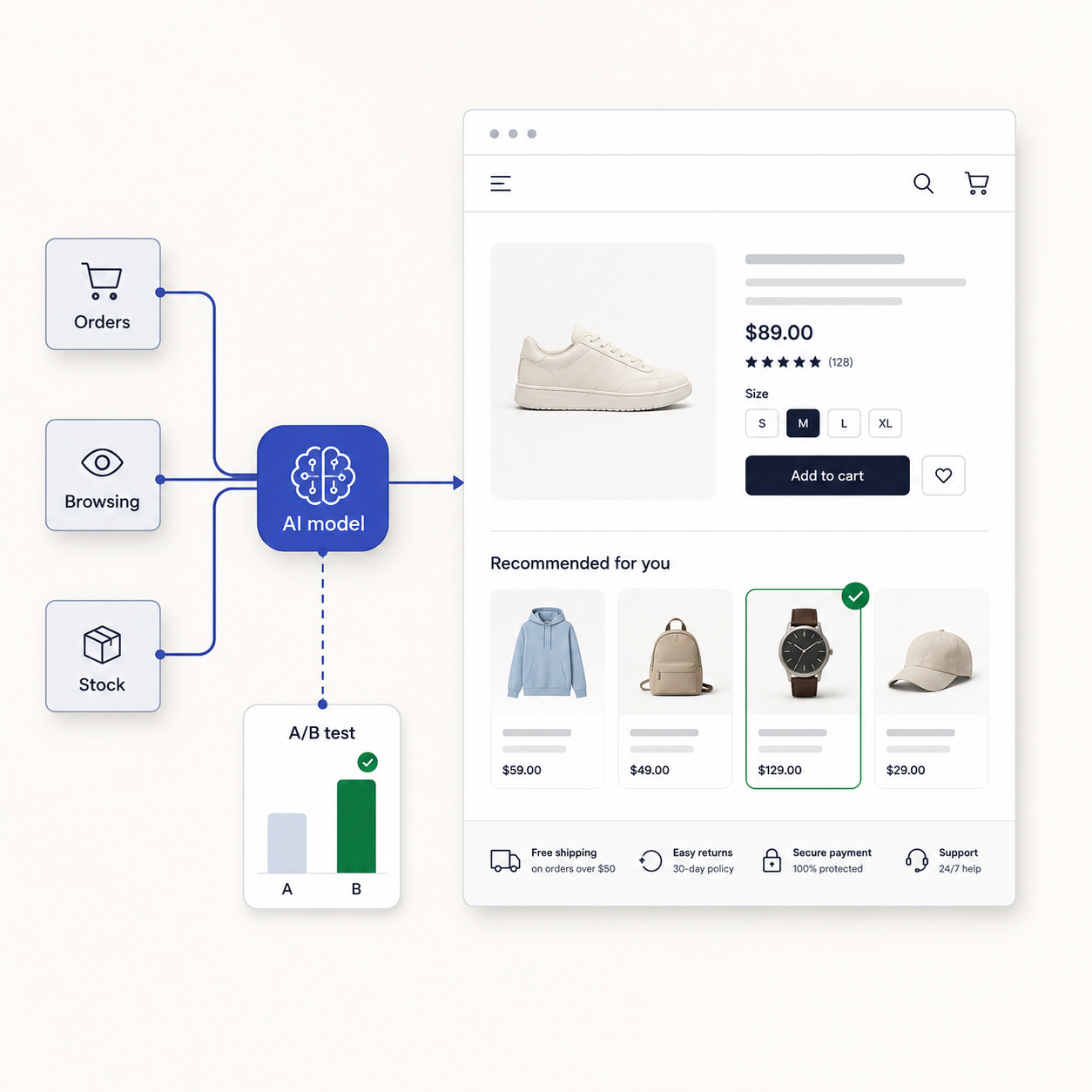
AI personalization in eCommerce uses machine learning to rank products and content for each visitor, with no hand-written if-then rules to maintain. The models now come built into every major engine, so results depend on the customer data the models receive and on testing what they produce. We connect the models to your data sources and verify each one's lift before its rollout scales.
On Adobe Commerce, we deliver this through Adobe Experience Platform services, and the same work applies to Dynamic Yield, Bloomreach, Klaviyo, and Algolia stacks.
How eCommerce personalization implementation works
The sequence puts data work before design work: nothing goes into the storefront until the segments feeding it are verified. The audit stage stands alone, and its output stays useful even if you take the project no further.

Personalization audit

We review the customer data available to your engine and every placement on the store, then rank the gaps. The result is your personalization strategy: the order of fixes and tests, and why. Gaps that sit in the wider journey rather than the engine go to our customer experience optimization team.

Engine fit and setup
New engines are evaluated in a trial on your own catalog data, from a field that includes Adobe Target, Dynamic Yield, Bloomreach, and Klaviyo. Existing contracts stay, and we take over configuration.

Placements and segments live
Placements go live behind feature flags, each with a control group defined, and no placement reaches full traffic before its test is attached.

Testing and tuning
Each experience is A/B tested against its control and scaled only when it wins. A monthly report states what the program returned in revenue.
.png)
See which placements and segments your engine is getting wrong
Send us your store URL and the engine you license. Our personalization specialists review every placement and the data feeding your segments, then rank what to fix.

Client results from personalization work
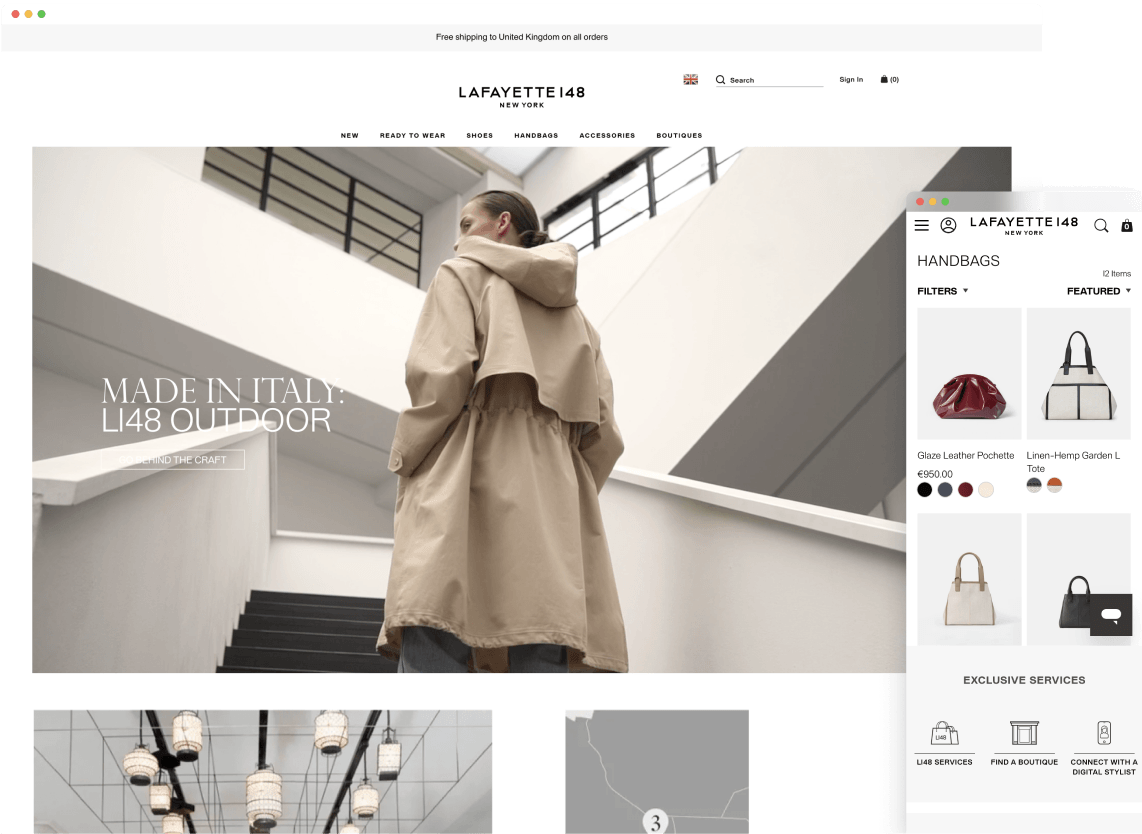

Scattered customer records became one profile that targeting can use
2x
revenue in 5 years on a CDP
40%+
of online revenue via email and SMS
85%
revenue from re-engaged customers
Learn more
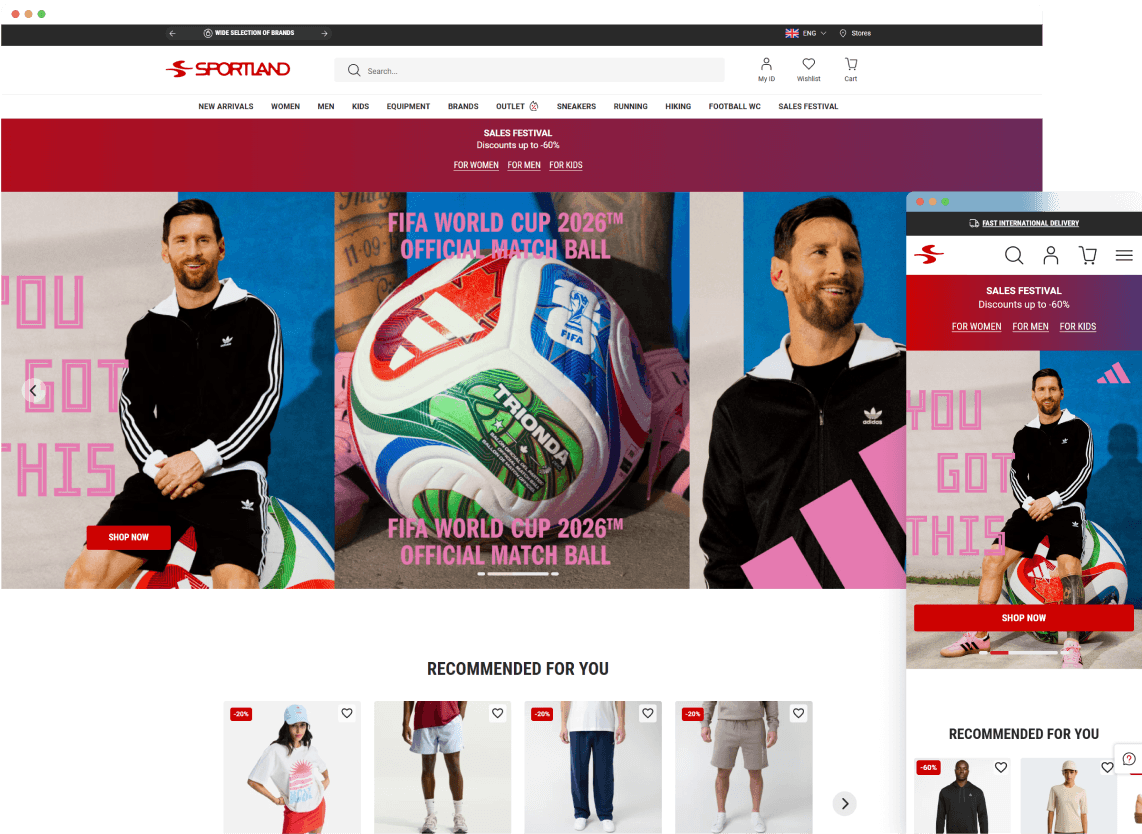

AI product recommendations that made sessions 80% more likely to convert
80%
better convertibility
+30%
sales
+75%
pageviews
Learn more


An A/B test picked the personalization platform, then proved it earned its license
+36.53%
unique purchases
+29.18%
add-to-cart
+14.72%
product list clicks
Learn more
Why brands pick scandiweb for personalization

Partners across competing engines
Salesforce partner, Shopify Plus Partner, and hands-on work in Klaviyo and Segmentify stacks. Engine advice comes from delivery, with no one vendor to defend.

Most certified Adobe Commerce team
Adobe Target and Sensei-powered recommendations are configured by engineers who hold Adobe's own credentials for the stack they build on every day.

Certified experimentation specialists
Optimization specialists trained by CXL, Baymard Institute, and Nielsen Norman Group design the experiences and the tests that prove them on your store.

Storefront code done in-house
The developers who maintain your platform build write the placements themselves. Theme changes and version upgrades stop breaking what personalization added.

Data engineering included
Certified data engineers build the pipelines and consent handling that feed your engine, on AWS infrastructure our team already operates daily.

Google Premier Partner 2026
Our top-tier Google partnership keeps the GA4 and measurement practice current. The lift a test reports is a number your finance team can trust.
What our clients say

.webp)



Frequently asked questions about eCommerce personalization
What is eCommerce personalization?
eCommerce personalization is the practice of adapting what each visitor sees in an online store, using data about their behavior and purchase history. Personalized product recommendations and segment-based content are the most common forms. Behind them sit an engine making the decisions, plus the customer data and testing that keep decisions accurate.
How long does personalization implementation take?
A personalization audit takes about two weeks. Engine selection, when you have none in place, adds 2 to 4 weeks for scoring and a scoped vendor trial. First experiences typically go live with their tests inside two months, and monthly tuning carries on from there. The main variable is how accessible your customer data turns out to be.
Why choose scandiweb for eCommerce personalization?
scandiweb treats personalization as engineering and measurement work. We hold partner status across competing engine vendors, so our recommendation is decided by your platform and data. The team connecting your data also builds the placements and reads the test results, an approach shaped across 700+ eCommerce clients. Work that turns out to be a conversion problem rather than a personalization one moves to our conversion rate optimization services team on the same account.
Is scandiweb a certified personalization partner?
Yes. scandiweb holds Adobe Solution Partner Gold and Hyvä Platinum Partner status, and is in the Salesforce and Shopify Plus partner programs. Each tier can be checked in that vendor's public partner directory, and we send the listings for every platform in your stack on request.
How much does eCommerce personalization cost?
The cost has two parts. The engine license is priced by the vendor, usually scaled to traffic or order volume. Implementation depends on how many placements and data sources are in scope, and each stage is a fixed-scope quote you approve before work starts. The audit prices the rest of the program, so the full cost is visible before any license is signed.
Do we have to replace our current personalization engine?
What happens after personalization goes live?
Launch is the midpoint. Segments and recommendation rules drift as your catalog and customers change, so we review performance monthly and pick the next tests from what the data shows. The same specialists stay on your account, so a fix never waits in an engine vendor's support queue.
Have you done this for stores like ours?
Typical projects cover eCommerce product recommendations and segmentation for mid-market and enterprise retailers, from specialty stores to luxury fashion houses. On a first call we bring the past projects closest to your catalog and engine, with the numbers each one produced, so you can judge the fit on results.

Get your eCommerce personalization audit
You get the placements, segments, and data gaps written up and ordered by value, from the specialists who would run the work. Anything outside personalization goes to our customer experience and conversion teams in-house.

Prefer to talk now? Book a call straight away, or email us at: [email protected]

Related services
Get more revenue out of the personalization you already pay for