4.9
Google Premier Partner handling technical and content SEO on BigCommerce. Get a team with more than ten years of experience in eCommerce SEO.
scandiweb is a Google Premier Partner, a status held by the top 3% of agencies worldwide and reassessed every year against client growth and certification depth. The SEO team has been working on eCommerce organic growth for 10+ years.
The same team covers SEO, AEO, CRO, paid media, and analytics, which is why a ranking gain gets measured against revenue as well as position. Work is delivered through monthly reporting with quarterly strategy reviews, and every deliverable stays visible to you throughout.
BigCommerce handles the basics well, which is why the problems show up once the catalog grows past a few hundred products.
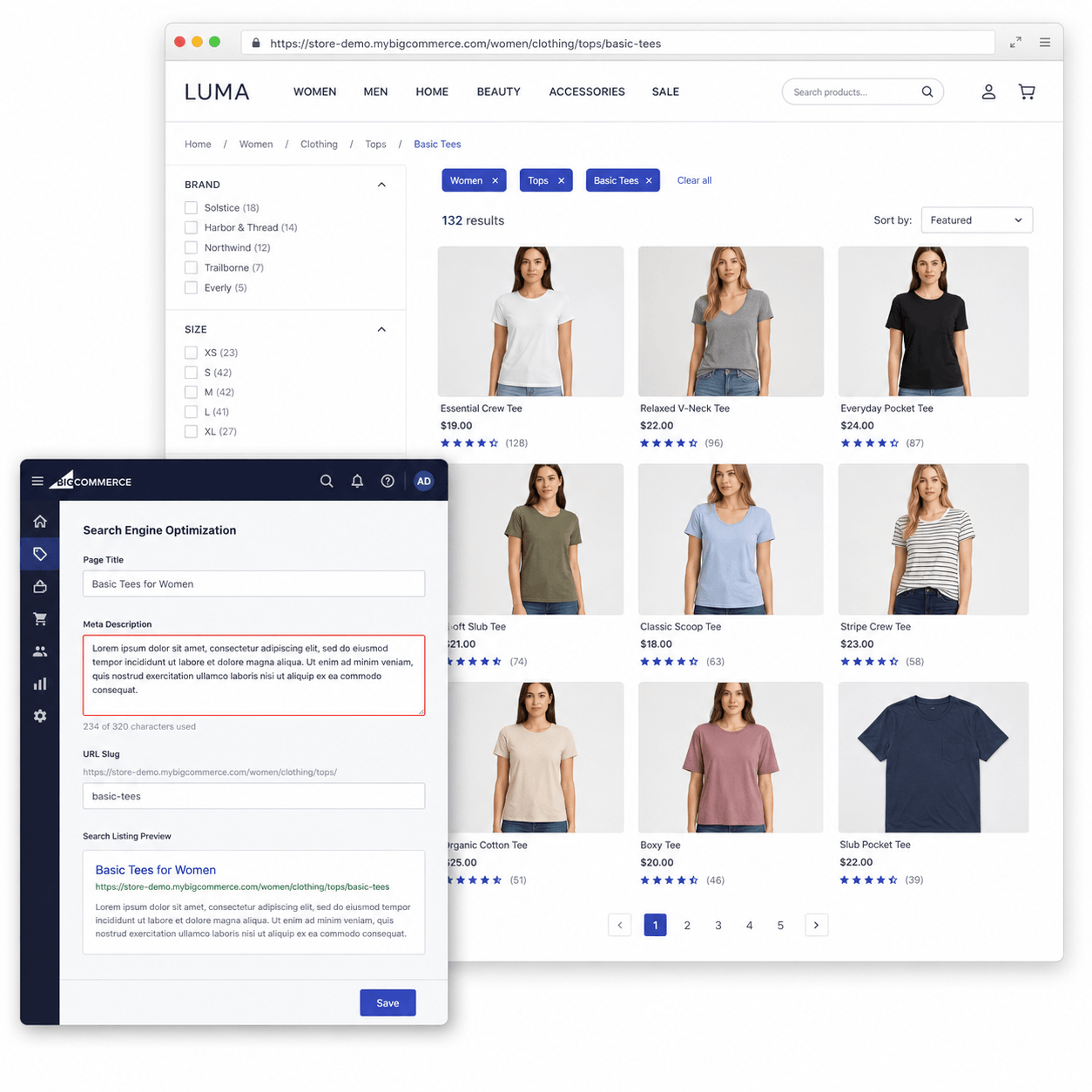
Faceted URLs multiply into thousands of near-identical pages that end up competing with the category you actually want ranking.
One shared template gives a whole catalog the same title pattern, so nothing differentiates a product page in search results.
Rankings get checked only when traffic drops, so a slow decline in category visibility is noticed a full quarter too late.
BigCommerce SEO is the work of making a hosted platform's fixed URL structure, faceted navigation, and template system rank a catalog it was not specifically designed around.
The platform manages redirects, canonical tags, and sitemaps natively, so the improved results come from category architecture, template-level optimization, and content depth. What you cannot do is edit the underlying rendering the way an open-source platform allows, which changes what a technical fix looks like on BigCommerce. Site speed is a ranking input we treat separately – see BigCommerce page speed.
BigCommerce catalogs usually gain most from technical and structural work before content, and each area is prioritized by the revenue it can generate.
We correct faceted URL rules, canonical handling, and sitemap structure so crawlers spend their budget on pages that convert.
Category trees get restructured around real search demand, with valuable filter combinations made indexable.
Title, meta, and schema patterns rebuilt at the template level, then overridden individually on the products that earn the most revenue.
Buying guides and category copy that answer the keyword gaps your competitors already rank for and your catalog can fill.
When you sell across several countries, hreflang, market-level keyword research, and localized metadata all come into scope.
Monthly dashboards track organic revenue and assisted conversions, and the quarterly review changes the plan when required.
Our SEO program has four stages, and the first produces an audit you own whether or not the work continues.
Technical, content, and backlink review of the store, plus competitor and market opportunity analysis. You receive a roadmap and a 3- to 6-month action plan.
Priorities set against your goals and KPIs, then sequenced into sprints and adjusted for how mature the store and the market already are.
Indexation and internal linking get fixed first, then metadata and category page structure are reworked against the audit priorities.
New guides and landing pages for the gaps the audit found, then authority building through backlinks once the content generates traffic.

We’ve done SEO migrations mapping over 100,000 URLs, which is the scale at which redirect planning stops being handled with spreadsheets.
The SEO team has worked on eCommerce organic growth for over a decade, across catalogs on BigCommerce, Magento, Shopify, and headless builds.
Our developers hold BigCommerce certification, so the team who recommends a technical fix is the same one who implements it on your store.
Our SEO work covers visibility in AI Overviews and assistant answers, which is where a growing share of product research now begins.
The specialists measuring traffic work alongside the ones earning it, so organic revenue is reported against the same numbers your board sees.
Analytics access and site data are in scope on an SEO program, under the same certifications that cover our enterprise delivery.
Yes, with caveats. It handles canonical tags, redirects and sitemaps natively, which removes a class of problem that open-source platforms create. The limits are the fixed URL structure and less control over rendering, so gains come from category architecture, template optimization and content depth.
Technical fixes can shift impressions within four to six weeks. Meaningful revenue change usually needs three to six months, because category restructuring and new content need time to be crawled and to earn authority. The audit tells you which of your gains are the fast ones before you commit.
Yes, and it is the point at which SEO matters most. Redirect mapping and template structure are decided during a replatform, and both are expensive to fix afterwards. Our BigCommerce migration team handles the mapping and the SEO team reviews templates before launch.
Technical work on indexation and faceted URLs, category and filter architecture, template-level title and schema patterns, content built against keyword gaps, international setup where you sell in several markets, and monthly reporting against organic revenue. Scope is set by the audit.
Site speed is a ranking input and it is a separate service with its own team, covered on our BigCommerce page speed page. An SEO audit flags where performance is holding rankings back, and the two programs are often sequenced together.
Programs are quoted after the audit, because the work depends on catalog size, how many markets you sell in and what technical debt already exists. Most are delivered as a monthly retainer over an initial three to six month plan. The audit itself is free and the roadmap is yours whether or not you continue.
Tell us your store URL and the markets you sell in. We will review indexation, category and filter structure, templates and technical health, then come back with a prioritized roadmap.
Prefer to talk now? Book a call straight away, or email us at: [email protected]
Send us your store URL. We will audit indexation, category structure and templates, then show you what the fixes are worth.