4.9
Usability testing services for eCommerce stores
Usability testing with shoppers screened to match your buyers. We record every session and hand you a severity-ranked findings report.
A UX researcher scopes your plan at no cost.
Trusted by 700+ leading brands worldwide


Trusted by 700+ leading brands worldwide
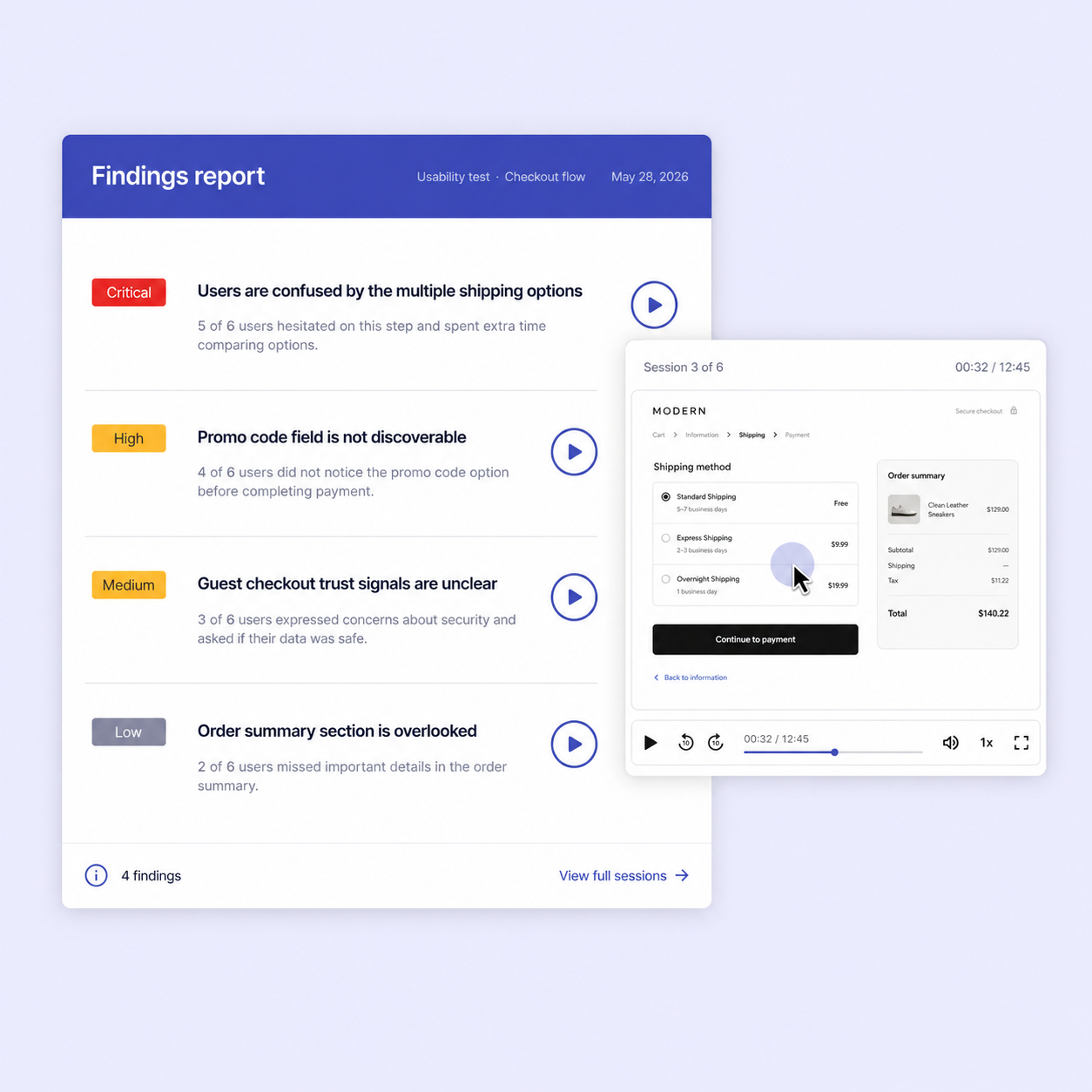
Usability testing services that end in a findings report
A usability testing study puts your live store in front of recruited shoppers, who attempt the tasks your revenue depends on. Each failure point in the report links to the session clip that shows it. Scope follows the decision the study supports: one flow with a small moderated group, or one task across a large unmoderated sample.
We choose the method from what you are testing. Our guide to 5 usability testing methods explains each one.
Usability testing methods we run with real shoppers
The usability testing method decides what evidence comes back. Sitting with one shopper while they narrate a checkout tells you why they hesitated. A larger unmoderated sample on the same task tells you how often it happens. Most eCommerce projects use both, and we set the split before recruiting starts.

Moderated usability testing
A researcher joins each participant live and asks why at the moment they hesitate. Best for a flow your team cannot yet explain from the numbers alone.

Unmoderated usability testing
Participants complete tasks on their own time, and we review the recordings afterward. One task can reach a far larger sample than moderated sessions allow.

Remote usability testing
We hold sessions over video with participants in their own market, on their own devices, which is how we test stores selling into several countries.

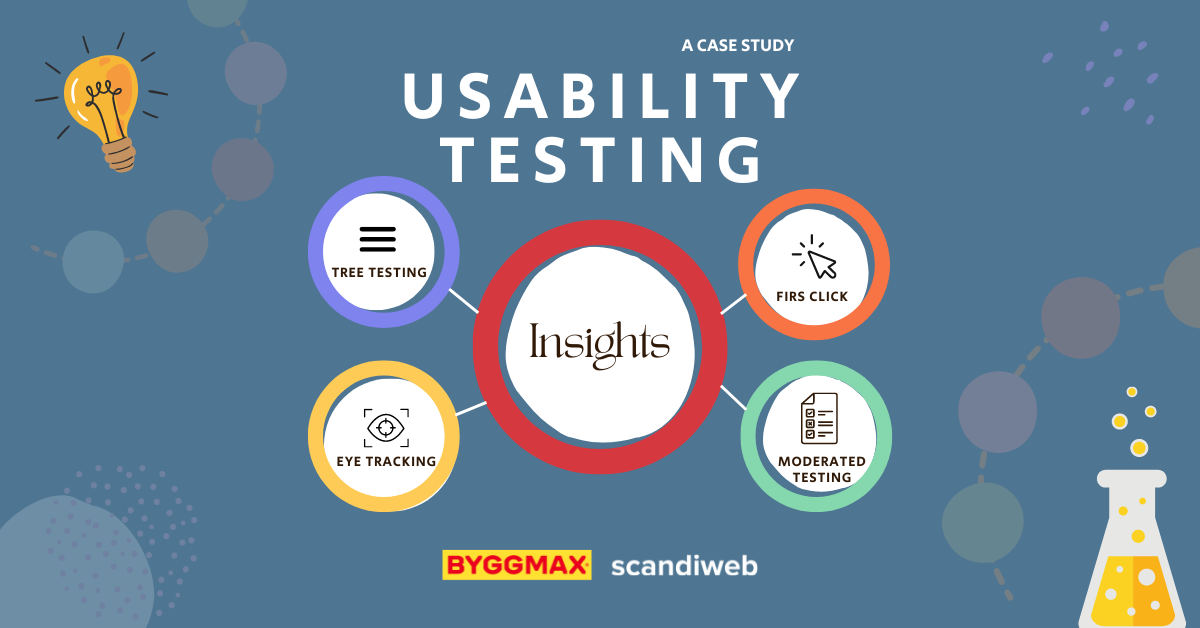
First-click and tree testing
Participants pick where they would click for a given product. This shows whether your menu labels match the words shoppers use, before any design work starts.

Eye-tracking studies
Gaze recording shows what shoppers looked at and what they never saw. We use it when a page performs badly and the click data offers no explanation.

Prototype and concept testing
We test a clickable prototype with shoppers before development starts, so a checkout or navigation idea can change before anyone writes code for it.
See which method fits your store
UX research services with a testing record
858+
User tests across client projects
2100+
eCommerce projects delivered
23+
Years in eCommerce
.png)
.png)
%201.png)
Award-winning design work 3 years in a row



When website usability testing is worth running
Usability testing earns its cost when the decision it informs is expensive to reverse. A rebuild signed off on workshop opinion costs more to undo than a study costs to run.

Before a build budget is committed
Design decisions come out of workshops where nobody in the room is a customer. A study before the build shows which of those assumptions hold.
When analytics show where buyers stop
GA4 tells you the step where sessions end. It cannot tell you what the shopper was trying to do at that step, or what they expected to see.
When shoppers report the same problem
Support tickets describe the symptom. Put shoppers from that segment in a session and you see the interface behavior producing it, and how many hit it.
How a usability testing project works
Recruiting sets the pace of a usability testing project: participants have to match the people who actually buy from you, and screening starts before the first task is written. One researcher owns the whole study. When the findings call for design work, our UI/UX design services team takes it on.

Scope and task design

We agree what the study has to answer, then write the tasks participants will attempt. Task wording decides the result, so we draft it with your team and test it internally first.

Participant recruiting and screening
We screen for people who buy in your category, at the price point you sell at. You approve the screener questions and the quotas before we book a single participant.

Test sessions with recording
Participants attempt the tasks on your live store or prototype while we record their screen and their voice. You are welcome to observe any session as it happens.

Analysis and severity ranking
The researcher codes every observation across sessions, then ranks each issue by how many participants hit it and how far it stopped them.

Findings report and walkthrough
You get the written report with the clip references, and a session where the researcher takes your team through the findings and answers questions.
.png)
Studies we ran for eCommerce brands
We recruited and screened the shoppers for each of these studies, and our UX and CRO case studies collect the rest.
.png)
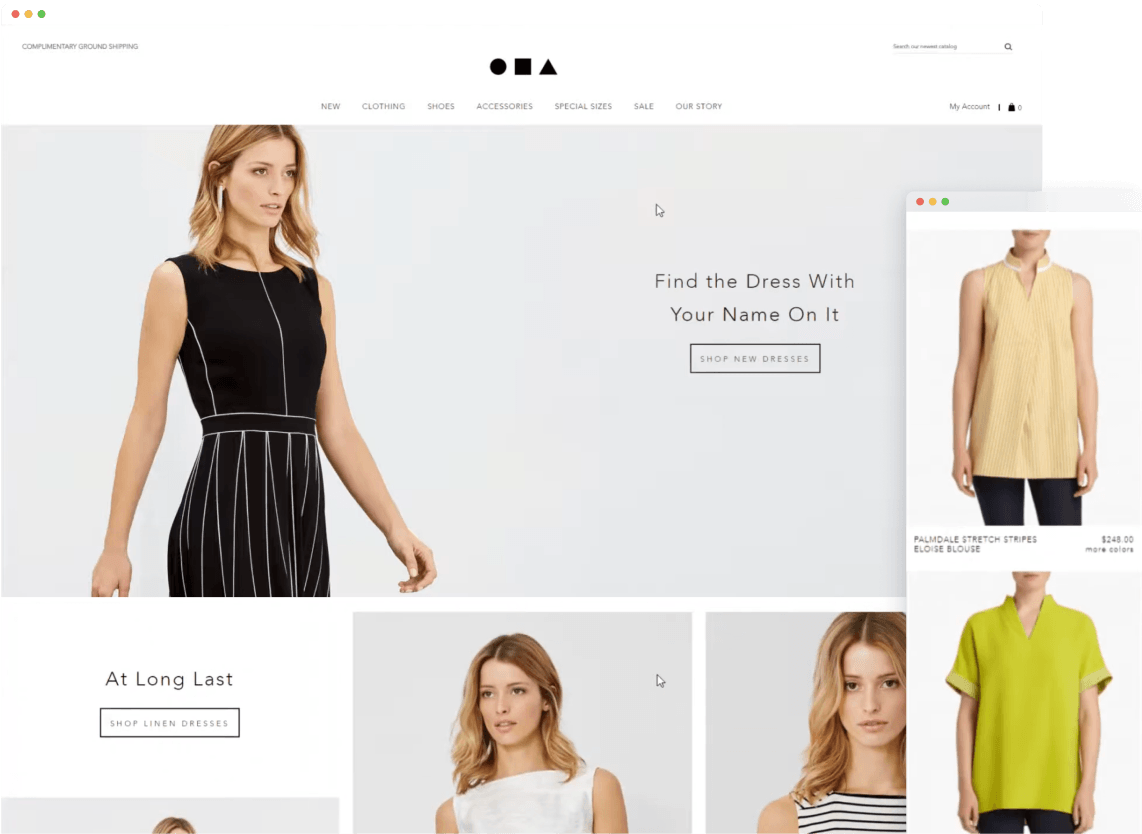
Eye-tracking rebuilt a 240-item menu and raised both │ menu use and revenue
~8%
Overall revenue increase
~16%
More menu interactions
18.23%
Less use of site search
Learn more
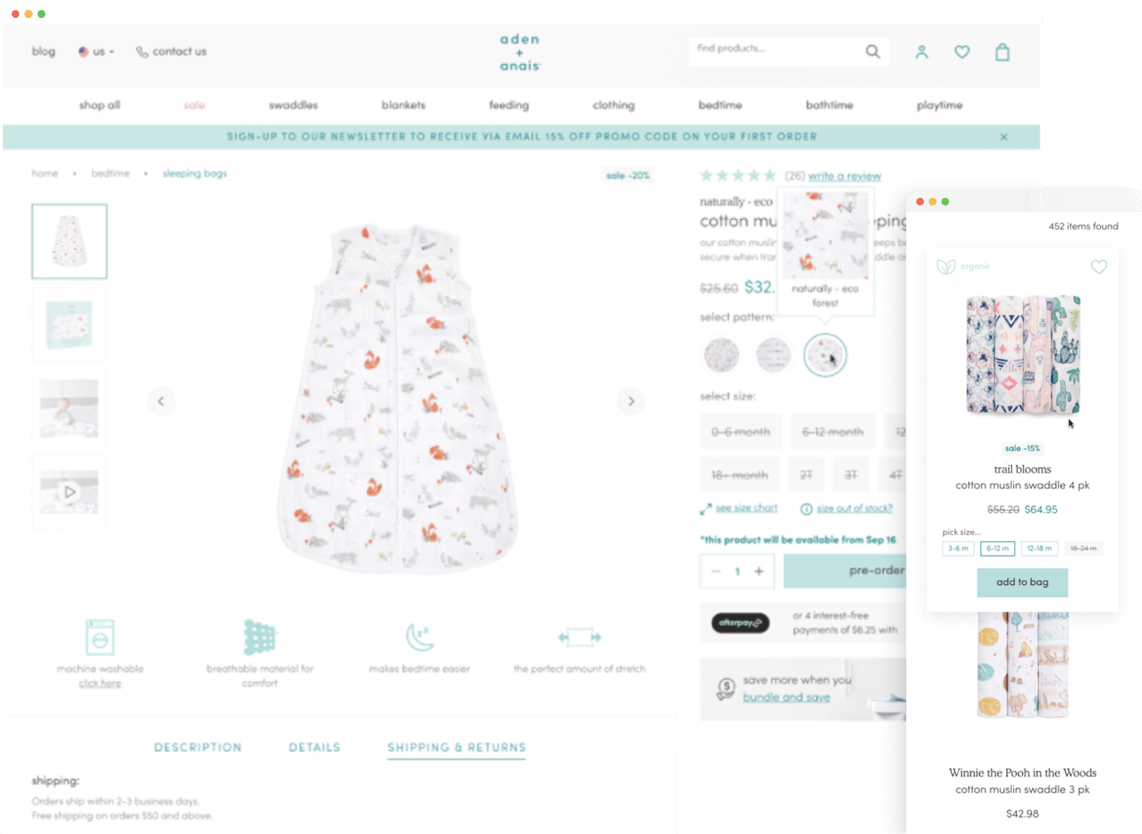

Two rounds of testing made the collection clear to every participant
20
Participants in round one
3 of 10
Found the benefits in round one
2 of 10
Saw the two products as separate
Learn more
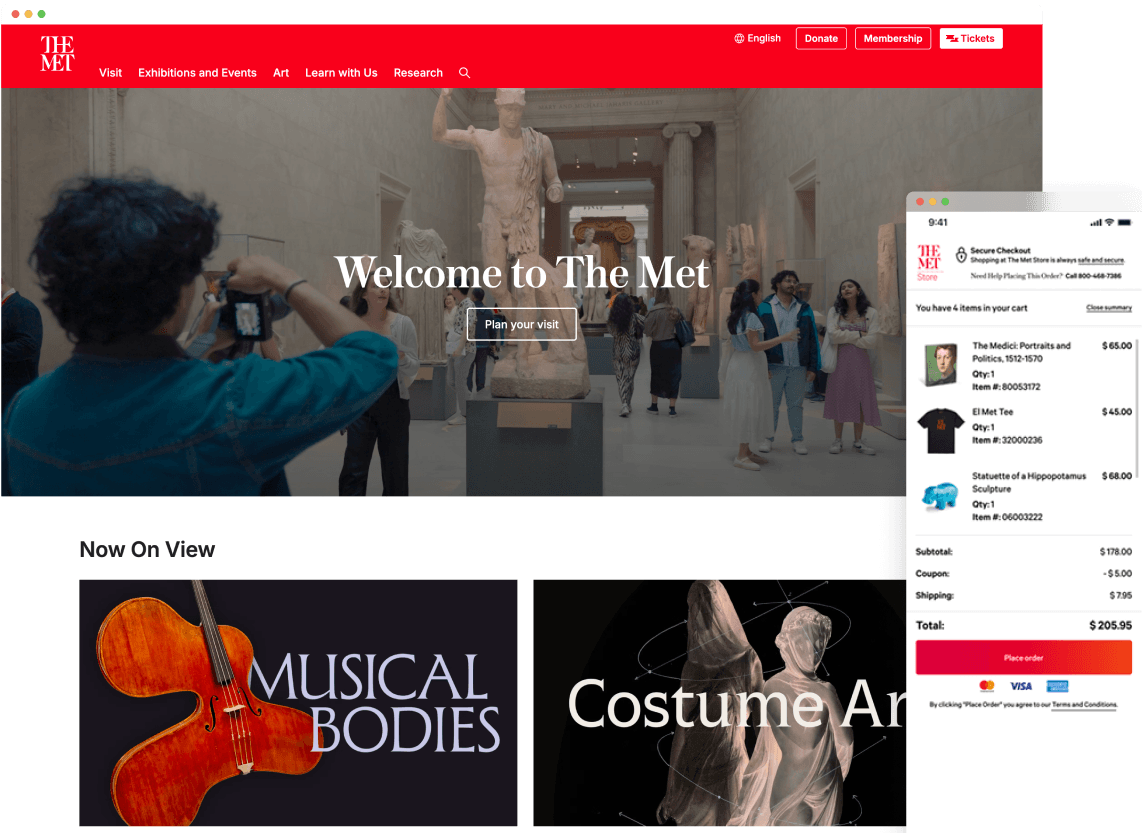

Shoppers showed The MET Store exactly what its checkout needed
37%
Hit friction during checkout
~13%
Saw their cart summary at billing
10 of 10
Valued seeing shipping costs early
Learn more
.webp)
Watch real shoppers use your store
Why brands choose our user research services

A study you can book on its own
Book the usability study as its own scope, sized to one flow or one task. The findings report is yours to act on with us or with your own developers.

Testing built for eCommerce flows
Our researchers specialize in eCommerce verticals, so task design starts from how shoppers move through a catalog and a checkout in a real purchase.

Participants screened to your buyer
Recruiting is where most studies go wrong. We screen on what people actually buy and how recently, and nobody joins a session without your sign-off.

Severity ranking on every issue
An unranked list of observations helps nobody. We score each issue by severity, so your team starts with the problem that stopped the most participants.

Findings your stakeholders can check
A colleague who disputes a finding can watch the exact moment it happened in the session recording, at the timestamp the researcher cited in the report.

A user research agency that builds
scandiweb builds eCommerce stores as well as testing them, so our designers and developers can implement a finding without briefing a second supplier.
What clients say about the work

.webp)



.png)
Frequently asked questions about usability testing
What is usability testing?
Usability testing is a research method where real people attempt real tasks on your store while a researcher records what they do. The output is behavioral: whether each task was completed, and the exact point where a participant stopped. On an eCommerce store the tasks are usually finding a product and completing a purchase.
Who performs the usability testing sessions?
A senior UX researcher from scandiweb's in-house team leads your study and writes the report. That researcher hosts each moderated session, and reviews every recording from an unmoderated study. The practice is led by Olga Kimalana, who has more than 10 years of CX experience across brands including NYT, Läderach, and Lafayette 148.
Is testing with five users enough?
Five participants surface about 85% of the usability problems in the design they test, which is Nielsen Norman Group's published finding for a single user group. Where a store sells to two distinct audiences, its guidance is 3 to 4 participants per group, and 3 per group once you test three or more. We size the sample to the number of audiences in scope.
Usability testing vs user acceptance testing?
User acceptance testing checks whether the build matches the specification, against pass criteria written in advance by QA. Usability testing checks whether a person who has never seen the store can complete the task, and no pass criterion is written first. A release can clear UAT completely and still fail with shoppers.
How much do usability testing services cost?
Cost moves with two things: the number of participants, and whether a researcher moderates each session. Unmoderated studies cost less per participant, so they suit larger samples on a single task. A usability study can be booked on its own, or inside scandiweb's wider customer experience review when you want the analytics and survey work alongside it.
What does a usability testing company deliver?
A usability testing company is accountable for the two parts that are easy to get wrong: writing tasks that do not lead the participant, and recruiting people who match your buyers. scandiweb keeps both in-house, so one team answers for the sample and the script. A change worth testing against live traffic becomes a conversion rate optimization project.
When to run usability testing?
Twice: once before you commit the build budget, and again once the new flow is live. Testing a prototype catches problems while a fix is still a design revision. Testing after launch measures whether the change worked. Teams with a continuous customer experience optimization program usually book a short study each quarter against one flow.
Can AI do usability testing?
AI tools transcribe sessions and cluster observations, which removes hours of manual analysis. What they cannot do is notice that a participant said one thing and did another, then ask the follow-up question that explains it. On every scandiweb study a researcher writes the tasks and interprets what the sessions show.

Get a usability test plan for your store
Tell us which flow to test and who buys from you. If you are not sure which flow to start with, say so, and a researcher will propose one from your analytics.

Prefer to talk now? Book a call straight away, or email us at: [email protected]
More on user research
Case studies and guides from our research team.

Related services
Scope a usability study on your worst-performing flow
A screened group of your buyers attempts the flow, and your team gets the recordings and the report.